To download a printable PDF version (no pictures)
click on this link E2E2017no1.pdf (eight A4 pages)
The links in the text will take you to photographs of the location
We visited more than is mentioned in the text
If you wish to see more photographs, click on the image below for the full set
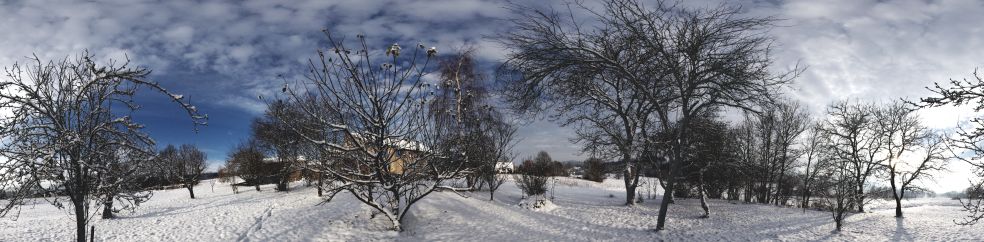
At the beginning of January we folded up our pagan Letchworth Christmas tree, wrapped the baubles in tissue, and regretfully discarded the holly, ivy and yellow jasmine (why didn’t that jasmine didn’t get into the carol?) in the conservatory and set sail for Entre-deux-Eaux. With snow forecast we stopped for a night en route in Reims; it was bitterly cold as we walked towards the dimly-lit cathedral. A few nights later temperatures were down to -18°C at night and continued to be very cold for a couple of weeks.
During January we usually relish the epiphany feasting in and around Entre-deux-Eaux. This year Helen had her gall bladder extracted on 13th, as, sadly, it had restricted her eating over Christmas and New Year. John nobly went alone to Mayor Duhaut’s Voeux (inaudible speech, champagne and nibbles) after visiting hours, and we did both go down to the oldies’ gathering on 17th after they had finished eating a very fatty (and satisfying, we gather) protracted lunch of pork, sausages, cheese and plentiful booze, and we were plied with galette des rois and champagne. In fact we did more short walks than feasts, as the snow which started during the night of Helen’s operation, was enticing in the sunny afternoons.
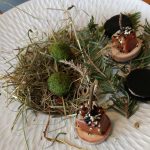
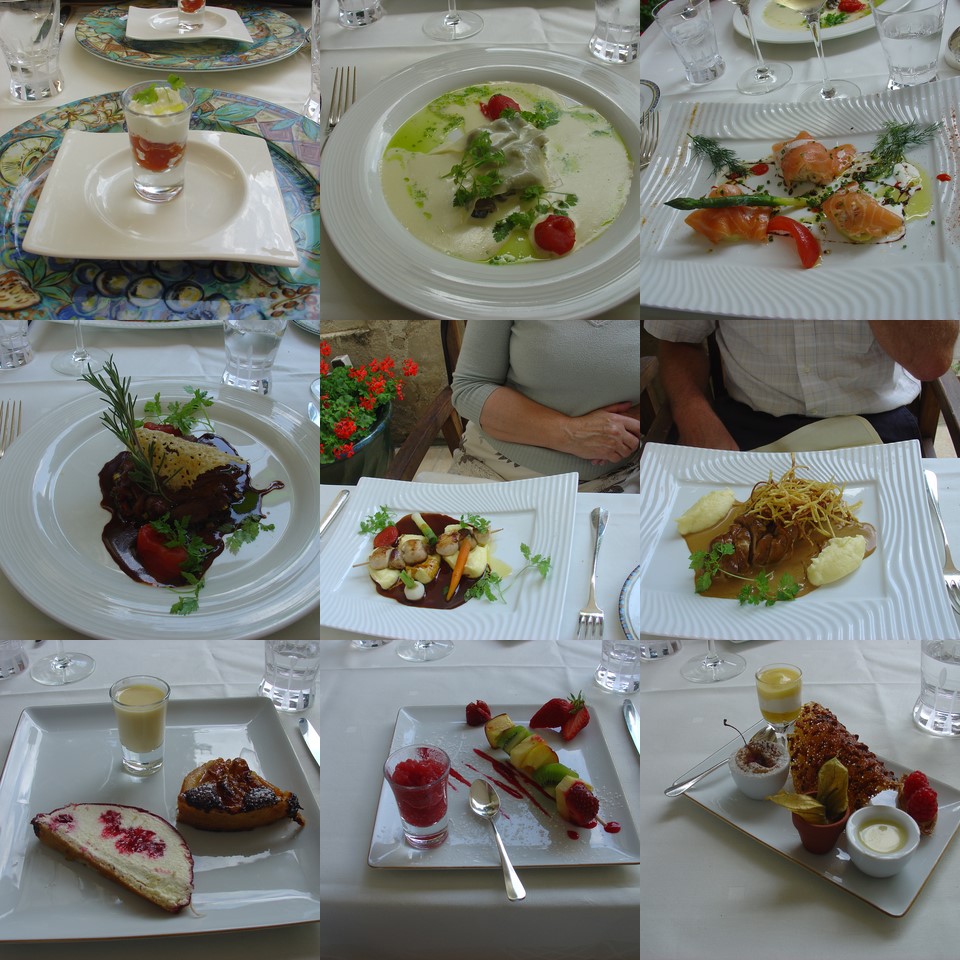
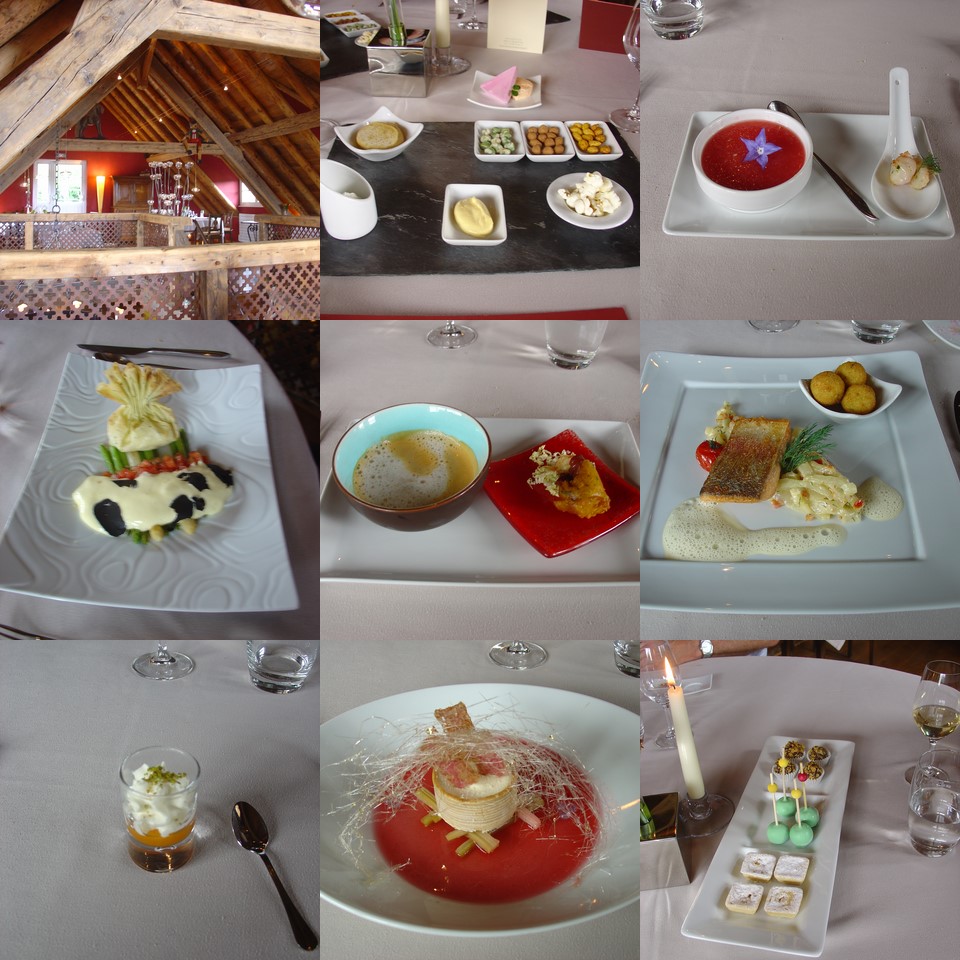
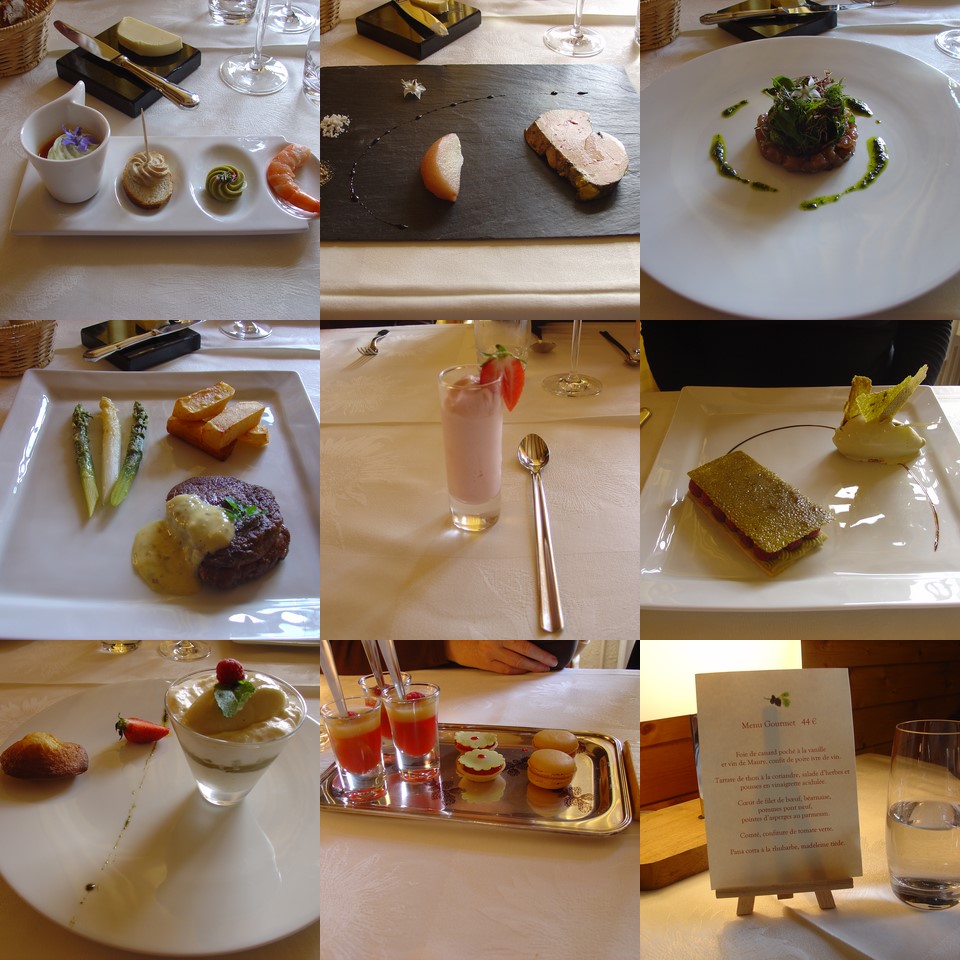
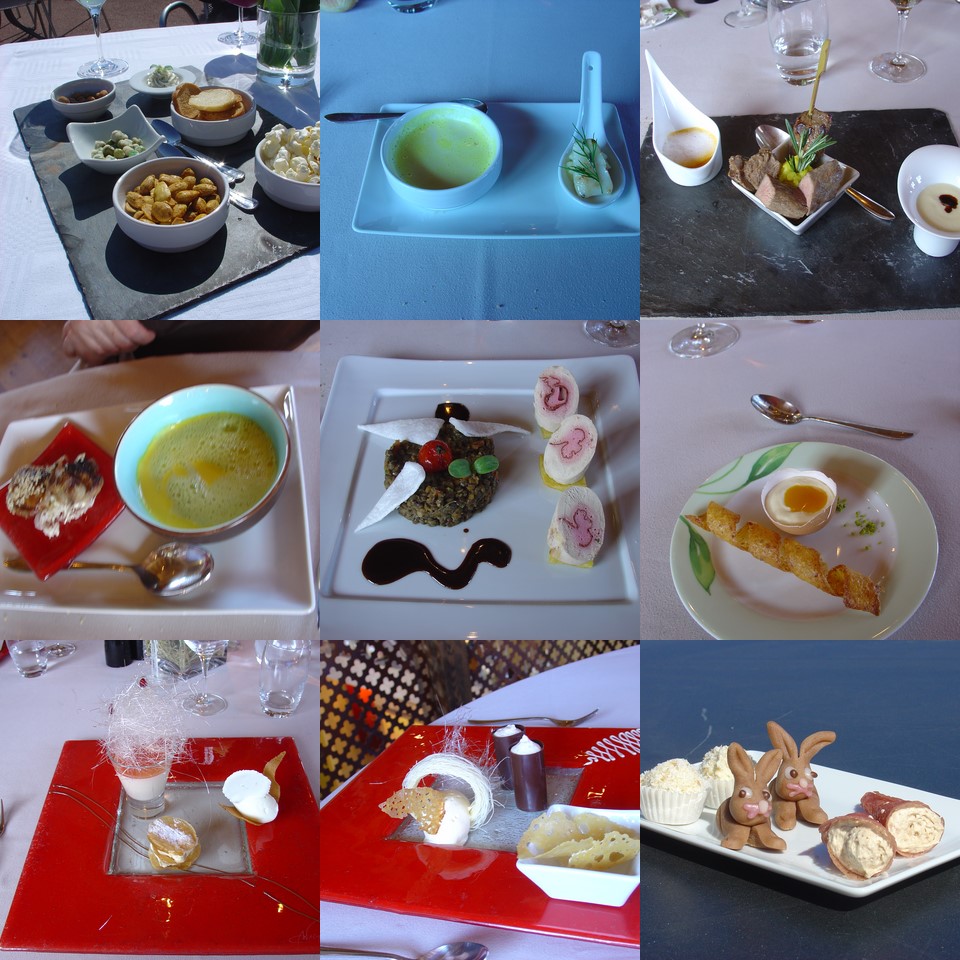
So, at the beginning of February we felt it was high time we ventured out to a restaurant (and no newsletter would be complete without a restaurant trip!) It is a long time since we have been to our nearby Book Village in Fontenay-la-Joute, so when John read about a restaurant, L’Imprimerie, in the former printer’s we decided to go there. Only one table was occupied when we arrived, which didn’t augur well, but we chose a table close to the blazing fire and settled down to await the menu. The waiter seemed half asleep, but produced two torn up children’s books (shock, horror for Helen) with inserts giving the prices of three menus, but no details of the food on each. We managed to extract information about the menu of the day, but he kept insisting that the other menus were a surprise, as were the accompanying wines. Eventually he checked with the chef, and on hearing that chef was proposing to include coquilles St Jacques and then pigeon and pork, Helen hastily settled for the safer menu of the day, but John chose a more adventurous one. To our surprise, John’s surprises all turned out to be beautifully and imaginatively presented, with lots of little pre, inter and post delicacies. We’d happily return with anyone who doesn’t mind gambling on what they eat!
By mid February we were back in Letchworth for half-term. We returned to the Higgins Museum in Bedford, taking Jacob as it is such a child friendly museum, and spent quite a bit of time talking about fossils with him. Another day we discovered that Stevenage is not all new town, but has an attractive old town with a wide high street similar to many old market towns. On a gloomy day we had an unsatisfactory attempt to reach Ely through the grey fens; the obstacle was nothing to do with resistance from Hereward the Wake, but due to a serious road accident which caused jams blocking all roads in.

Mildenhall treasure
The fenland theme continued when we were in London and went to see the Mildenhall Trove at the British Museum (we had previously driven through Mildenhall, but not explored); the Roman silver tableware was stunning, and we were interested to see on their map of finds how well the fens had preserved many other treasures. After that we couldn’t resist mingling with the eager school children and their clip boards to see the Sutton Hoo burial display. In the afternoon we saw the revival of Stoppard’s Travesties (we’d seen the 1974 original), which was good, and ate at Moro in Exmouth Market, which was disappointing. Another trip to London saw us at an unexpected venue, the London Corinthian Sailing Club, to celebrate in style John’s school-friend Alan’s 70th birthday. John’s sister Ann and brother-in-law Derek had just moved from Essex across the Thames to Tenterden in Kent and we spent our last two days with them, enjoying lunch in a good country restaurant (The Curlew outside Bodiam) and a walled garden centre in Hawkhurst (the hellebore which we bought there is flourishing back in E2E, a reminder of the time that Helen’s mother spent as Headmistress of Lillesden School in Hawkhurst, which is now apparently converted into smart apartments after closing and featuring in Doctor Who episodes). The channel crossing was rolling next day and we crossed northern France through lashing rain, blinding spray and high winds.
Back in E2E the dull wet weather of early March soon felt oppressive, with few diversions other than the free audition tests offered by the hospital (expected results: Helen OK for her age, John not). This time last year we had been happily meandering round south-east Portugal, intending to cross into Spain and explore Andalusia, but found so much to see we did not cross the border. Almost as soon as we thought of our uncompleted trip, John had booked flights from Basel to Seville and back and a hired car. We don’t usually plan our hotels far ahead, but in the miserable weather we enjoyed reading guidebooks and hotel reviews, and ended up booking hotels for every night, some of which were to add greatly to our appreciation of the region. As we drove to Basel on Saturday 11th, we realised that the permitted season for certain Vosgian river fish must have opened, as there were damp fishermen on every bridge.
Seville airport was hot when we arrived, and we were glad not to be heading towards the narrow streets of the city in our hired car whose air-conditioning didn’t seem to be working efficiently. Instead we sped along the A4 in the opposite direction across the plain towards Cordoba until we could see on our right that night’s destination, the small fortified hill town of Carmona. Turning off towards it, the small road got steeper, goats scattered in front of us, we passed a ruined chapel and suddenly a huge old gateway, the Puerta de Cordoba, engulfed us and our sat nav was directing us through narrow streets past joyous family meals in a street bar, emerging onto the escarpment with breathtaking views and our hotel, the Alcazar de la Reina. Helen is easily impressed and the two sinks in the spacious cool cream bathroom, added to the friendly welcome, the carpeted entrance, traditional heavy furniture and shady courtyard and pool appealed to her. Given how every street space in Spain seemed to be taken up with parked cars, we were glad we’d opted to book hotels with their own parking.
On the main San Fernando square with its huge palm trees with tiny thatched tops, children were playing, the little girls all in beautiful frocks, with big bows in their hair and satin pumps on their feet. Were they dressed up for a special Saint’s day? The bar and café tables round the edge of the square were full of families and friends drinking and eating, but a space was found outside the Bar Goya and we ordered cold drinks, a squid salad and pigs kidneys in sherry and enjoyed the feeling of having arrived. Revived, we wandered downhill through the narrow streets and spectacular double-entranced Puerta de Sevilla into the “new” (or later) town, ending up at the Roman necropolis. Only part of it was open (half an hour before closing time), but it was interesting to peer into the large holes and linked cave system with its statue of an elephant. In the bar/restaurant where we ate later, braided boys with drums joined their friends (what had we missed?), and outside a soutaned cleric fretted over his loose wing mirror.
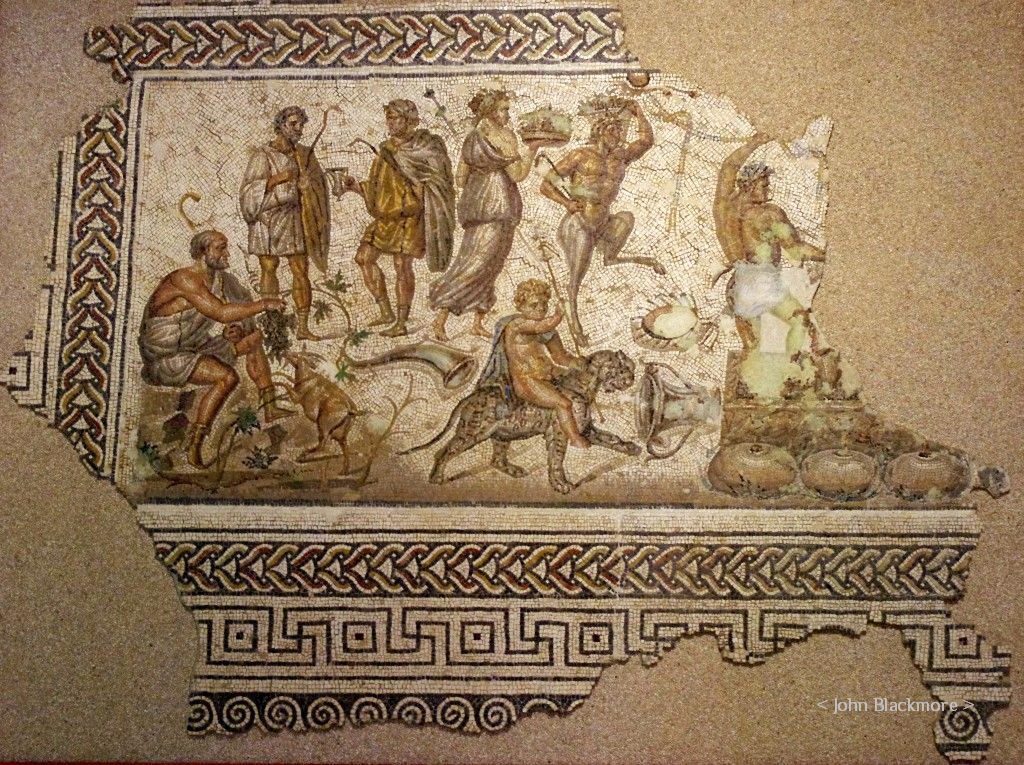
Ecija: Bacchus Gift of Wine
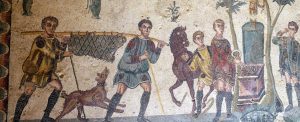
Next day, further along the A4 to Cordoba, we stopped in Ecija and followed our noses and the glimpses of elaborate church towers into the old town. The highlight was coming across the Palacio Benameji and sticking our noses through the gateway. In an inner courtyard children, in silent concentration, were learning to make Roman amphora and oil lamps which were put to dry in the sun, and up the sweeping staircase we found a surprising array of fine Roman mosaics is displayed on the walls. Downstairs were interestingly carved prehistoric stones. An unsung provincial museum! And we’d nearly ignored it in favour of coffee (which we subsequently enjoyed just outside the palace walls).
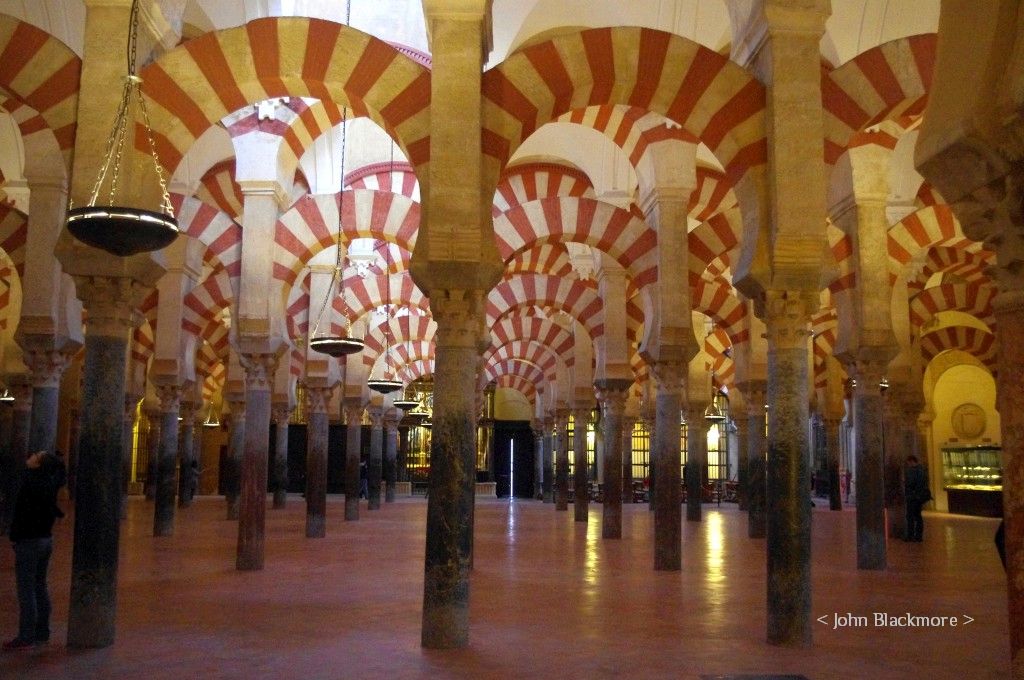
Mezquita, Cordoba
Cordoba’s Archaeological Museum’s mosaics were disappointing in comparison, as they are still in the unsafe older part where they can’t be seen; but the excavated Roman amphitheatre in the basement of the new building was fascinating and well explained. It was probably the return of rain and the bog-standard 4* but quite pricey hotel (which couldn’t change a dead light bulb for 18 hours) which coloured our impressions of Cordoba. All the pictures of the Mezquita which you see emphasize the rows and rows of columns and the light, spacious feel of the huge old place of worship. They don’t prepare you for the fact that your view as you walk in is blocked by the elaborate cathedral which was later constructed in the centre of the mosque to reclaim the space, while the Mezquita walls have ornate chapels on three sides which prevent light from entering.
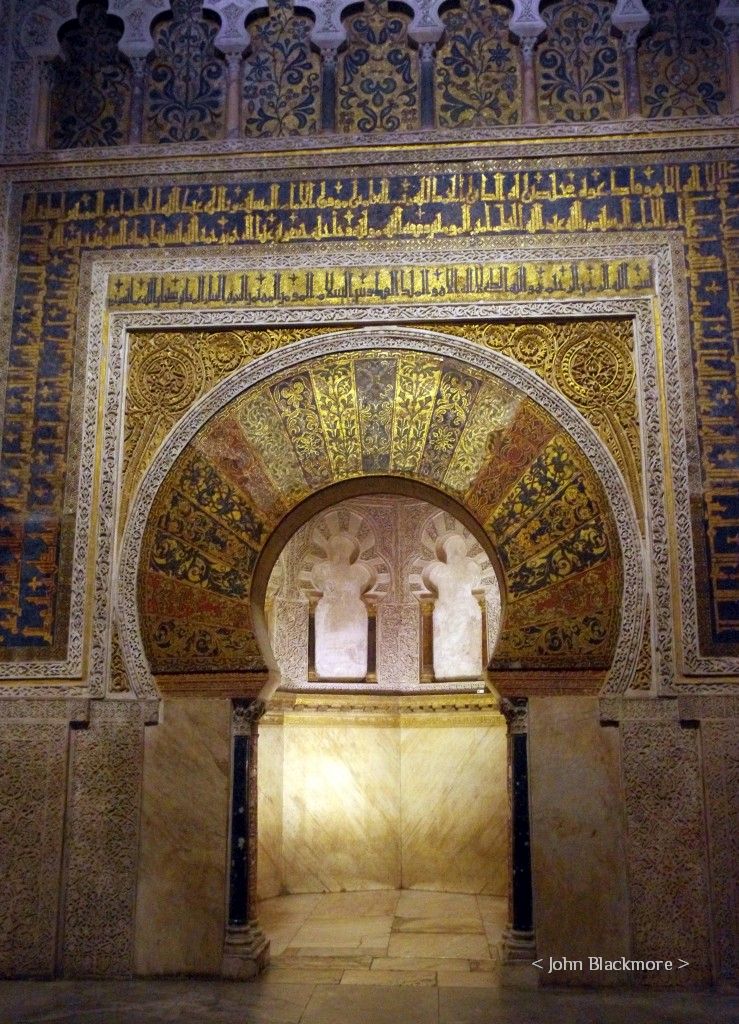
Mihrab, Mezquita, Cordoba
It is only when you close your eyes to the obstacles and walk round the cathedral towards the austerely decorated mihrab that you get more of a feel of the constantly extended forest of columns. Another jarring image of Cordoba was the rain-swept Roman bridge with coach loads of Chinese and Japanese tourists leaning into the wind, some with sinister-looking scarlet face masks like modern invaders.
Granada was such a contrast to wet Cordoba. The sun was shining to welcome us as we drove towards the top of the hill facing the Alhambra, following complicated instructions to the hotel avoiding the narrowest and steepest one-way streets of the old Moorish quarter. Our hotel (Santa Isabel la Real) was a delightful restoration of an old building, and we were graciously seated in the beautifully traditionally furnished sitting room with coffee and fresh lemonade while the paperwork was done (always surprisingly time-consuming) and our room was prepared (we were early), then the easiest way of accessing the Alhambra and the useful local buses were explained, and the housekeeper took us up to our room on the first floor, following the balcony round the inner courtyard. It was cool and shady with old beams, and a cool white bathroom.
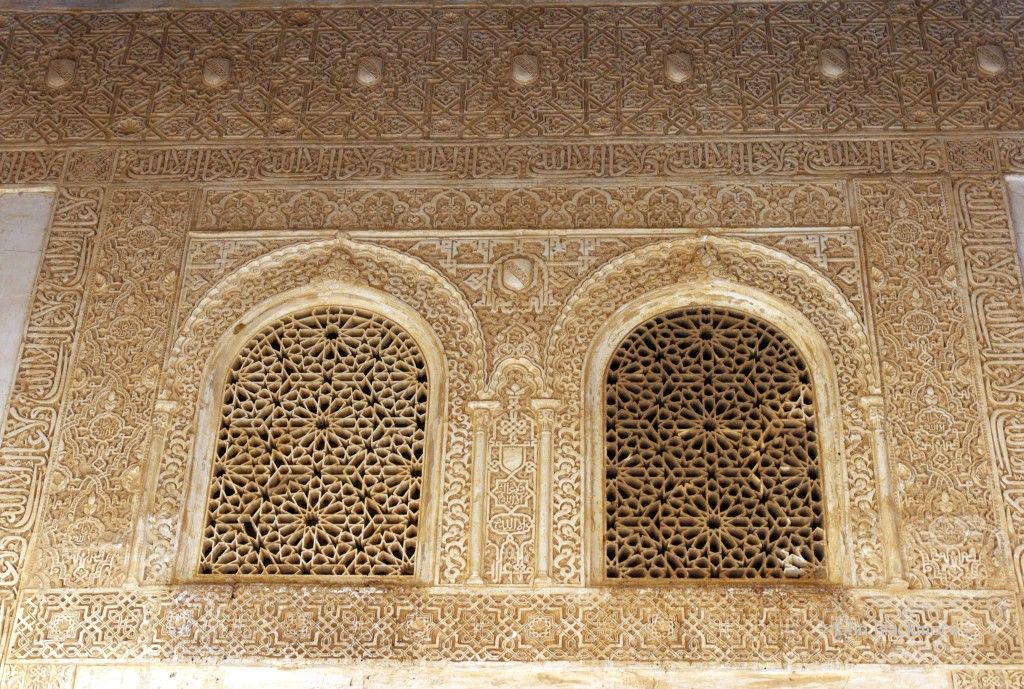
Alhambra, Granada
A couple of hours later, we had walked round some of the grounds of the Alhambra, admired the views of the snow-capped Sierra Nevada, detoured into an exhibition of Mariano Fortuny’s 19C Andalusian sketches and paintings which felt just right for the occasion, and also the archaeological museum, both in the palace of Carlos V, and were waiting for our 16.30 timed entry slot (pre-booked, as recommended) to the Nasrid Palaces. Despite all forebodings that we would be herded round, with milling and squealing crowds continuously posing for selfies just in front of us, it was all so much more beautiful than I had imagined; just as you think you have seen all the most delicate tracery in the Mexnar Palace, then the Comares Palace drips with more and the Palace of Lions stuns. And there were interesting notes on the restoration techniques.
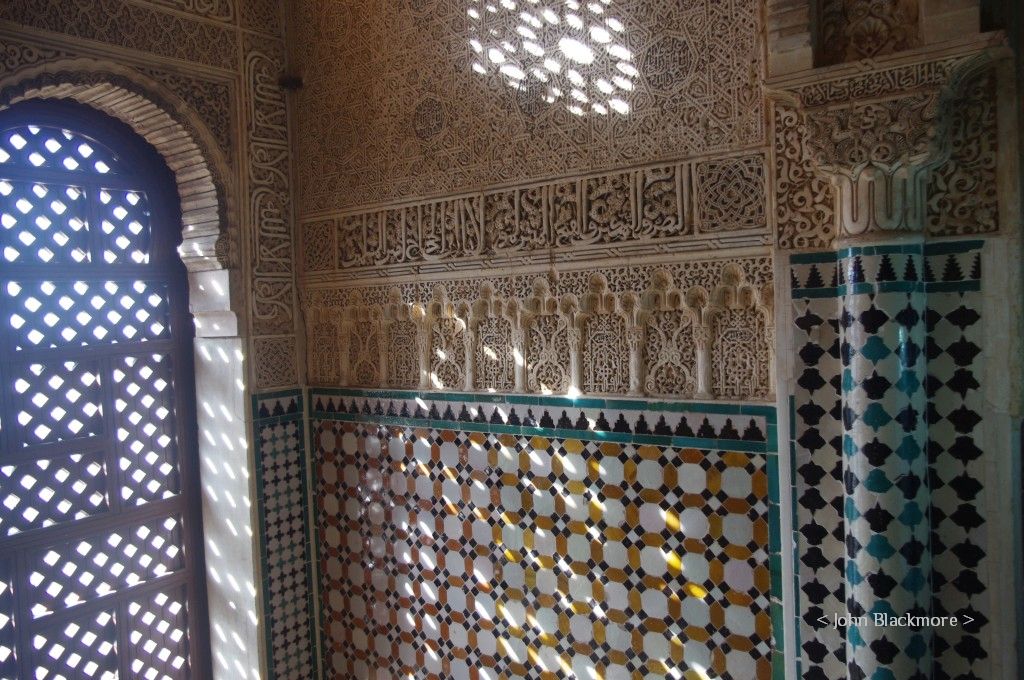
Alhambra, Granada
As we lingered, the crowds surged ahead, so that by the time we reached the smaller, now bare, rooms of Carlos I (1520s), later occupied by Washington Irving there were very few other people. As the palaces closed it was getting cold in the gardens, but we hugged good memories of the exquisite rooms with their white/cream perforated detail, glassy tiled surrounds, Moorish arches, fountains, pools and shady colonnades. Sneering accounts of the over extensive restoration work have not subsequently dimmed the memories. In the evening we threaded down steps and along narrow streets to a lovely (but cold) contemporary restaurant for flavour-filled peppers stuffed with squid and crunchy celery (starter) and main courses of sea bass with fruit and cod, beetroot purée, broad beans and dried bacon.
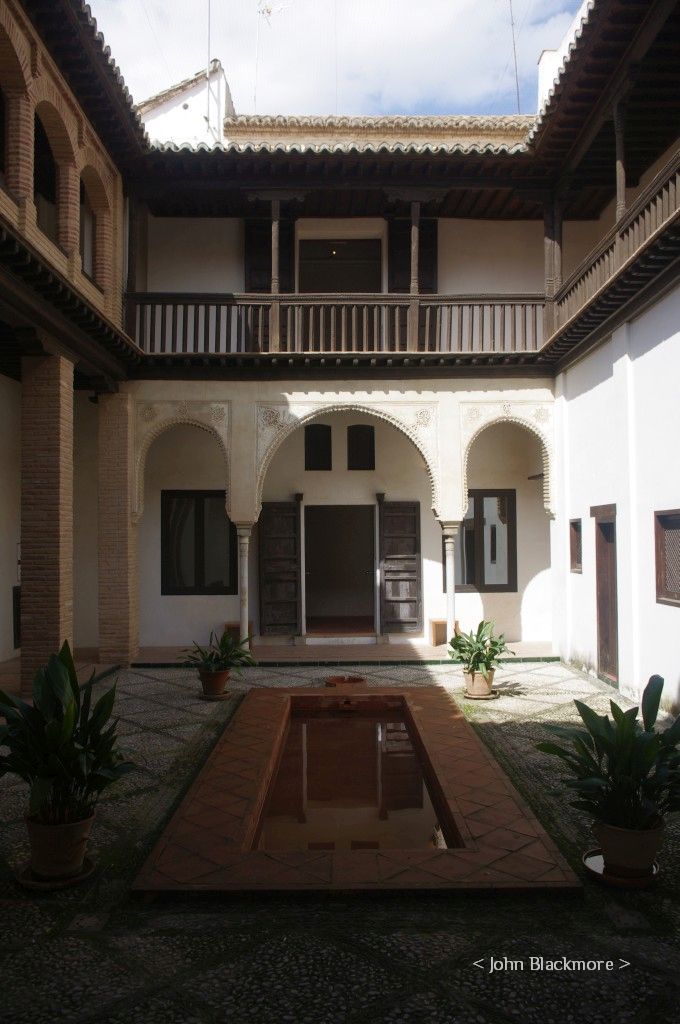
Casa de Horno de Oro, Granada
The next day, having “done” the highlight, we wandered around the narrow winding hillside streets of the medieval Moorish Albaicin area of our hotel. Of course, the sunshine helped, but it was another memorable day. Just along our road was the house of the 20C Belgian painter Max Moreau; it felt satisfying seeing inside the courtyard with its unusual pots and plates, the building with his portraits, the sitting room with its Java shadow puppets and other exotic treasures and the small garden with two black cats stalking and squabbling. Next we, rather on the spur of the moment, joined a small tour of a water museum; it was all in Spanish but from the information panels and enthusiasm of the guide we picked up a bit about the building, the recreated garden, the city’s water supply in Moorish times and the deep cistern in its basement which supplied fresh water (kept pure by turtles, it seemed) to the old palace of Dar-al-Horra.
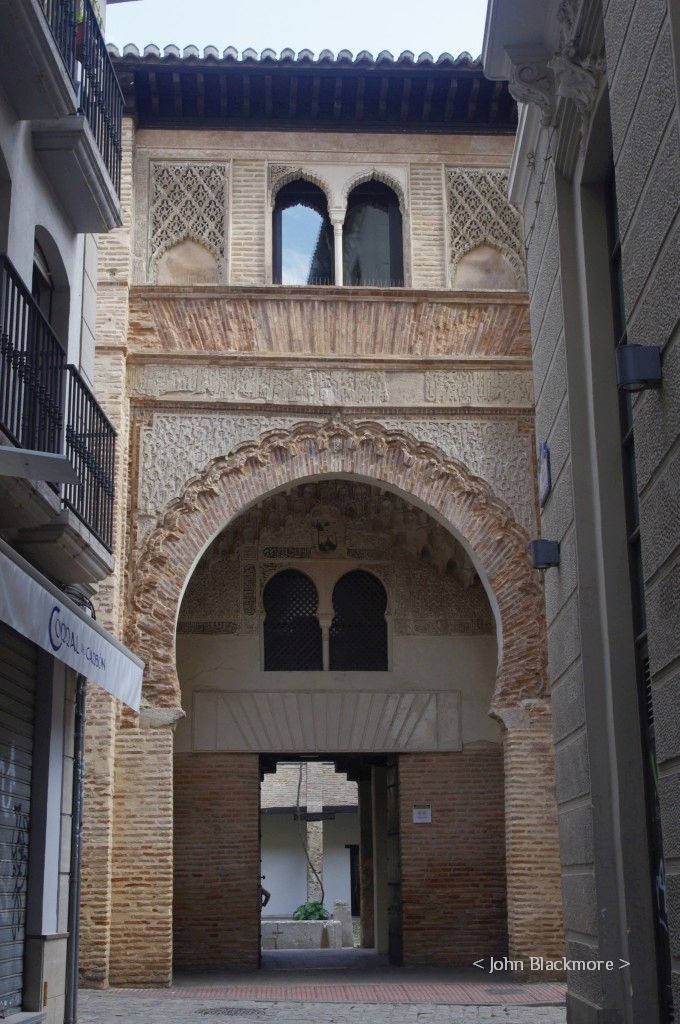
Corral de Carbon Grenada
After that we went in search of the palace. What pleasanter occupation after artists, water and palaces than to relax in a small square with a coffee or beer and survey the world. We also found a bakery with good savoury pastries which we munched as we walked on downhill in search of visitable Moorish houses and courtyards, then the Arab baths and finally the huge balconied fourteenth century hostel and warehouse for Moorish merchants and traders (later used by charcoal merchants and currently by the City Orchestra). After the day’s walking, in the evening we went to Maria’s small bar in the nearby small square for Maria’s delicious freshly cooked “specials”, chicken and raisin pastry, veal in a prune and spicy sauce, and moist pistachio cake.
We’d stopped for a night at Dona Mencia (cold and windy) in the hills between Cordoba and Granada, and had promised ourselves another night in a hilltop village, this time further west in Olvera, half way to Cadiz. But on our way there from Granada we turned off to Antequera. After very uninspiring outskirts and a broad street lined with old churches and shops, we zig-zagged up between the picturesque white houses of the old town till we arrived right in front of the Gateway of Hercules of the Alcazaba. We hadn’t really planned on spending much time there, but having accepted headphones, we both got engrossed in the drama of Fernando I laying siege to the massive Moorish fort, gaining victory and sleeping in the comfort of the keep/white tower (occasional pieces of furniture brought the rooms to life, especially the one Fernando described as lavishly, almost decadently furnished). As a result it became much more interesting than the bare Alcazaba at Granada’s Alhambra.

Dolmen Menga, Antequera
Refreshed by beers and tapas just outside the walls, we drove back through the outskirts to find the dolmens mentioned by our guidebook, as we had enjoyed seeing dolmens last year in south-east Portugal. Antequerra’s three sites were breath-taking in their state of preservation, especially the five thousand year old Menga dolmen with its corridor of huge slabs leading to an oval chamber, columns and five huge roof stones, the whole protected by a tumulus. The entrance apparently did not face sunrise, as usual, but the mountain (Lover’s Rock) which had neolithic cave with wall paintings and probably a religious significance. The tholos of El Romeral, by contrast, had corridor walls of thin stones like bricks and a beehive chamber roof of decreasing circles of stones. Stunning.
In Olvera in our B&B town house on the steep hill, we got a warm welcome from our Canadian hosts and were soon discussing the problems of renovating old rural houses and appreciating our spacious bedroom with its comfortable IKEA chairs, shuttered long windows and narrow balconies, and interesting posters of art exhibitions. Later we walked round the small town, which came to life in the evening, and ate tapas in a packed and noisy bar. On our way back in the dark we saw men rehearsing for a procession, carrying a heavy platform on poles (which would presumably have a heavy silver or gold image on it) and rhythmically edging it back into its store. Is it for a Saint’s day or Holy Week procession we wondered.
Next day on our drive to Cadiz, we detoured to see the cave houses of Setenil de las Bodegas and the dramatic gorge of Ronda and passed further spectacular rock faces on our cross country drive to Arcos de la Frontera, our last hilltop town. There we wound through siesta-abandoned lower streets and emerged, thanks to our sat nav, on an elegant old street of Mudejar (Christian Islamic fusion) houses. A street café with scarlet tables and chairs revived us after the hot drive and we enjoyed walking round the top of the hill, saddened only that the church with the beautiful but eroded Gothic doorway was closed.

But what really grabbed our attention was the young men near our parked car who were lowering their trousers and wrapping long lengths of tightly pulled material round their waists to form corsets, usually with the help of a friend holding one end taut. Near them were two structures, one a heavy wooden platform and the other a lighter metal frame. Despite the lack of carrying poles this was obviously going to be another procession rehearsal. After a lot of standing around, the men suddenly divided into two groups — old hands and novices. The younger men threw their rucksacks onto the metal framed “float”, put on neck protectors like sleeping airline passengers, and crouched under their structure; their different heights were compensated for by slats of wood tied to the bars above their shoulders. 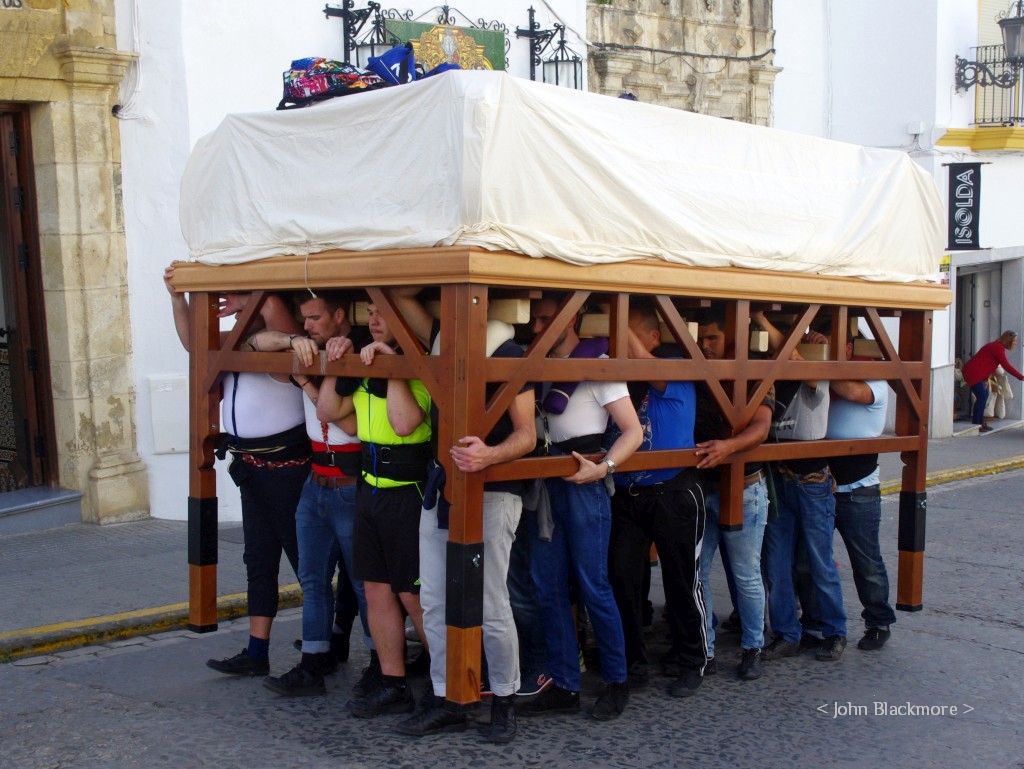 The front bar was banged three times, the crouching figures raised the platform slowly on their shoulders and moved in a swaying rhythm towards the centre of the road then slowly headed uphill towards the church. After a while the brawnier old hands crawled under their heavier, larger wooden structure and adjusted their wooden slats. At the front right was the beefy, confident giant who had helped wind corsets and check fixings. After quiet encouragement they all murmured a prayer, and at three taps on the front bar they shouldered their very heavy burden, swayed into action and were off.
We drove on through a rolling but much barer landscape till we could see signs of docks, then soared across the water on a new motorway bridge to the thin strip of land Cadiz is built on. We reached our large hotel in the ugly new sprawl of hotels and offices outside the old walls in time to walk down to the sea as the sun was setting. Sunday in Cadiz was leisurely and enjoyable, with the café tables in squares packed with people enjoying the sunshine. In one café an elderly red-haired lady at the next table was dressed for the occasion in a leopard patterned wrap with a fur collar, dark glasses and a silver and black patterned cane, while her friend wore a tweed suit, and another elderly lady, this time blonde, with a pouched face and wearing a scarlet coat, waddled past on her husband’s arm. Behind them the bells of the white St Francis church tolled and a black and purple clad procession appeared from a doorway, bearing aloft silver candlesticks and the cross, and entered the church amid obscuring incense or dust.

Market mural Cadiz
Wandering on, we were sorry that the fish market wasn’t active then or after breakfast on Monday morning, but a restaurant owner facing the market collared us to show us photographs of his parents at their market stall and to assure us that he is constantly popping across to obtain fresh fish for his diners. There were some good murals of market scenes on one of the market’s outside walls and a flea market beyond which included a large pile of boots and shoes. In the shady Plaza de Mina, where children were playing and adults chatting on benches, we enjoyed seeing the museum’s Phoenician sarcophagi and other finds (neolithic, Phoenician and Roman), some early twentieth century paintings and an exhibition of fish preservation, ancient and modern.
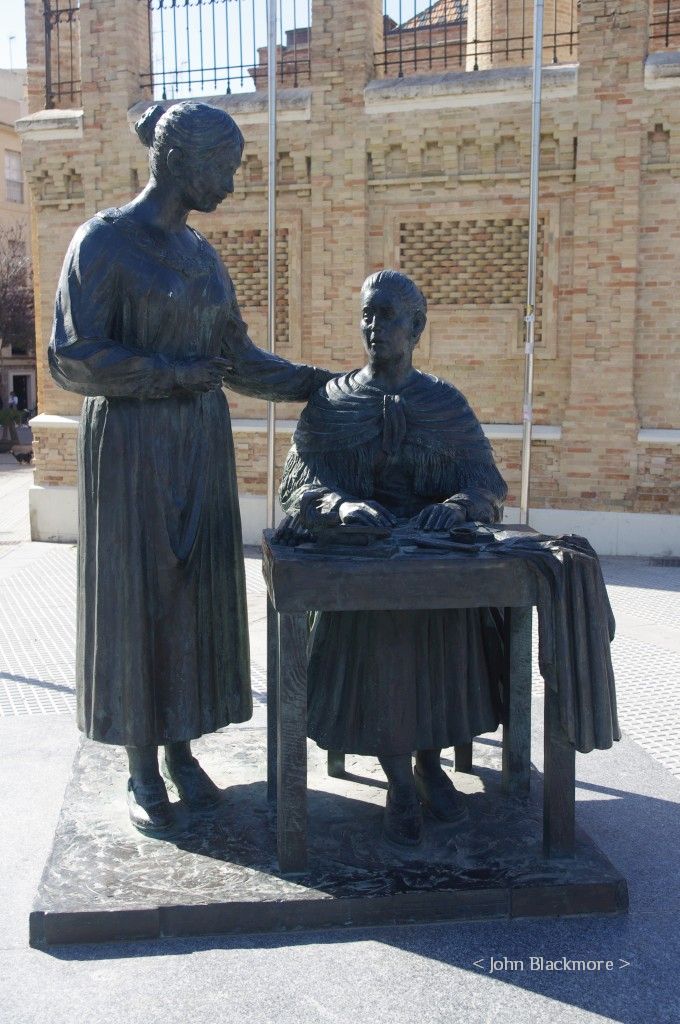
Cigar Makers Cadiz
Unusually, we ate at the same restaurant both nights as it was so tasty and well-prepared. The first night we dined at a table in the restaurant at the back on salad followed by grilled tuna fish or pork stuffed with dry fruit in a cream and onion sauce followed (are you reading this, Dorinda?) by a good three-chocolate tart; the second night we perched on bar stools near the busy preparation counter for tapas of prawns, potato salad, artichokes stuffed with black sausage on apple sauce, meatballs in tomato sauce and barbecued pork and chips; we couldn’t resist finishing off with more three-chocolate tart. We walked back past the tall frontage of the Cadiz tobacco factory and the statue of two women cigar makers and along the peaceful sea front.
In Seville the next afternoon we were hot and panting when we reached the Alcazar after we took the wrong bus and had a 40-minute walk to meet the entry deadline; our dishevelled state, the noisy crowds and the indifferent garden refreshments may have accounted for our finding it less captivating than Granada’s Alhambra, despite the headphone commentary. But when we headed northwards to the Mudejar Interpretation Museum in the Palacio de los Marqueses de la Algaba, we found an almost deserted but recently restored building with interesting displays. Back in our boutique hotel (so boutique that the rooms have names not numbers, the courtyard fountain falls soothingly, a slight smell of sewage pervades and the dim bathroom is a dark crimson with beaten silver washbasins), we could hear a band across the road playing the same funereal phrase over and over. It was still playing later in the evening as we crossed the busy main road to the Bar Plata for tapas. It paused when the church bells of the Basilica de la Macarena rang, then resumed its slow funeral march, while inside the bar we had skating music. As we crossed back to the hotel a large number of people emerged from the Basilica. According to the receptionist the band was practising for Holy Week when the image will process from the Basilica to the distant Cathedral, a twelve-hour epic for bearers, band and followers. At 10.45pm the band sounded particularly loud and we wondered if it would practice throughout the night, but when we opened the shutters, the end of the procession was in the street immediately below and disappearing into the Basilica. The dirge then ceased for the night.
Our last day was varied and cooler. We started with a fascinating tour of the Royal Tobacco Factory which is now part of the University buildings. Our guide was scholarly, fluent and enthusiastic, showing us first the portraits of recent rectors in the Rectors’ Rooms, the stable area of the Tobacco Factory and the courtyard clock which chimed twice an hour, once for the male workers and then for the female workers (who were the first female factory workers in Spain and initially resented by the men) so they could emerge at different times. We next saw the long, dark room, lit by a single window and oil lamps, where the women rolled the cigars on their bared legs, often while feeding babies, a romantic scene to nineteenth century observers, which inspired paintings, novels and the opera “Carmen”. On to the small prison where tobacco theft workers were punished, and finally the tobacco workers’ church where the theme of the Holy Week processions was picked up: the university had decided to form its own religious brotherhood (one of the 62 or 64 Seville brotherhoods which would hold their own procession during Holy Week) and they would process behind their old huge Christ on the cross and more recent Virgin in glory.
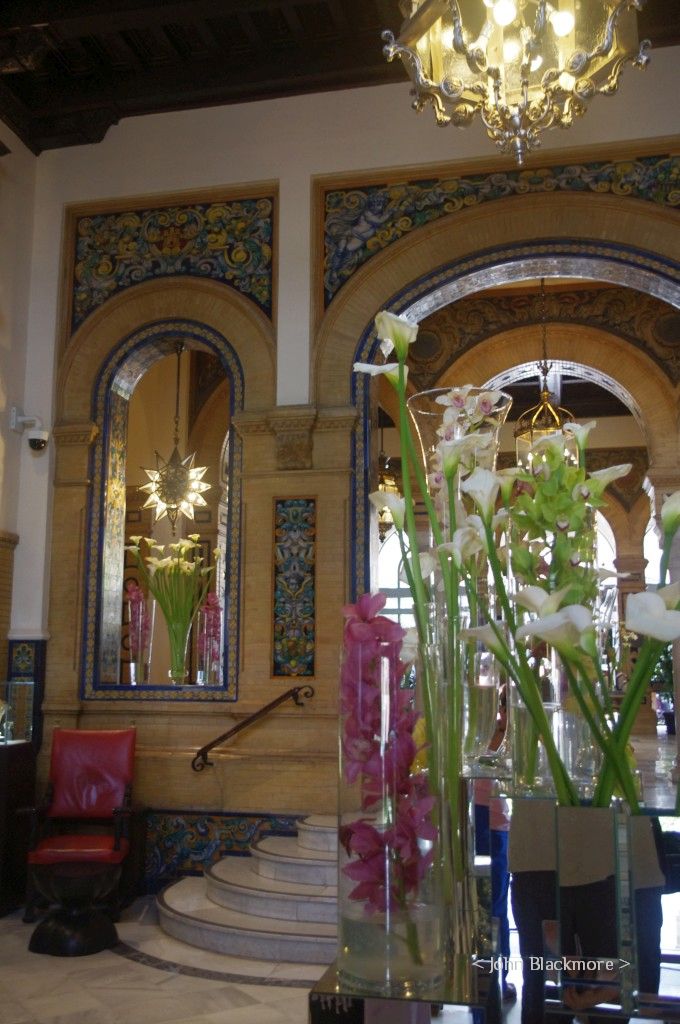
Hotel Alfonso XIII Seville
After all this interesting information, we relaxed over coffee in the neo-Mudejar Hotel Alfonso XIII with its decadent banks of white orchids, then headed for the vast Cathedral which exuded a sense of immense wealth from its silver and gold encrusted altars, chapels and treasury — enough to feed the poor for quite some time.
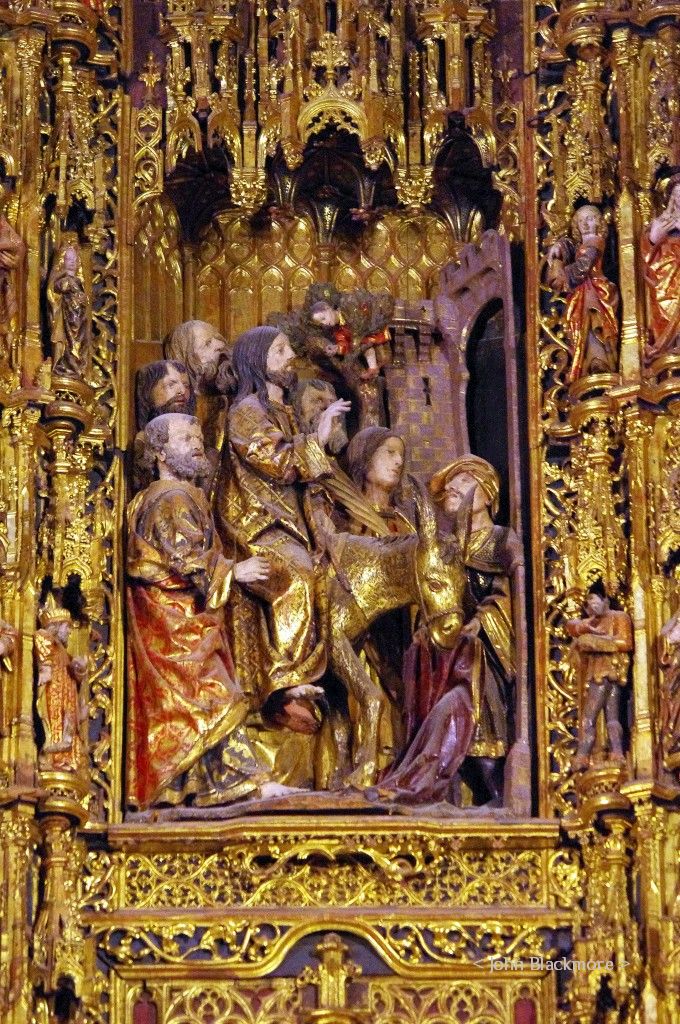
Seville Cathedral
In front of the intricate golden cedar altarpiece an American mother picked out carved Bible scenes for her nine-year-old daughter and, starting with Palm Sunday and the donkey, discussed with great lucidity the events of Holy week. Outside it had got colder and was looking overcast as we followed the tramlines back to the sixteenth century Archivo de Indias, where the short video told us how, before its construction, the merchants used to annoy the Cathedral authorities by gathering below the Cathedral gate to discuss the price of goods from the Indies; trade declined when the river silted up and the merchants moved to Cadiz, the building fell into disuse, declined into tenements and was finally restored in the late eighteenth century for the Archives of the Indies’ documents on the discovery and colonization of America and the Philippines. Currently it had an interesting exhibition of illustrations from Poma’s account of the conquest and conversion of Peru. Half way back to our hotel we warmed up with coffee/beer and a shared chocolate brownie. In the evening our holiday finished perfectly when we met up on the Alameda de Hercules with John and Wendy, who had just returned to Seville from Cordoba, and we enjoyed exchanging travel impressions and family news over congenial tapas at the Arte y Sabor restaurant. The band was not rehearsing outside our hotel that night.
We returned next day to Entre-deux-Eaux to the sad news that Madame Laine’s sister Giselle had died after another nasty fall while we were away. On a happier note the cowslips were pretty in the orchard, and wood anemones starry under the hazel. Since then it has been warm and sunny for gardening, and the lady’s smock are also out in the meadows and the damson trees are white in the orchard. And now we need to pack for our next Letchworth visit.