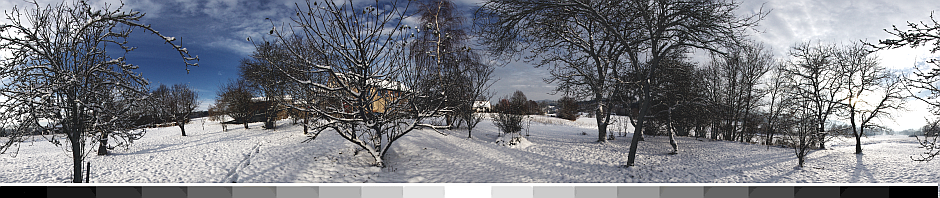
Lethargy, marriage and mosaics: Everyday life in and away from Entre-deux-Eaux, April – July 2026

As well as the highlighted links in the text,
there is comprehensive set of photographs of the
Italy and Switzerland trip
including the World Heritage sites
Biblioteca Queriniana Brescia
Capitolium Brescia
Santa Giula Museum Brescia
Massi di Cemmo archaelogical Park Capo di Ponte
Naquane Rock Engravings National Park Capo di Ponte
Seradina-Bedolina Parco Archeologico Communale Capo di Ponte
Saint John Convent Munstair

The printable PDF of the text is E2E2026no2.pdf (six A4 pages)

14 July, Bastille Day. Normally the scene of exuberant firework displays. And this year the added excitement of France’s semi-final world cup match in the evening. But all firework displays were cancelled or postponed because of the heatwave and fires. And to add to that night’s disappointment, France lost against Spain.
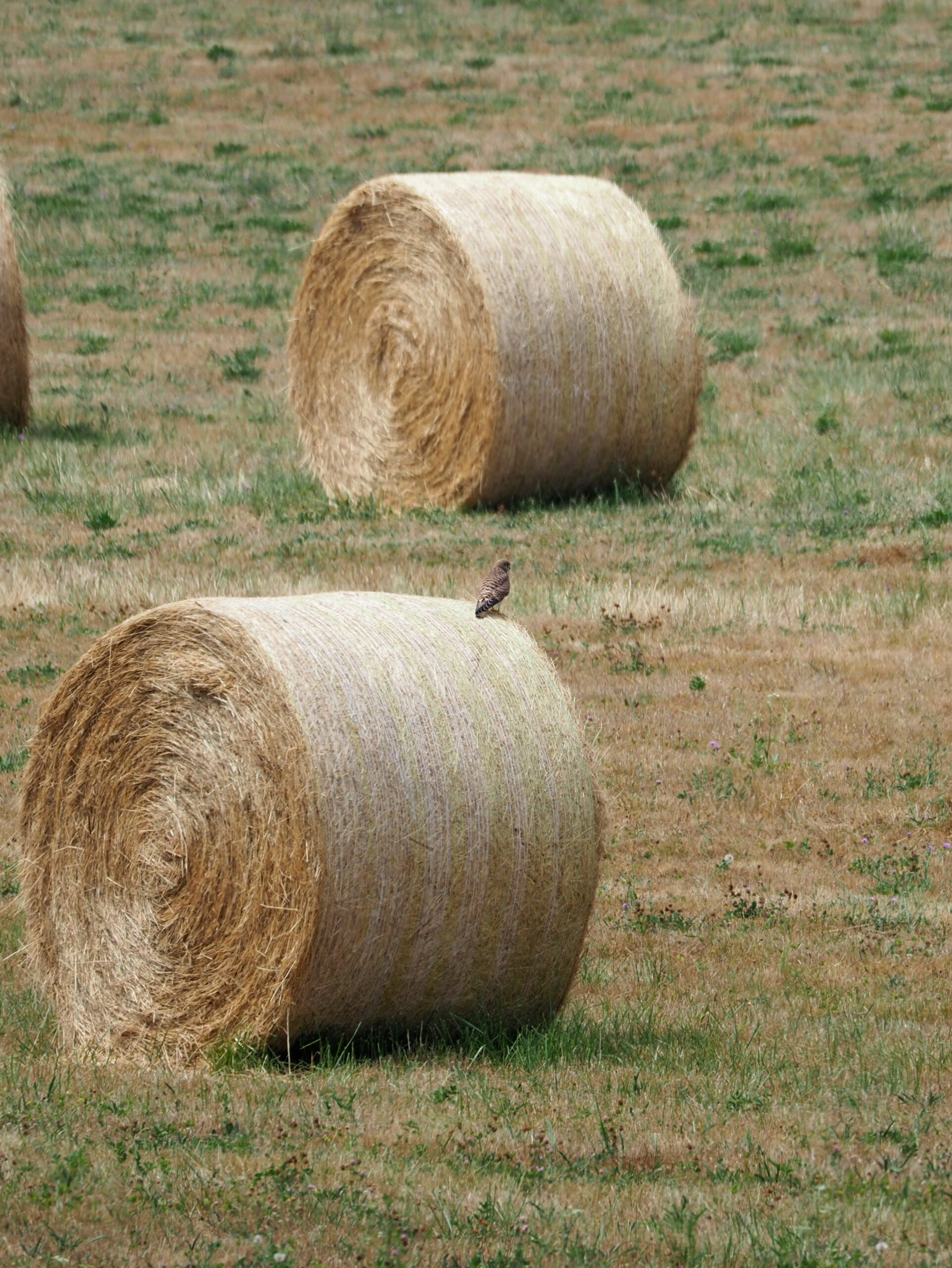
hay bales and kestrel

During the June-July heatwave, or canicule, our everyday life in Entre-deux-Eaux was reduced to pre-breakfast sorties into the garden to pick dwindling quantities of raspberries and blueberries, followed by sedentary indoor activities with the blinds down and several electric fans blowing on high. Neither walks not indoor exercise in temperatures up to 38°C appealed as we reclined listlessly, and most of our contacts also stayed indoors. The June activities of the Marguerites club like the final board games session, the BBQ by the pond and the petanque contest were all cancelled. Feux de Saint Jean bonfires and 14 July fireworks were cancelled everywhere. On the last weekend in June, Saint Dié cancelled not only their Feux de Saint Jean but also the shooting competition, World Refugee Day activities, a canine agility competition, a duck race, and a rock concert. It began to feel a bit like the isolation of the Covid lock-down. Only our medical appointments continued as normal. Outside the farmers worked hard, usually by night, hay-making and adorning the fields with huge golden bales.

But the hay bales were to become a danger. One Friday in July, on men’s semi-finals day at Wimbledon, John was just about to make mid-day coffee when the fans and other electrical appliances stopped abruptly. The radio and computers limped on until the several back-up UPS ran out. Time passed with no coffee and no indication of how long the power cut would last. The tennis semi-finals were far less exciting when watched on a mobile phone screen. The ENEDIS (electricity distribution) web site update stated supplies would be restored by 14.30, but eventually changed and just said the power cut was ongoing, Then, over four and a half hours later, the fans whirred back into action. We received an e-mail from the mairie. There had been a big harvest fire in the fields behind the football pitch that morning, fought by over fifty firemen as it spread towards surrounding forest; the power had been cut as a precaution when an overhead cable was threatened by a burning wood pile immediately below it. Residents were requested to be sparing in their use of water as it had not been possible for water to be pumped through from the nearby village of Saint Leonard during the outage to top up the storage. We were initially surprised that we had not smelt the smoke or heard any emergency vehicle sirens, but the football pitch is about 2.5km away on the other side of the hill, so we were shielded from the fire. Gendarmes have been investigating but it is not known if the fire was deliberate or careless. Of course, this village fire was nothing like relentless forest fires affecting huge areas elsewhere, but it was a local drama.

There is now a strict ban on watering gardens and fields, using hose pipes, filling pools and washing cars. Even commercial car washes have had to shut despite their obligatory water recycling/filtering systems.
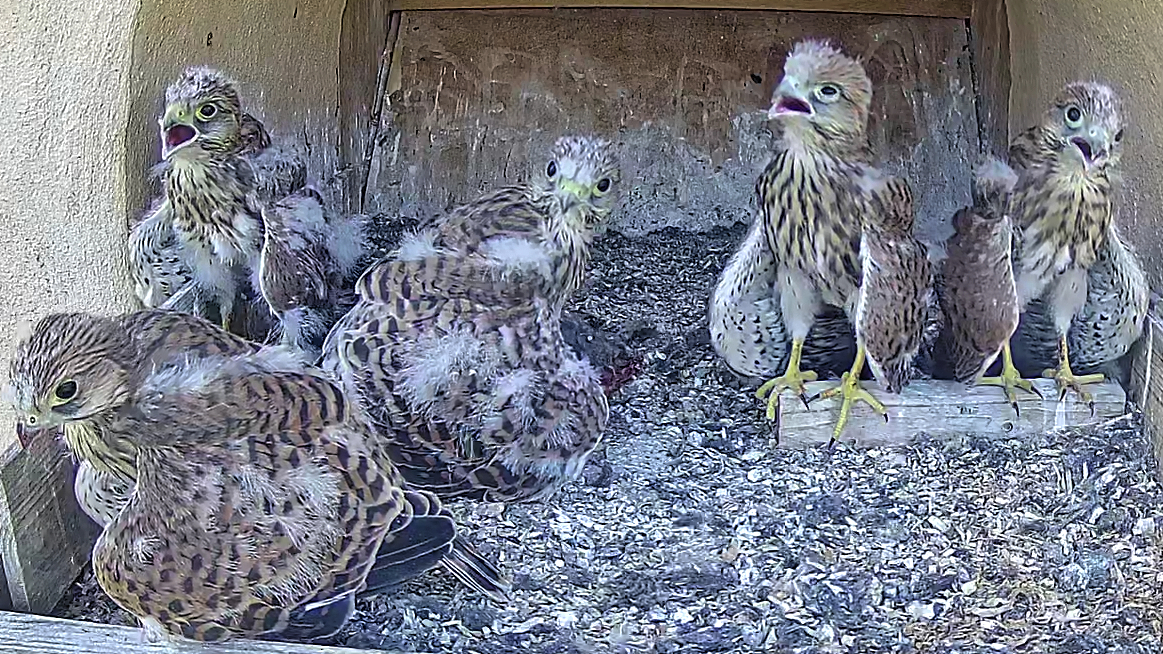
juvenile kestrels 23/6

This year’s baby kestrels also suffered during the heatwave. The first egg was laid on 22 April and followed by five more. All six had hatched by the end of May but the weakest died a few days later. Kestrels only get water through food, and during the canicule, the adult kestrels found it difficult to find food for their chicks. The juveniles fledged at the end of June, a few days later than the usual time after hatching. They are still in the trees around and have occasionally visited their old home on our attic windowsill during July.

One of our rare sorties in the heat was to a local firm, following their engineer’s visit, to sign a contract to install air-air heat pump/air conditioning units on 20 July. But there have been supply delays, followed by holiday closures, so it will now start at the end of August. Meanwhile, after several years, a reduction in VAT from 20% to 5.5% on air-air heat pump units has been announced (it was already 5.5% on air-water heat pumps). Fortunately the end of July has been a bit cooler but there are further heat wave warnings.

During this welcome lull in the heatwave, we have taken full advantage. Helen joined a walk round Saint Dié’s Art Nouveau buildings, and we booked lunch at a couple of restaurants. We have been going to the Frankenbourg restaurant Alsace over the last 30 years and watched it go up market and also gain a Michelin star. We used to see workmen enjoying the menu of the day in the old more basic restaurant. Now it is businessmen in suits who bring their clients to the spacious up-market extension. Their reminder of our latest booking included the words, “to preserve the refined atmosphere of our establishment, we kindly ask you to dress smartly for your visit. Simple and relaxed elegance will be perfectly appreciated.” Would we be sufficiently refined for them? It brought back memories for Helen of those snooty head waiters of the sixties and seventies talking down to clients. Guillaume explained, when questioned after our meal, that he felt that standards were slipping now when clients wore shorts, jogging outfits and football shirts. Acolytes in Selestat had no such requirements, the clients were well dressed, the atmosphere calm and the 4 course menu delicious.

During the worst of the heat, humidity and lethargy of June and July, it was pleasant to look back on Toby and Rachel’s wedding on 2 May and our early June trip to northern Italy.
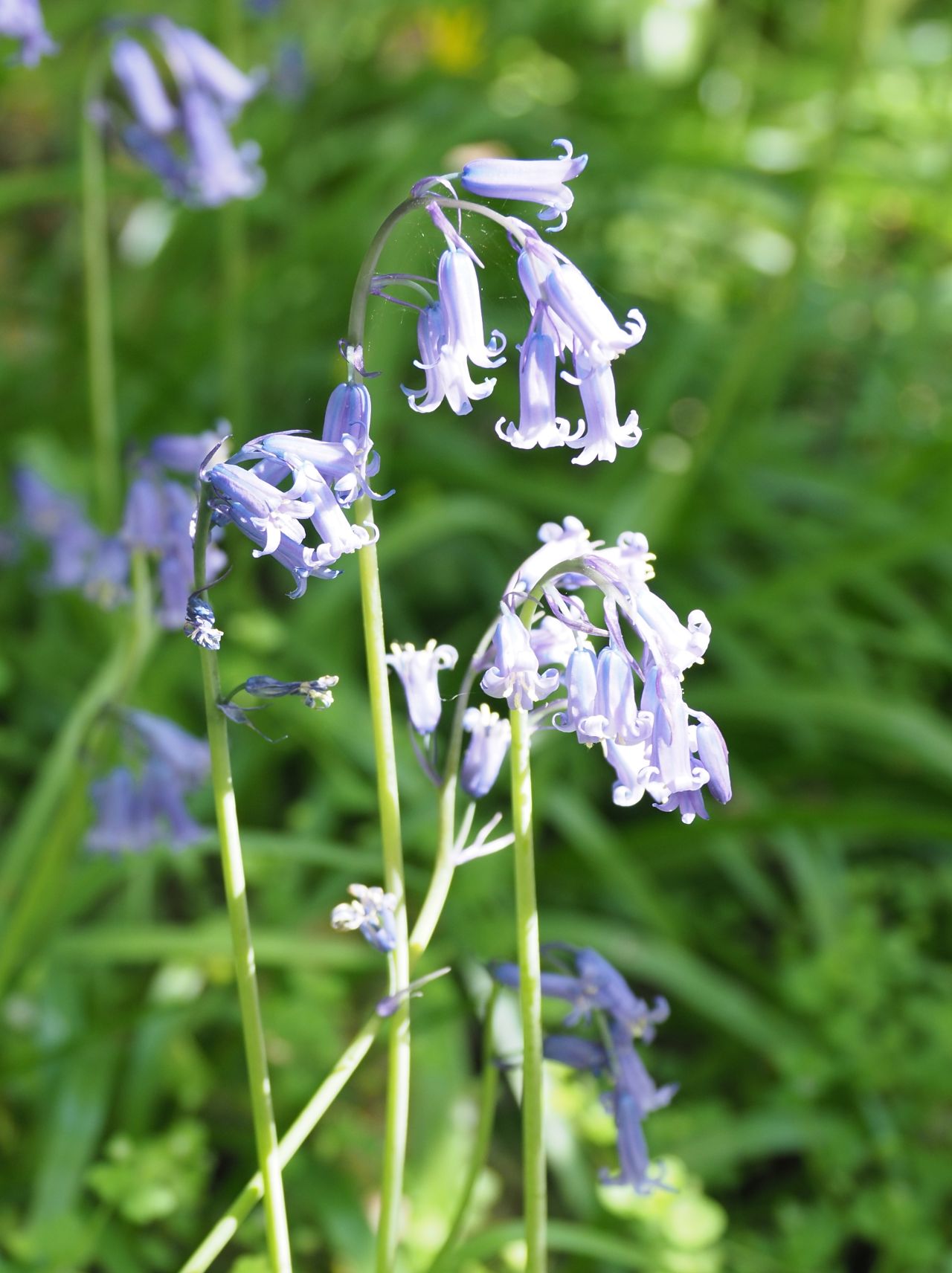
In mid-April we drove from Entre-deux-Eaux, via the Channel Tunnel, to Ann and Derek’s in Tenterden. It is always pleasant to start our UK visits catching up with them, and we were able to co-ordinate our plans around the wedding. Ann also mentioned that the bluebells in the adjacent woods were almost over. It seemed early for them to be fading (perhaps another indication of climate change) as Helen’s childhood birthdays were always celebrated in mid-May with a bluebell picnic. So next morning we strolled into the copse, enjoying the delicate scent and the blue/mauve colour stretching to haziness.

When Toby had talked on the phone about buying suits for himself and for Jacob for the wedding, we started to think about our own outfits and rummaged in our wardrobes for formal clothes. The kipper ties, flares and op-art skirts evoked happy memories, but we soon realised that good food and reduced exercise had taken their toll over recent years. Our elegant jackets and waisted dresses of past years would no longer button up. So our first few days in the UK were spent shopping. John found a suit in M&S on Stevenage’s Roaring Meg retail estate (the name always sounds like a raggle-taggle gypsy-O) and Helen found a dress in the ever reliable John Lewis in Cambridge, but John’s Indian silk tie and Helen’s velvet jacket were relics from the past. (Perhaps we should have worn the outfits for our meal at the Frankenbourg as our contribution to Guillaume’s refined atmosphere)

It might have been well past Easter, but UK supermarkets were still flogging hot cross buns in a wide variety of flavours. We tested some of the less outrageous combinations, but you can’t beat the traditional taste. Remember the days when they were only available on Good Friday? The smells outside bakeries as you queued for freshly baked buns?

With wedding outfits and breakfasts sorted, Helen had a last minute thought. The spokes on her folding umbrella had broken, and it might be unwise to attend a wedding with a defective umbrella. We remembered the torrential rain at one family wedding in the Lake District, the barrage of umbrellas at the lych gate and the bride’s wellington boots. We also recalled a wonderful London umbrella shop. As its website proclaims, The gentlemen of London have entrusted the making of their umbrellas to James Smith and Sons for over 185 years. Whether combining a bowler hat with a Slim Rolled Umbrella in the City of London or using a Solid Stick Umbrella as a walking aid, the little umbrella shop on the corner of New Oxford Street continues to produce umbrellas of the best quality.” But which local shop to try in Letchworth? Charity shops, supermarkets and hardware shops were distinctly lacking in umbrellas. One shop even said it was the wrong time of year for them! However, the staff in the large B&M store thought they might have some, probably in the centre by the garden furniture (no, those were large garden furniture parasols). Finally a bin was found beyond the check-out tills, handy for a wet get-away.

Ann and Derek stayed overnight in Letchworth with us, and we drove up separately to Melton Mowbray the day before the wedding. They had rented an Airbnb, and we were staying in one of the two rooms above the Hammer & Pincers restaurant in Wymeswold, but we dropped off some crémant at Toby and Rachel’s on our way. Toby had just returned from the barber’s and Rachel and Farrah returned later from shopping. It was good to see Toby’s old university friends, Jordan and Ed, again. Jordan would be best man next day while Jacob would be the ring bearer. As the doorbell rang and more friends arrived, we left them in controlled chaos. After we had booked to stay at the Hammer & Pincers, Farrah had co-incidentally started working some shifts there in addition to her shifts at the Tap and Run pub and her college catering timetable, so the owners knew all about the wedding. Later Leila joined us there for dinner after she finished work, along with Ann and Derek.
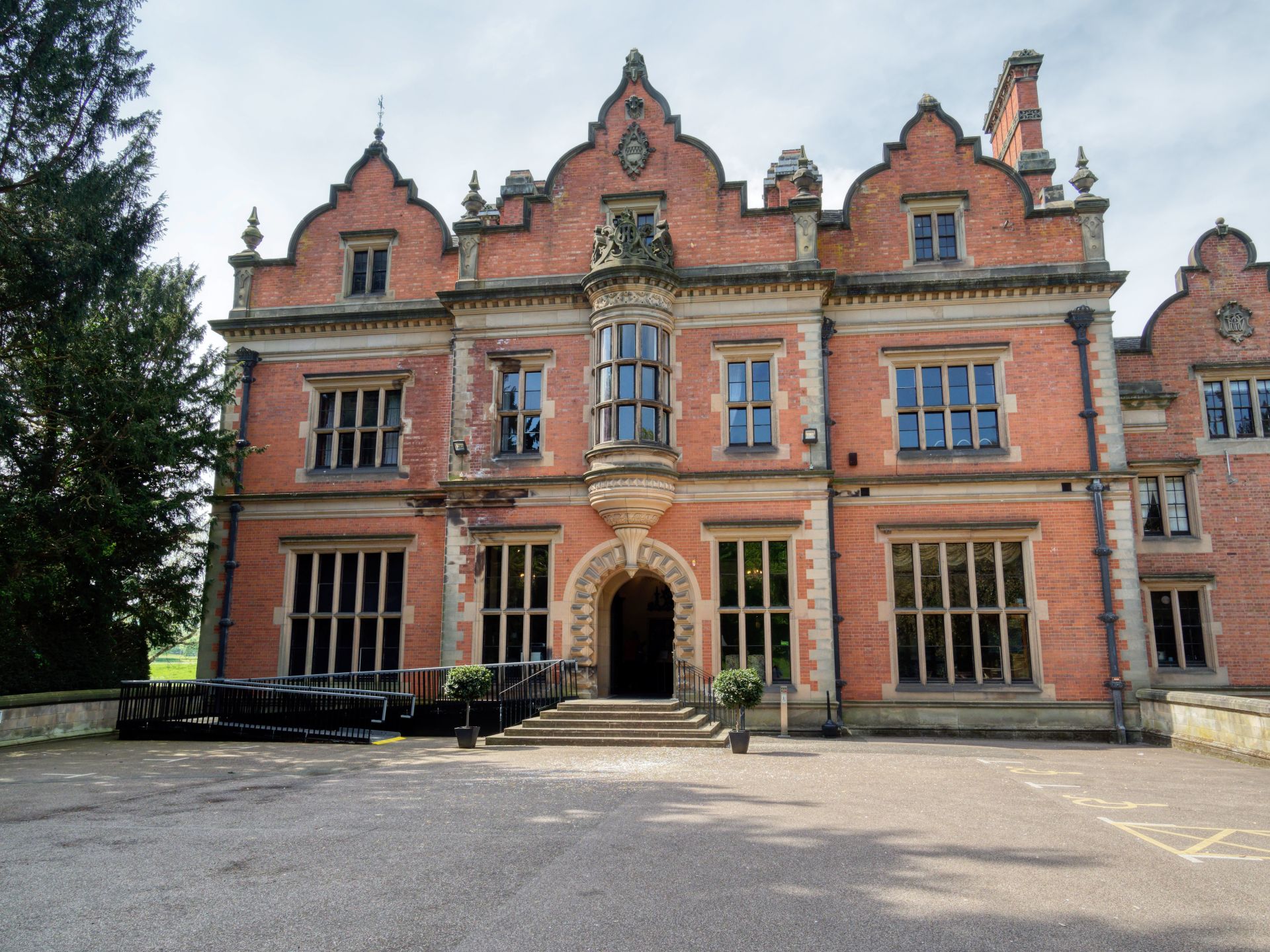
Beaumanor Hall

The wedding day was lovely and sunny. Who needs an umbrella? We had originally pictured an impersonal registry office, but Beaumanor Hall in Woodhouse is an imposing 1840s country mansion set in extensive grounds and the weddings were well spaced out. We had been asked to arrive by 1.40pm. and the previous wedding couple had vanished in an omnibus bearing their names as our wedding party sat by their cars munching the sandwiches they had prudently brought. (We had stoked up at the Hammer and Pincers on the chef’s full English breakfast before being waved off in style to the wedding by his wife). The ceremony was held on the first floor of the Hall, and we swept up a magnificent carved wood staircase which was illuminated by a large stained glass window. The registrar was welcoming and gracious and spoke throughout as if she had known Toby and Rachel all their lives, so it was very personal. Rachel’s three daughters sat together, elegant in their long dresses/trouser suit (Holly looking a little nervous about her reading), and Jacob sat quietly by them holding the ring box. John and Ed were encouraged to take photos. Then tears welled up as Rachel’s father walked slowly up the aisle with his stick in one hand and Rachel on his other arm, Rachel elegant in a white lace dress with a posy of white freesias. The registrar led a really meaningful exchange of vows and love, Jacob quietly produced the ring, Holly read beautifully, and Leila and Rachel’s sister witnessed their signatures. Toby had requested some photos on the staircase with the stained glass behind, and there was also time for some photos in the garden. Then the guests left the splendour of Beaumanor Hall in search of the contrasting-sounding reception venue of the Old Cow Shed in Kirby Bellars.
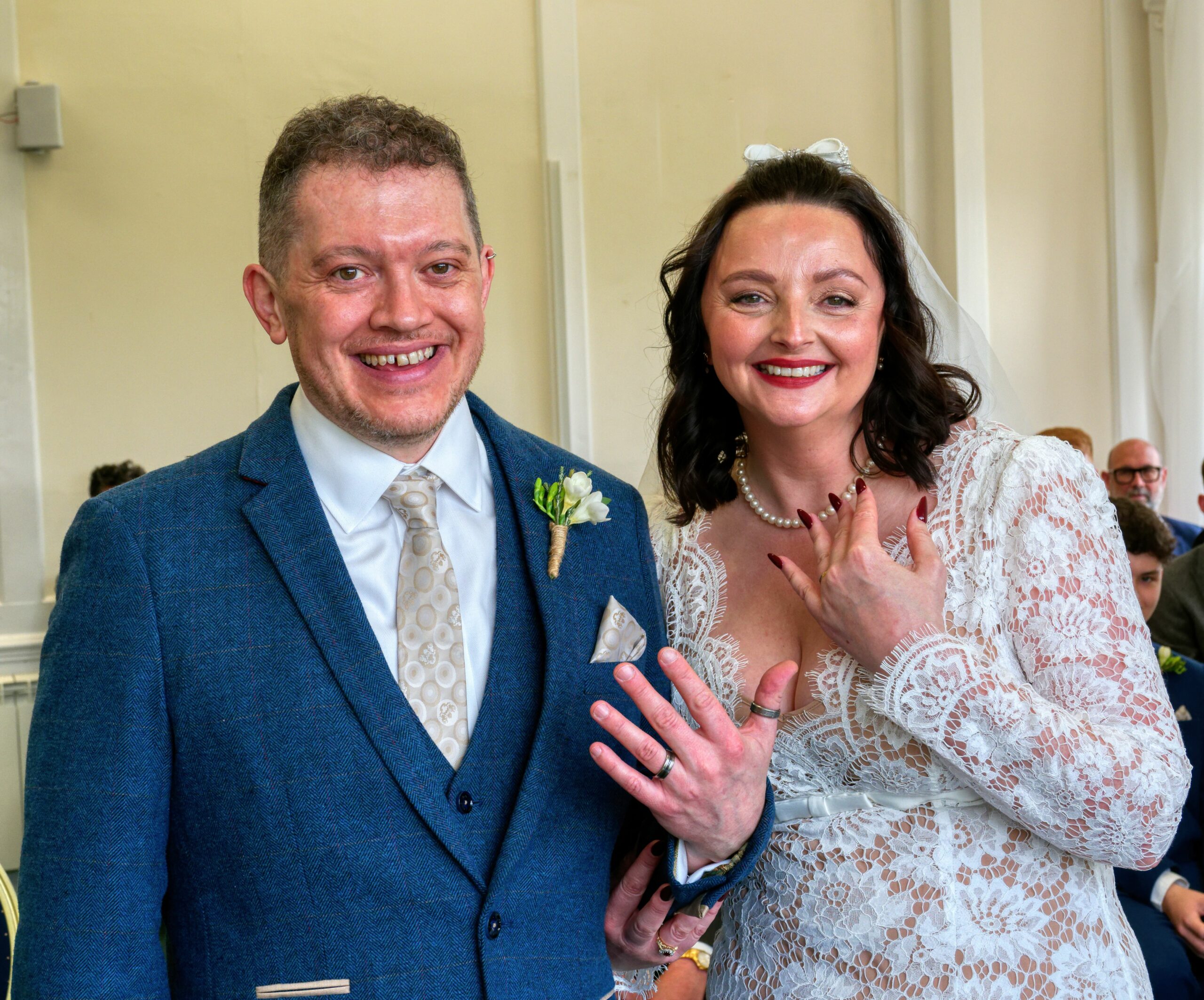
Originally guests had been invited for food back at their house, but the event had grown and Toby and Rachel had booked the converted barns, covered yard and bar of a former farm, which made a pleasantly informal wedding venue where guests chatted in the paddock over bubbly, lots more photos were taken and the best man gave his speech. All this time the sky was clouding over. Most people had retreated to the tables and chairs (and bar) in the covered courtyard by the time the pizza van in one corner started serving. After the pizzas, Jacob organised card games with his cousins, aunts, uncles and grandparents. And then, when we were all warm, fed and entertained, the heavens opened and the roof covering was pounded by heavy rain. And where was Helen’s new umbrella? In the car which was parked in another field. It was late by the time the guests started to disperse after the rain had abated, leaving the wedding party to retire to their on-site stables and shepherd’s hut at the end of a beautiful, happy day.

In the next few days we were able to catch up with old friends in Nottingham over morning coffee, lunch and afternoon tea. Leila also booked a table for Sunday lunch with the three of us, Ann, Derek and Steven’s family in the pub near our former Wollaton house. And we saw Toby and Rachel after their return from the Old Cow Shed. (Their honeymoon was to be in Tenerife a few weeks later). We were pleased to meet up with other friends before we returned to France, though sorry that illness prevented some visits, and that long delays on the M25 reduced our time with another friend before we took the Eurotunnel back to France.

Lac des Quatre Cantons, Lake Lucerne

After the usual medical appointments that awaited us in France, we made some last-minute travel plans to drive through Switzerland to northern Italy, and set out on 7 June. This time we had the necessary vignette for Swiss motorways, so admired the views of Basel from the motorway (remembering our pleasant few days there in March). John had found a hotel off the motorway with views across Lake Lucerne for our first night.
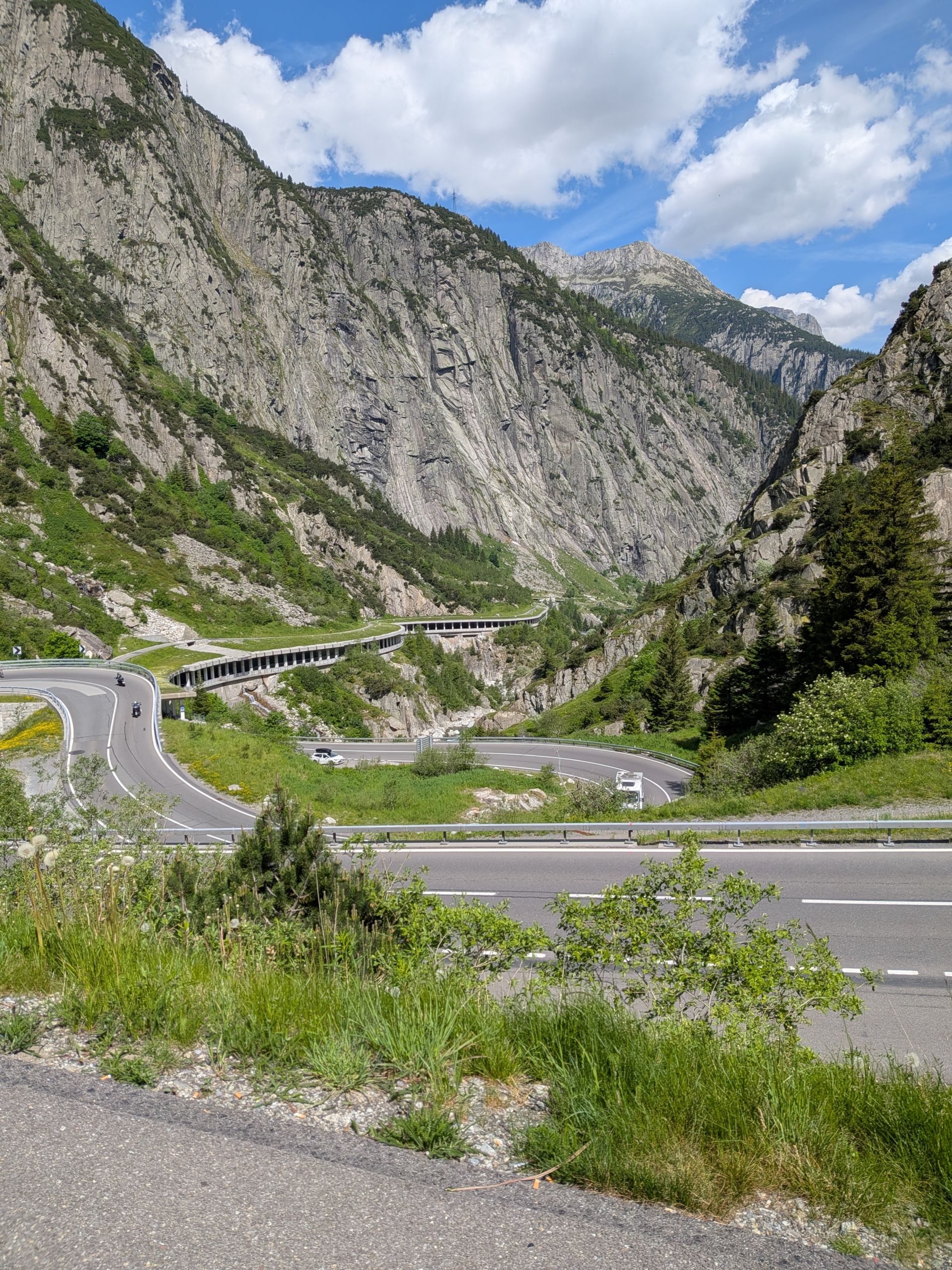
going up the Saint Gotthard pass

The next day we decided it would be more fun to take the road over the Gotthard Pass, hairpin bends and all, rather than queue for the long (16.9 km) motorway tunnel. When we pulled over after one bend to admire the view behind us, John noticed that the car parked in front of us was leaking coolant. The young English owners were already on the phone for assistance, and we do hope they did not have a long wait in the heat by the roadside. The pass itself felt bleak despite the sunshine, and there was still snow to be seen in the crevices, but the views as we dropped down on the other side were spectacular. It was also interesting to be travelling in the opposite direction to our rail journey over the Gotthard a couple of years ago.

Fiat 1100 SM (Gobbone) 1948

We had decided to spend our first days in Italy in Brescia. Mosaics, frescoes, tired feet, re-routed buses, octopus salad, broken sandals, glue and hailstones jostle together in memory. The Mille Miglia vintage car endurance race was taking place that week, so there was little choice of accommodation. We were fortunate in that our ground-floor apartment, seemed newly furnished and equipped; we may have been the first renters. We were on a convenient bus route from our leafy suburb to the centre. But unfortunately all the buses on our first day were rerouted and skirted the centre because of the race, so we did a lot of unexpected walking to reach the Santa Giulia museum and had very tired feet that evening. There were no temporary route maps or revised timetables and the locals were equally confused.

The museum, in a former monastery, was fascinating, though so rambling that among the prehistoric, Roman and mediaeval exhibits we missed one of the chapels with its frescoes and had to go back next day and beg to be readmitted. We found the round Romanesque old cathedral and its crypt more interesting than the adjacent Baroque cathedral, and lingered even longer there when we heard the heavy rain storm outside. We got back to our apartment that evening before a violent hail storm which briefly turned the garden white. Later, John was upset to see that it had also pitted the bodywork of our new car quite badly. The bus route was flooded, with cars sending up arcs of spray as they drove past, and that night’s restaurant staff must have worked hard to restore the courtyard dining area next day. Other Brescia sights included the dramatic remains of the Roman Capitol with the Winged Victory inside, a massive suspended bronze rhinoceros pretentiously entitled the weight of suspended time, and the peaceful Queriniana Library founded by a Cardinal and donated to the public in 1750; in 2026 its tables were filled with students with their laptops, ignoring the shelves of dusty volumes.

Naquane Rock Engravings National Park

Seradina-Bedolina Parco Archeologico

We decided to give Milan and Bergamo a miss in the heat and at the height of the tourist season and next headed north to the Valle Camonica to see some of the prehistoric inscribed rock carvings which have become a World Heritage site. Our accommodation for those two nights was a more basic “bed and living” overlooking the railway line with a breakfast voucher for a coffee and croissant at the nearby Break Bar. As John read some of the more earnest interpretations of the rock incisions in the museum, he wondered aloud whether some of them were just as likely to have been made by bored shepherd boys than as sacred art. Over three days we scrambled round three of the sites in the heat. Some of the incisions were easier to see than others, and we could pick out animals, figures (some with weapons), ploughs, a four wheeled cart and a possible settlement map, but they looked like individual images rather than a design for a whole boulder face.
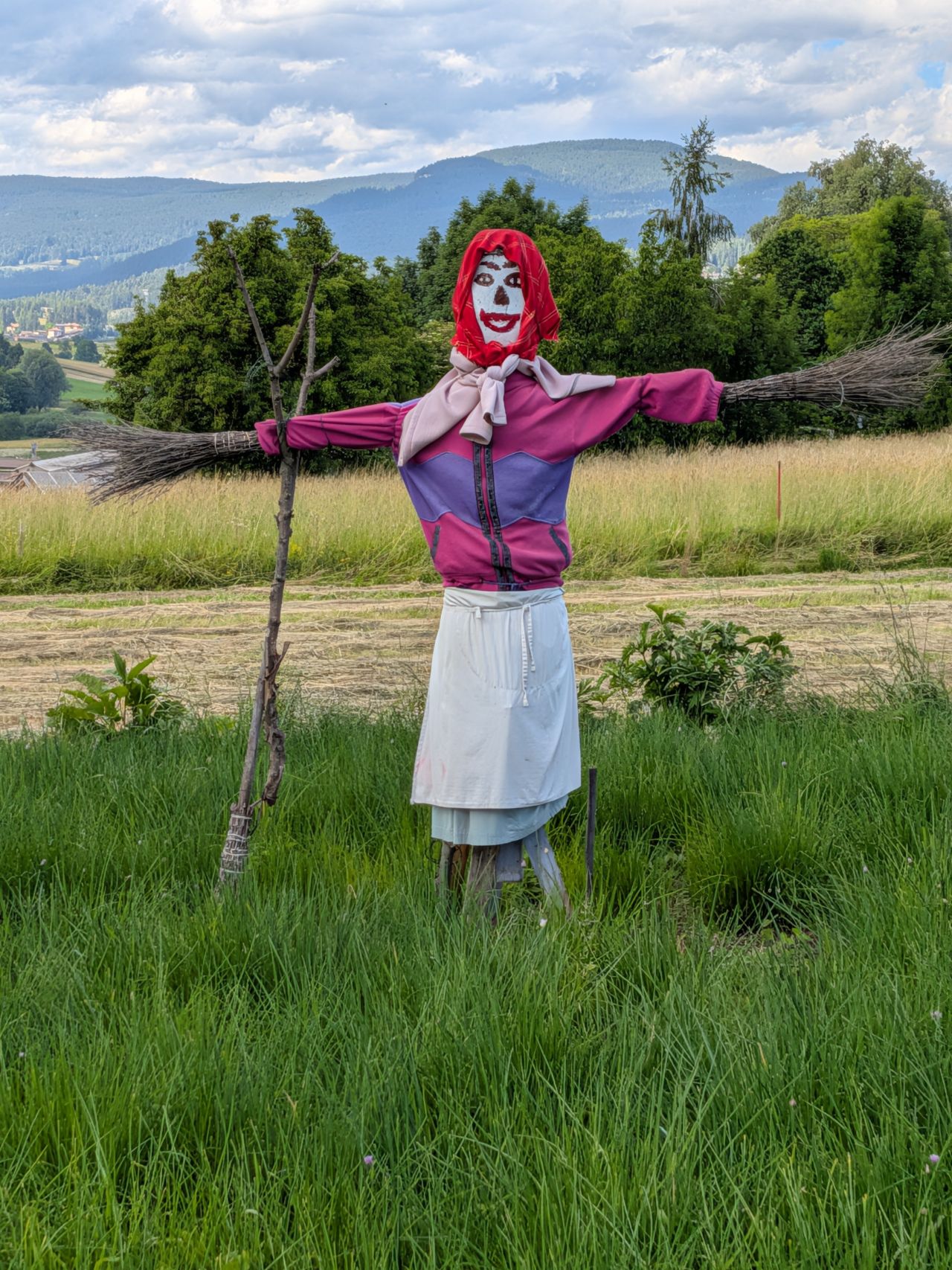
After a week of “culture” we were ready for a day of relaxation. We continued north up the valley, crossed the Paso del Tonale along with the Sunday strings of suicidal motorcyclists, and dropped down into valleys of apple espaliers around Bolzano. The Hotel Rosa Resort with its turrets and wooden balconies and female staff in traditional long skirts and bodices had a bit of a Ruritanian feel. The décor was “Trentino traditional”, with wood panelled walls, ceramic stoves, gilt framed landscapes, embroideries, patterned sofas, curtain swags and candelabra. Roses were everywhere, blooming in the garden, filling vases, and on the walls in paintings. Beyond the rose garden, a cheerful scarecrow guarded the chive patch, a farmer was haymaking and in the distance rose the mountains. The wifi in our room was hopeless, the food hearty, the apple strudel good and G&Ts potent. Jupiter was bright in the night sky above us.
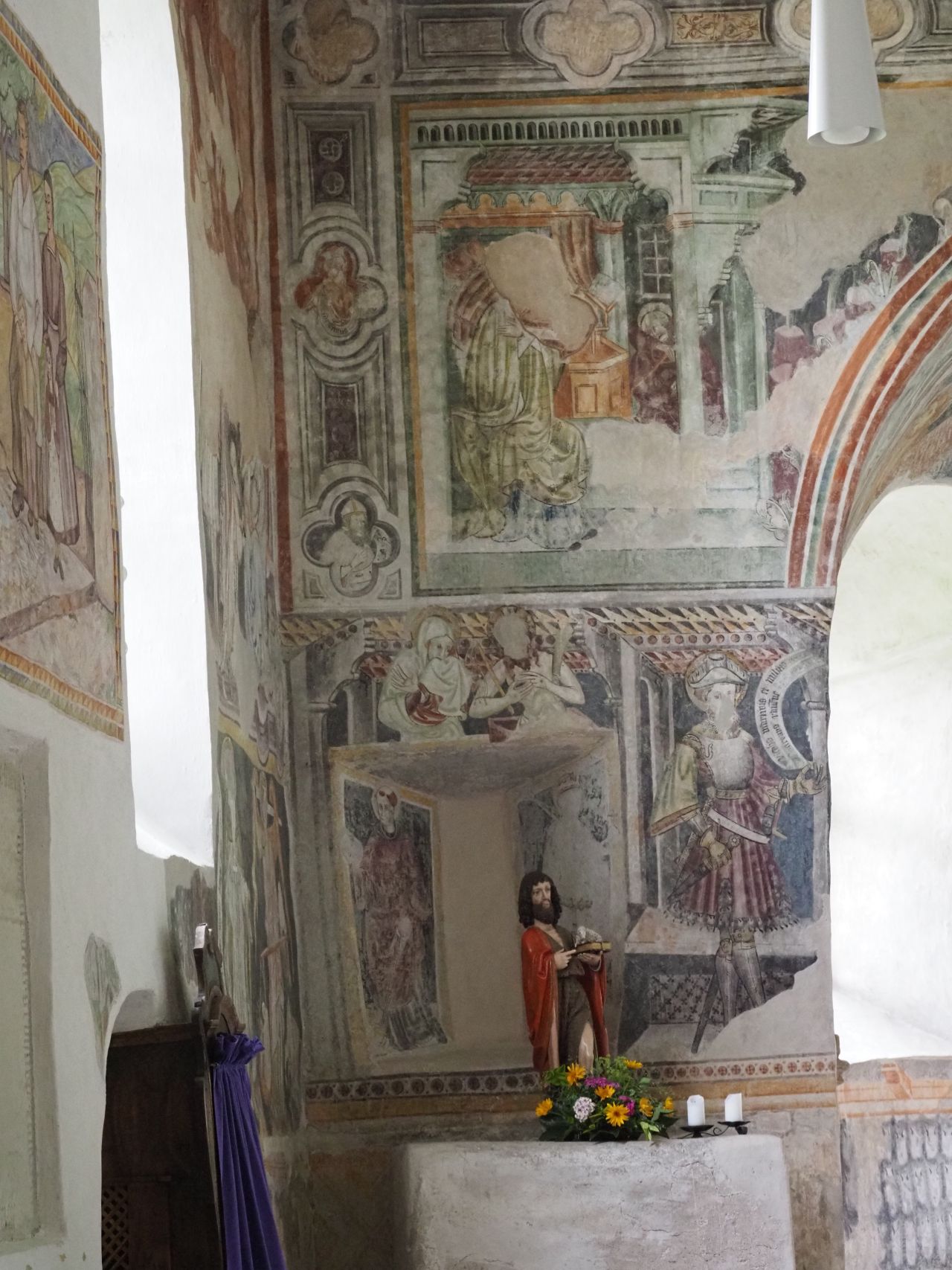
Saint Johann Kirche

As we drove towards the Swiss border after our rosy relaxation day, we heard a mix of Italian and German dialects. We gave the Bolzano Iceman a miss, paused in the thermal town of Merano for coffee, cathedral and the Hapsburg splendour of the kurhaus and concert hall, and ended up at the Gasthof Stein in the small town of Prato allo Stelvio at the foot of the Stelvio Pass. We walked up to its Saint Johann Kirche, but were disappointed to find it locked and the keyholder on holiday. John managed to photograph some of the frescoes from 1420 and 1948 through small patterned glass windows.
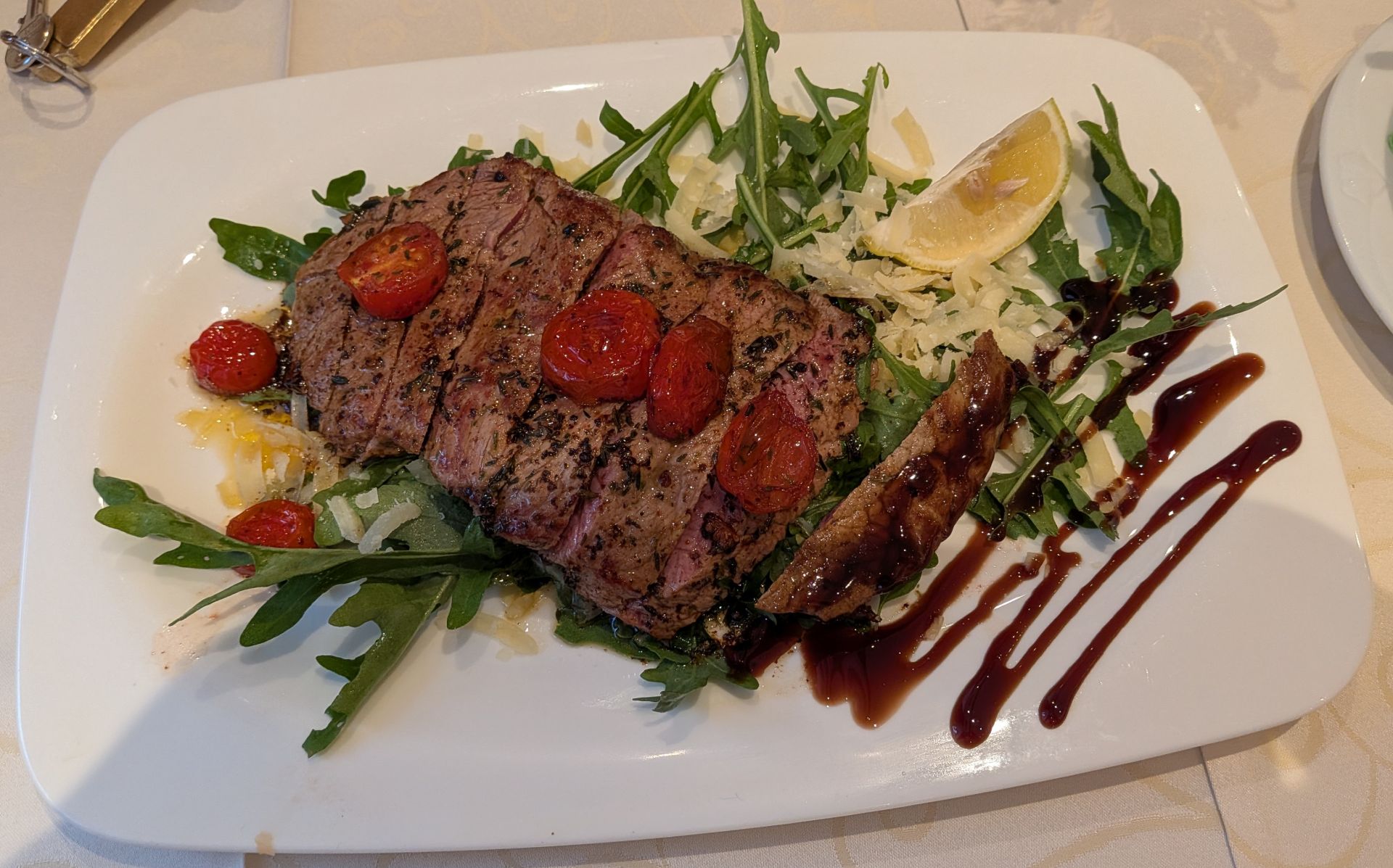
tagliata beef strips

Our last meal in northern Italy that evening was the best of the holiday with John’s tagliata beef strips on rocket, and Helen‘s taglierini and an even spicier apple strudel.
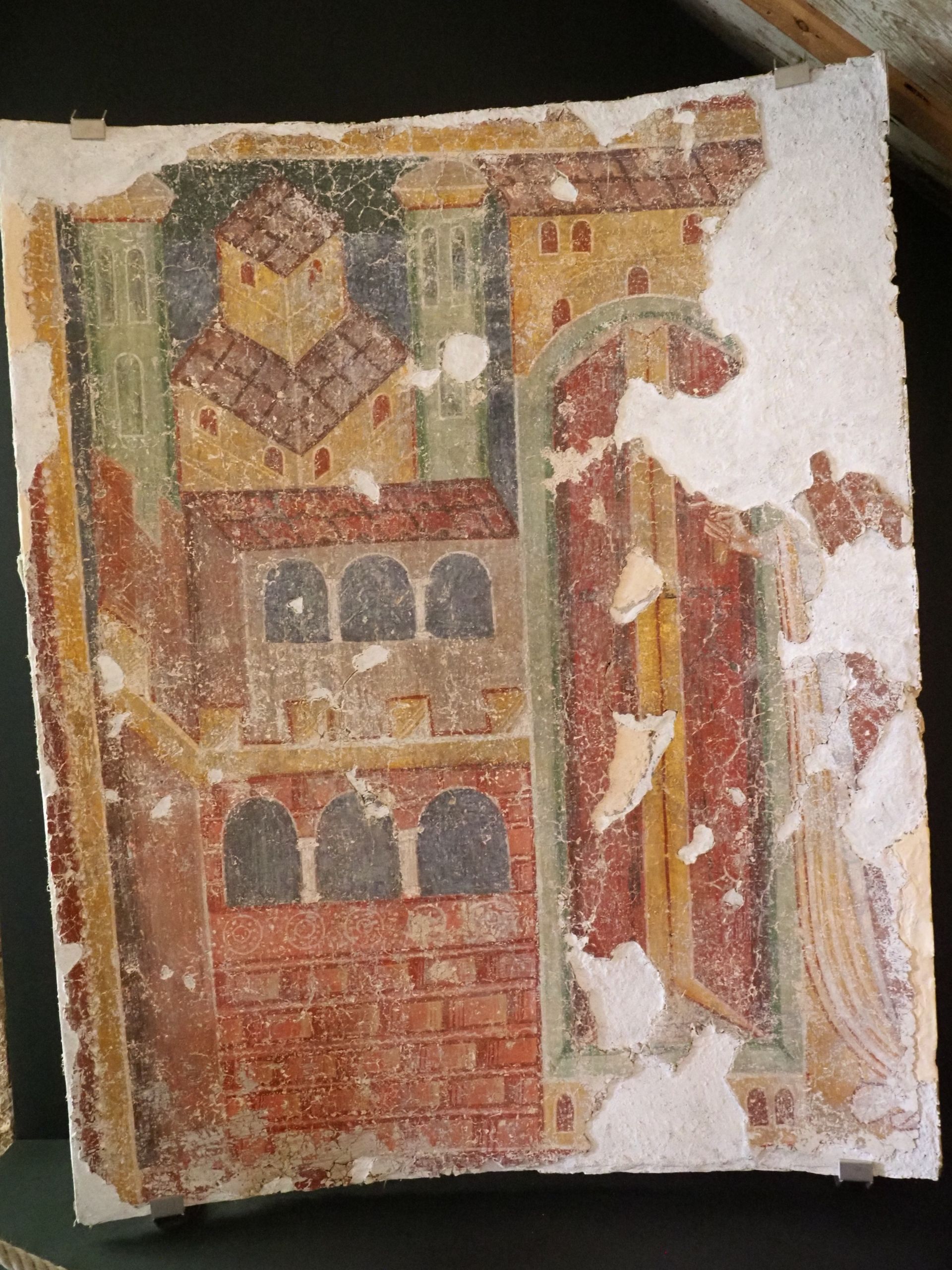
fresco in Munstair convent

We crossed the border next morning to the Benedictine Convent of Saint John of Mustair with its 9th century frescoes. The oldest buildings have World Heritage status, but eight nuns still live and work in other parts and there were recordings in the old cells at the top of the tower of some of them talking about joining the convent and their lives there. The art work of one of the sisters was also on display.
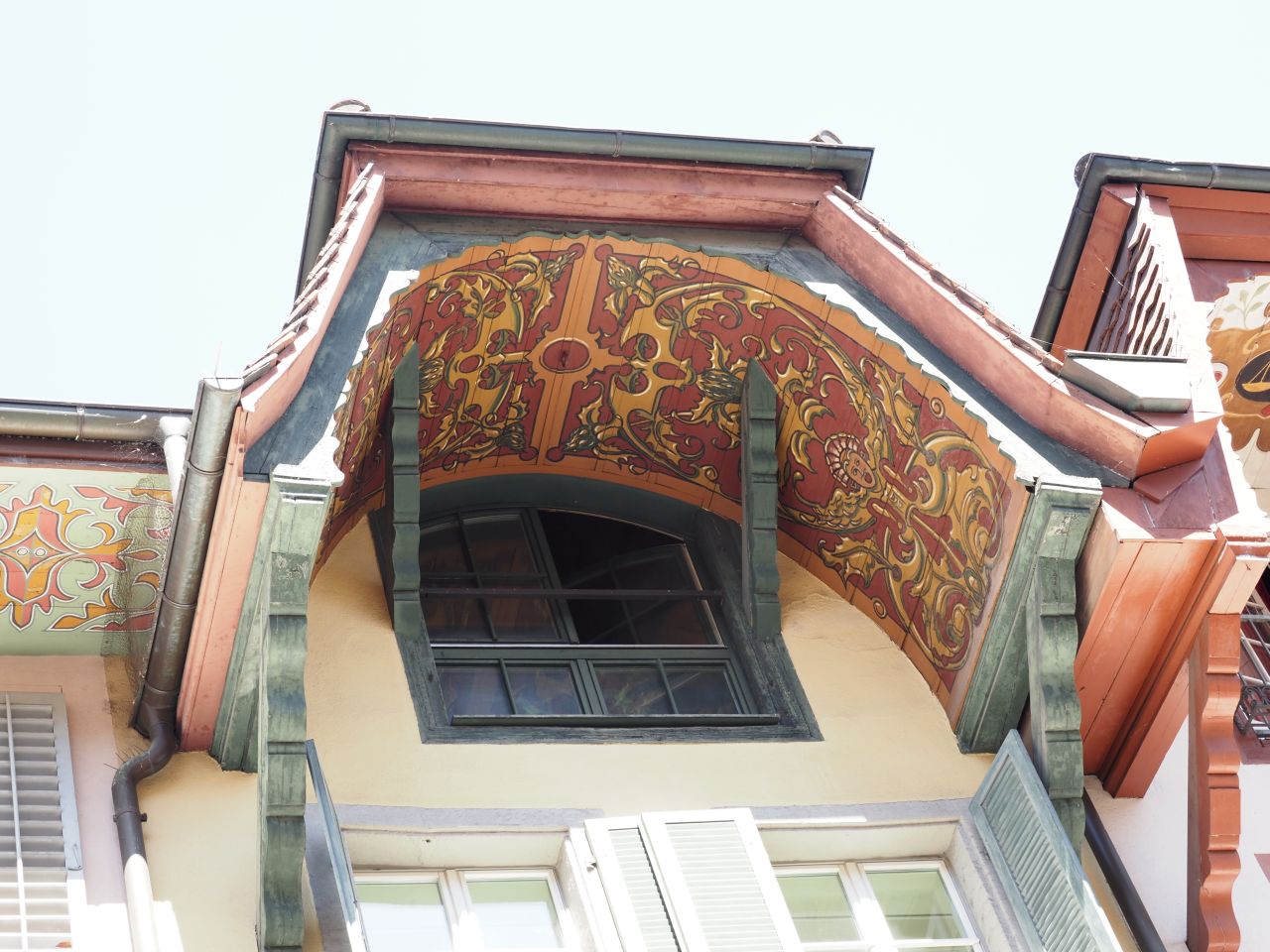
Aarau painted eave

Our last two nights in Switzerland were spent in Davos, which did not impress us, then (after admiring the painted eaves in Aarau) in Olten whose streets were deserted in the evening as Switzerland played Bosnia-Herzegovina in the World Cup. With temperatures going up to 36 degrees, we were pleased to reach Entre-deux-Eaux at the end of our impromptu holiday.

Since we got back, we have had the repair of the Italian-hail-damaged new car assessed and authorised for repair by the insurance. As we sweltered in the heat, it was frustrating to hear that Toby and Rachel in Tenerife and Jessica in Andros were having cooler weather than us! And now, after the welcome few days of lower temperatures, we are in the next round of the canicule in the east.

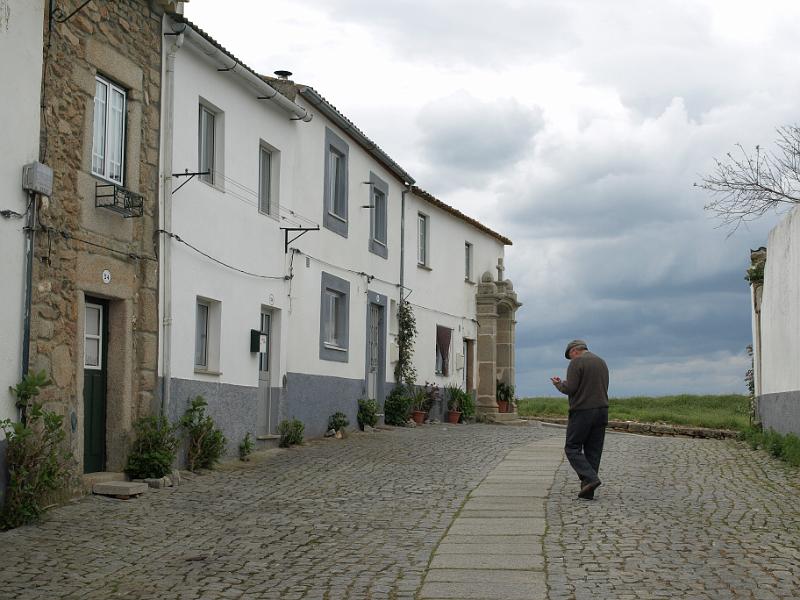
Time out from Entre-deux-Eaux: Portugal, volcanoes, piri-piri and football

To download a printable Adobe Acrobat version click on this link E2EYr8Weeks41-5.pdf (seven A4 pages)
Clicking on a photo will take you to a larger single image.
Clicking on one of the underlined links
(e.g. food) will take you to a selection of photos.

Everyone has their own tale of volcanic ash and the disruption of travel plans. Ours began with a cookery book, Piri piri starfish: Portugal found, which Leila had given John. His bedtime reading of these recipes led to the idea of travelling to Portugal to sample authentic dishes for ourselves. Combine this with our love of train-travel and you can imagine the sequence: book a cheap Ryanair flight in April/early May from Baden-Baden to Porto, then a leisurely train journey round northern Portugal, sampling the wines and food. We would start by travelling up the Douro valley, with its spectacular scenery and branch off on the dramatic narrow-gauge railways up the Douro tributaries…

The plan was doomed from the start. First of all, research into train timetables showed that the narrow-gauge railways had got too dramatic, with fatal accidents, and were currently closed for essential work. And then of course, Iceland suffered a volcano crisis and flights began to be cancelled. We wondered whether we should postpone the trip (but then we’d miss the spring flowers) or drive down (a long journey, but the car would enable us to see more remote areas).

Late that Saturday afternoon, with planes still grounded, John returned with Bluto and a clean bill of health from the car’s obligatory controle technique (MOT equivalent), and we decided to cancel our Porto hotels, forget the train timetables, throw a few clothes in the back of the car, and start driving the following morning. Of course, although we included John’s computer and recent guide books to Portugal, we hadn’t updated our road maps for this trip, so we had a 2004 Michelin road atlas of France, a 2000 road atlas of Europe and our faithful (but already with out-of-date maps) satnav, Gladys. (At a service station we hastily purchased a Michelin map of Portugal). So we were soon struck by how new motorways have opened up swathes of rural France for rapid travel, in a way that the railways must once have done. Once out of Lorraine, we found ourselves careering through boar and deer forests towards Orleans on a motorway that wasn’t even a dotted line on our map book. The other shock was that the days of comfortable family hotels in every small French town seem to have vanished without us noticing, and we were reduced to finding a cheap hotel chain on some industrial estate near the airport on the outskirts of Poitiers (but at least there were no planes overhead).

The road through the Pyrenees, Spain

The road through the Pyrenees, Spain

The following day saw us crossing the border into Spain, between Bayonne and Bilbao, feeling as if the days of the highwaymen demanding every last coin had not vanished, as tolls were exacted every few kilometres. And then we lunged off down another splendid new motorway to Vitoria, with tunnels, soaring bridges, fantastic rock striations and stunning views.

On our third day, we decided it was time to slow down and appreciate a little of north-west Spain before crossing into Portugal, so we spent a morning in Salamanca, enjoying the old cathedral, elegant churches the huge Plaza Major with its outdoor cafés and young musicians in black doublets and hose. Then we drove on to the small hill-top walled town of Ciudad Rodrigo, on the Spanish side of the border. Our room in the Palacio Maldonado (lavishly refurbished downstairs and pleasant upstairs) overlooked the ramparts, a favoured route of dog-walkers, it seemed. But in place of cannons and attacking soldiers, sheep grazed peacefully between the defensive walls, and small black donkeys by the river. The fourteenth century castle, accustomed to withstanding the Moors, the Portuguese and Napoleon, had also lapsed into a more peaceful role as a Parador, and we decided to experience their “taste of the region” menu. By 10 o’clock, when we were ready for bed, the Spanish were just settling down to their food.

We crossed the border into Portugal the next morning. On the original plan, we’d have been in Porto, on the coast. This route felt like the back door into Portugal, – the scruffy route. The well-tended land on the Spanish side changed abruptly to wilderness. Once there had been fields with walls, and there must have been homes. But now it was abandoned. And then we reached the first hill-top fortifications on the Portuguese side – Almeida in its familiar Vauban star-shaped glory. Two vans with hunting horns painted on their sides hurtled through the gates to deliver the post to outlying areas.

Almeida

Almeida

It was a surprise, once we had walked through the impressive tunnelled gateways, to find that the village inside had the air of a Cornish fishing village, with its whitewashed walls and narrow streets. It had undergone a face-lift since the military finally left in 1928. I was particularly touched, as you can imagine, when I paused in front of the library, and was pushed enthusiastically inside by a passing inhabitant, who clearly thought it was one of the marvels of the town. It had been attractively renovated. It didn’t seem to have many books (though an old one was open in a showcase at an illustration of the fort at Agra) but the computers were all in use and chairs were being organised for a meeting or lecture. Down by the old barracks, the fire station was making its own preparations, with firemen busily washing their engines. The subterranean barracks had been turned into a museum with displays of different military periods. The pictures illustrating the Peninsular War all looked like stills from “Sharpe’s Gold”. However, listening to the commentary, it soon became obvious that Wellington’s victories against the French were due not to the fictional Sharpe and his small band, but to the outstanding Portuguese soldiers who Wellington always placed in the front of any attack. At lunch time, the small bar where we were still having coffee (after our leisurely breakfast discussing volcanic ash and alternative land and sea routes with an enterprising English couple) was popular with workmen who were served earthenware bowls of steaming food.

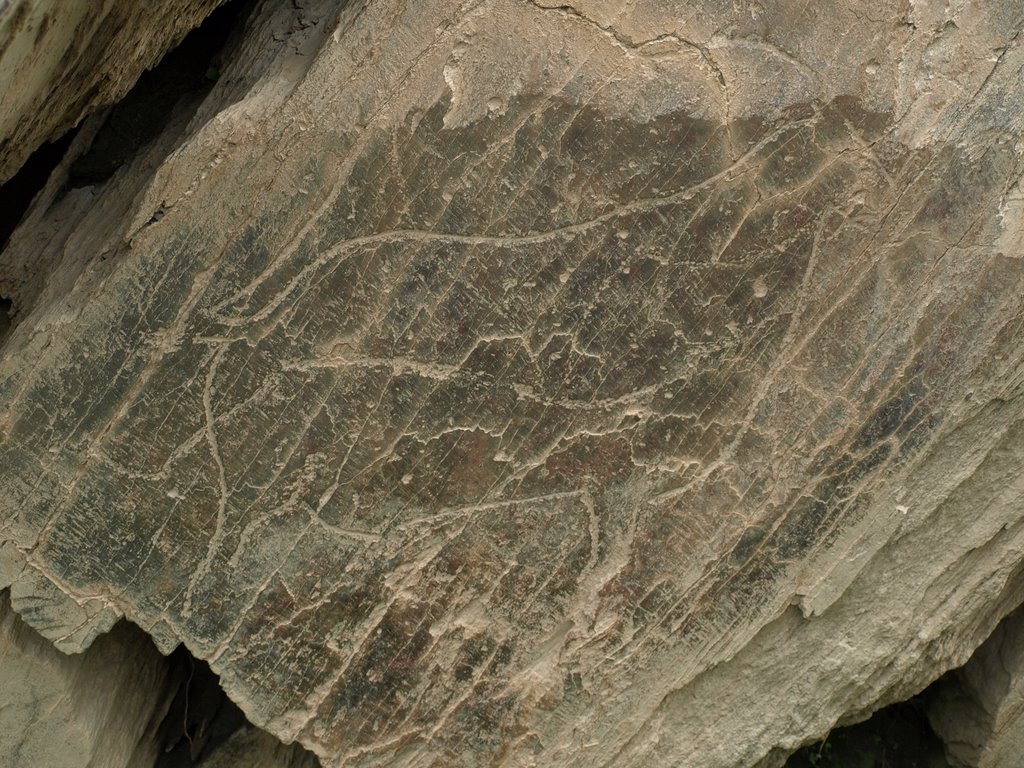
From Almeida we drove towards Foz Coa, enjoying the whites, purples and lavenders of the wild flowers as well as the vines, almonds, olives and freshly ploughed fields. We stopped in Castelo Melhor, and joined four congenial English people (who’d also had to make alternative travel plans) and a guide bouncing down a rutted track in an Archaeological Park landrover to some of the prehistoric rock carvings by the river. These are not in caves (like Lascaux) or under dramatic overhangs (as in the Drakensberg Mountains) but on separate bits of schist rock face, shorn off in places.

Rock carving at Castelo Melhor near Foz Coa

Rock carving at Castelo Melhor near Foz Coa

And, if they had been painted, there is no trace of paint now, just layers of overlaid scraped or chiselled lines. The guide was very good, tracing in the air all the lines we could so easily have overlooked. We examined six rocks out of the hundreds that have been found. They were noticed when a dam was being built, and all work on the dam has come to a halt since. We spent the night in a grumpy hotel in Foz Coa, dashing out in the torrential rain to the nearest restaurant. No sign of chicken piri-piri or hearty casseroles there, so John had good cod and fried potato and I had veal escalopes and chips, both accompanied by a rice and bean mix and a very heady wine.

With rain still threatening next morning we visited more prehistoric rock carvings by the river Coa at Canada Inferno, then headed towards the Douro. We were seduced by mention of ruins to detour along a cobbled narrow track between stone walls, which followed a contour and vineyards round the hillsides for several kilometres. Again the wild flowers were so pretty in the afternoon sunshine, and everything was fresh after last night’s rain. There were no houses and no people apart from some French walkers along this ancient-feeling route.

Roman ruins near Freixo de Numão

Roman ruins near Freixo de Numão

And then, below us we spotted ruined columns and walls. It was a spectacular site, in need of some explanatory panels, but appeared to be Roman, built on Neolithic remains.

As we dropped down from the mountains towards the River Douro, we were engulfed by more vine terraces, and could have drunk our way westwards at any of the great port names, (including Sandeman in his black cape). John had found on the internet a remote agrotourism hotel up in the hills for the night. It was so remote that it was hard to find (Gladys was a star here), and it was great to be welcomed on our arrival with a glass of port and the news that, as it was quiet, we’d been upgraded from a double room to our own stone cottage, with sitting room and small garden. As you can imagine, we can thoroughly recommend this new venture, with its enthusiastic young manager. Apparently his mother does all the cooking, but we never saw her enter or emerge from the kitchen. After a walk through orchards and vineyards and a bath, Mama’s locally-sourced food was served: starters of either succulent black sausage or bread sausage, followed by cod in corn bread or pork in a sweet and sour sauce, and a white wine from the days when it had been a farm. On the TV in the main sitting room Fulham was playing Hamburg, and we sank into the sofas to watch.

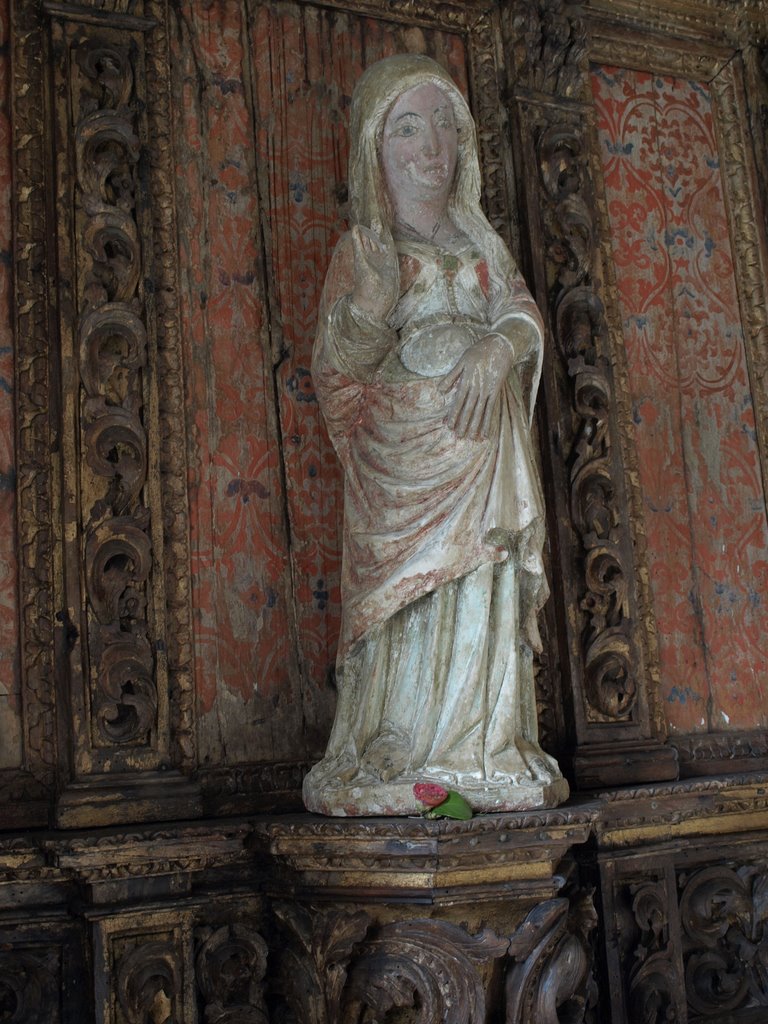
Next morning Mamma’s home-made pumpkin jam was delicious on the freshly delivered rolls, not to mention her chocolate cake. We headed off to Lamego for the day, but it was another diversion that proved the most enjoyable – to the Visigothic / Romanesque chapel of São Pedro de Balsemão (the oldest church in Portugal, we discovered later). We weren’t even sure that we’d found it at first, as from the side it looked a bit like a run-down factory with four-square stone walls. Rounding a corner we could see stone steps and a doorway with coats of arms. We were still uncertain, but once up the steps we were stunned to find ourselves in a small basilica with three naves, columns with Corinthian capitals, a coffered, painted, wooden seventeenth century ceiling, and a beautiful fourteenth century bishop’s tomb resting on recumbent lions.

Pregnant Virgin Mary at São Pedro de Balsemão

Pregnant Virgin Mary at São Pedro de Balsemão

A cheerful lady came bustling in from the courtyard on the other side, wiping her hands on an apron and pointing out all the “primitive” features and the fourteenth century Virgin of the O, the pregnant Virgin Mary. There were also fragments of Roman epigraphs incorporated into the walls, to add to the timeless feels of the little church. But then, alas, time intervened, for she was clearly anxious to serve the lunch she’d been preparing. So we drove on to Lamego and its castle, museum, churches and drab ladies’ and gents’ outfitters. But it was Balsamão that had captivated us. That evening Mama offered a choice between baked octopus and veal followed by strawberries or “pudding” (like a slice of thick crème caramel)

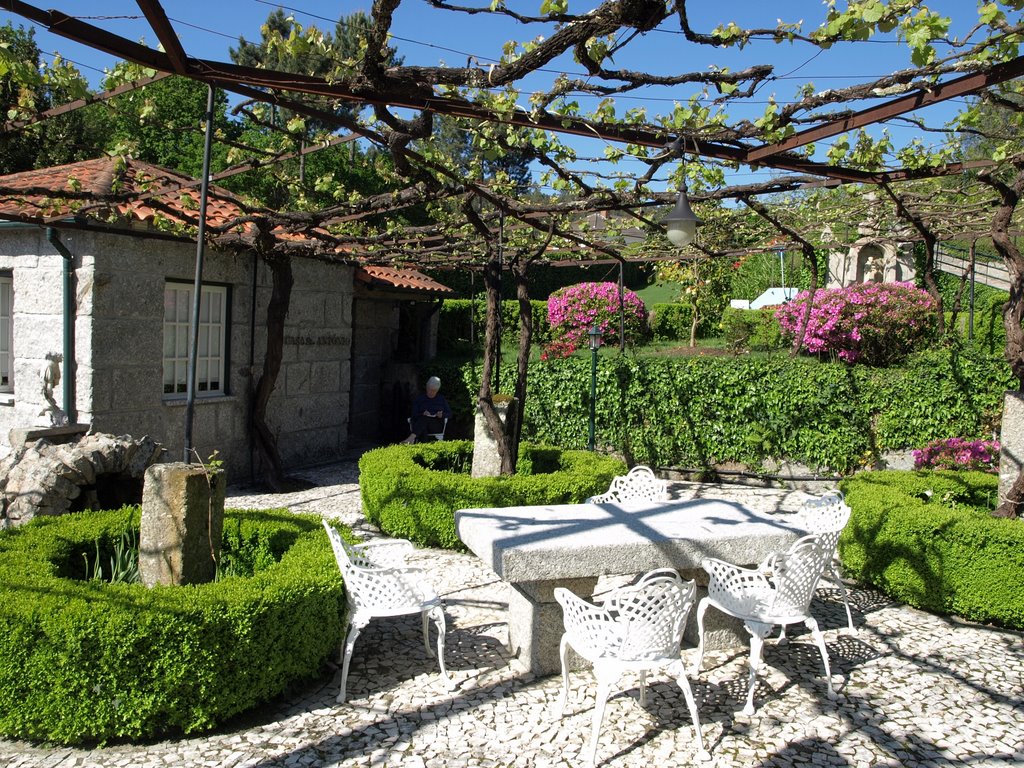
Having really enjoyed two nights of agrotourism, we decided to book another rural hotel, on the other side of the Douro, handy for Braga, the mediaeval town of Guimaraes and the fortified Celtic hill settlement of Breiteros. This hotel was even harder to find with just a name and place, but it seemed to be well known for miles around, as burly workmen in cafés drew us diagrams of how to get back on course and find it (road, town and street signs in rural Portugal are nearly non-existent and both Google maps and Gladys had identified only one place of the same name in the area, which turned out to be the wrong one). From the moment we reached its high walls and gate, we felt there was some mystery about it, which was perhaps well known to the locals. The man who greeted us had the air of a pirate, as he escorted us down the steps from the gate into a well-tended garden of fountains, box hedged paths, vine-covered terrace, red roses, azaleas, rhododendrons, pure white lilies, stone tables and white chairs.

Quinta de Santo Antonio do Pombal

Quinta de Santo Antonio do Pombal

Then his father appeared, and our pirate started to shuffle deferentially. Father struck John as a fallen aristo (and me as a wily lawyer). The odd duo showed us our cottage, which initially felt a bit damp, and then the main house with the sombre dining room for breakfast next morning. Clearly, promoting local foods is not part of their role, for no dinner was provided, and the nearest town of Fafe on a Sunday night was uninspiring. Over breakfast the next morning, father and son hovered in a menacing fashion, watching our every mouthful. It transpired that mother lives in Porto (in two houses), but father acquired this quinta twenty years ago, in some dodgy sounding deal where a friend first purchased but couldn’t afford it.

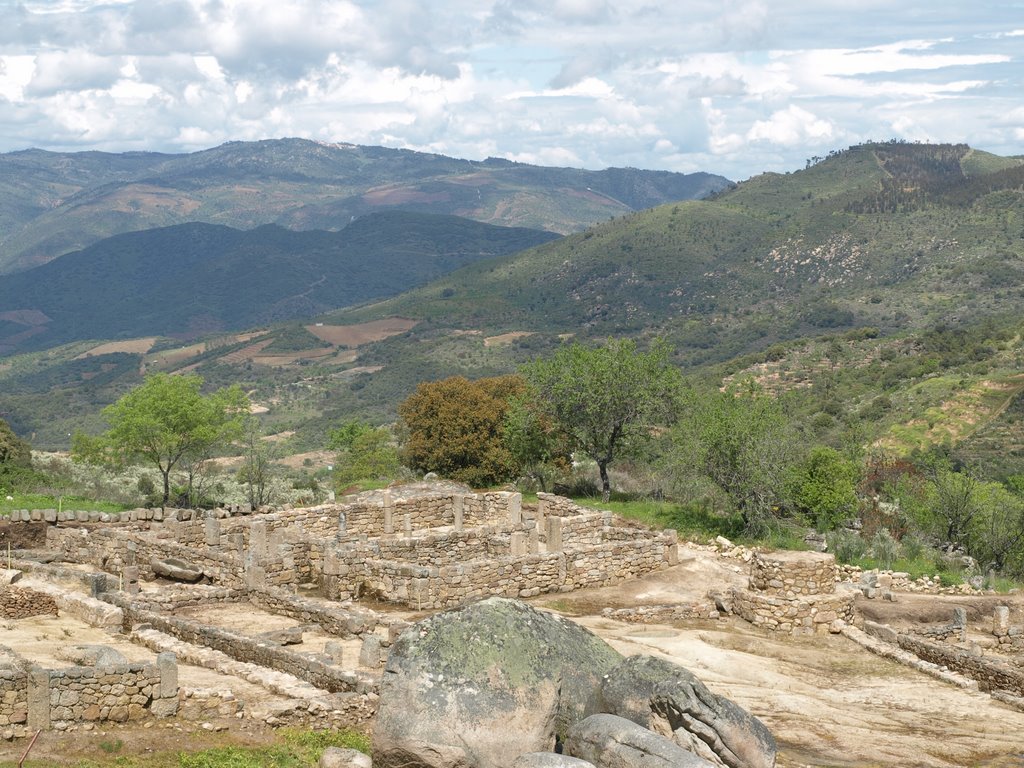
Father was determined that we should see a pilgrim church on a hill with a baroque staircase with fountains, but we were more keen to see the Celtic Citania de Briteiros. This is an amazing archaeological site. We’ve never seen such a vast hill settlement before, nor walls which rise two to three feet high. John suspected the nineteenth century archaeologists of rebuilding many of the walls, when we saw other areas which looked like undifferentiated rubble. We spent a long time there in the heat of the mid-day sun, and also enjoyed the small museum in the village, then drove on to Braga behind a car whose hobbit-sized owner had imbibed excessively. We strolled round Braga, rather overwhelmed by the exuberant jungle of carvings on the cathedral’s organ and the gilded balcony choir stalls. Appropriately, we dined at the Churrasqueira da Se (Cathedral Grill) on nibbles of fishcakes, olives and sausage slices, followed by salad, grilled meat and mounds of rice and chips (chicken piri piri is still proving elusive). The patron on his barstool was transfixed by the match between Braga and Naval (so we added to our scant knowledge of the Portuguese football league), but he leapt off his stool, yelling as Braga scored the first goal.

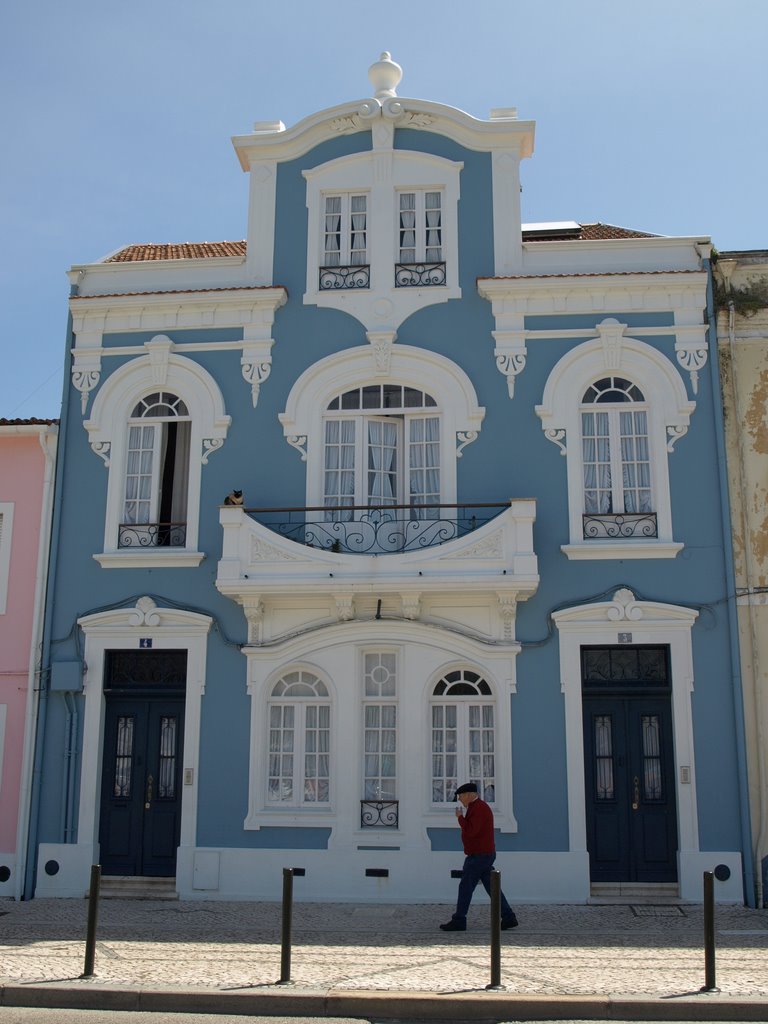
Art deco in Aveiro

Art deco in Aveiro

Next morning, Father was anxious to be handed cash for the two nights’ “hospitality” before he left for Porto, and we were escorted from the gated premises by the pirate. We decided against trying to drive and park in Porto, but crossed back over the Douro outside Porto, stopped for coffee in the coastal town of Aveiro, with its art deco houses and colourful high-prowed boats, then headed south-east towards a night of extravagant pleasures at the Buçaco Palace Hotel (I’d pleaded an imminent birthday when John had expressed doubts). Like so many beautiful things, the walled forest in which the palace is situated, was created by monks. They planted hundreds of species of trees round their convent, as a reminder of Mount Carmel and a symbol of earthly paradise.

Palace Hotel do Bussaco (Buçaco), Coimbra, Portugal

Palace Hotel do Bussaco (Buçaco), Coimbra, Portugal

The flat, dull countryside vanished as we plunged into this lush, hilly forest, with its follies, towers and neglected chapels (along a mossy Via Crucis). We were enclosed in another world – magical, contemplative, inviting. Beneath the soaring trees were streams with decadent white lilies, winding paths, steps, cascades, formal box-edged gardens, and a wisteria walk dripping mauve flowers. And then, plonked in the middle, next to the monks old chapel, was the neo-Manueline, icing-sugar, fantasy palace created at the end of the nineteenth and beginning of the twentieth century. It had the air of a maharaja’s palace, and indeed, some of the blue and white tile pictures inside depicted the Portuguese ruler of India, along with scenes from the battle of Buçaco in 1810 (in which Wellington’s army defeated the French after the Siege of Ciudad Rodrigo, the Battle of Coa, and the Siege of Almeida – had we unwittingly been following the French attack route?). The forest outside was romanticised inside in huge wall paintings of minstrels, ladies, and hunters in the smoking room-cum-bar, whilst the hallway was a riot of carved white Edinburgh rock.

That evening, after a forest walk and a lingering bath, we descended to a dining room which combined features of a large railway station buffet with those of a French château. Amid the array of starched linen, wine glasses and painted walls (sailing ships in misty seas), we ordered a splendid-sounding dinner. But with the wine list starting at 1,000 euro for a bottle red and 800 euro for white (as well as 3,600 euro for vintage port) and stopping at 40 euro, John pointedly ordered beer while I splashed out on an eight euro glass of indifferent white wine. With no chicken on the menu, my companion, as they say in reviews, chose a starter of suckling pig ravioli, giblets sauce and orange zest confit, followed it with a very fiddly-to-eat steamed ray wing with raspberry emulsion, bread pudding with tomato and green asparagus, and still had an appetite for grilled wild boar with garlic and rosemary sautéed potato with cider and rapini purée tartlet (though found the boar dry). I really enjoyed my more delicate suckling pig salad with pistachios, pine nuts and marinated figs in Douro Moscatel followed by gratinated scallop and sautéed tiger prawn with pennyroyal leek confit. When the dessert trolley rattled up, we both chose the tropical fruit tart and a slab of ice-cream with walnut, vanilla and red fruit.

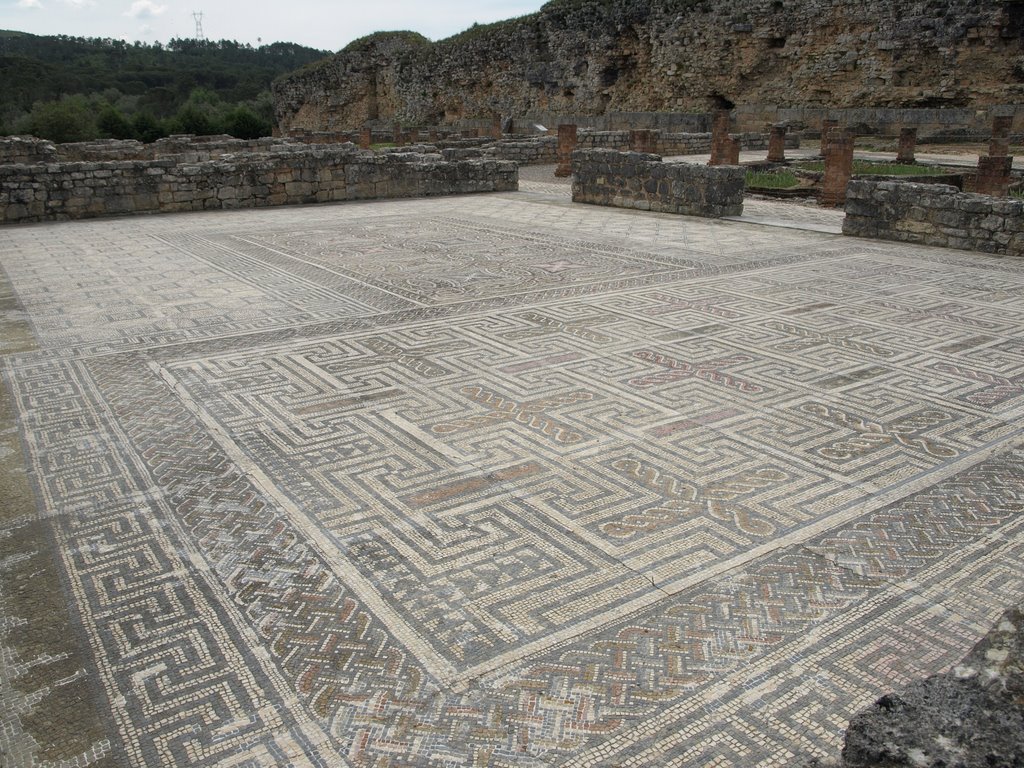
Not surprisingly we slept heartily and woke to an equally sumptuous breakfast laid out on the central oval table. I couldn’t bring myself to start the day with chilled “champagne” or with a cooked breakfast, but loved the three-tiered fruit bowl in the centre and the candelabra of bowls of cereals, apricots and fruit salad and the ceramic hen on its boiled eggs. After we’d explored more of the dappled forest, we drove out of the enchanted forest and back onto the scrubby plain, and the Roman marvels at Conimbriga. It was a hot day, and the noisy school groups were as bothersome as flies. But we really enjoyed the ruins, with their spectacular mosaic floors.

Conimbriga Roman ruins, near Cimbra, Portugal

Conimbriga Roman ruins, near Coimbra, Portugal

But it wasn’t until one of the school groups put some money in a slot we had overlooked, that we got the full benefit of Roman engineering, as reconstructed fountains (or jets of water) all round the central garden of irises, began to spray water. Such a cooling sound. The underground heating of the baths was also impressive, though we weren’t so keen on the partial reconstruction of the forum. Behind the house of the fountains rose a later, enormous, defensive wall which cut right through the rows of Roman houses, but, alas, it had failed to keep out the barbarians. The museum was good and informative and its café was great for plum juice, peach juice and the most delicious sweet pastries.

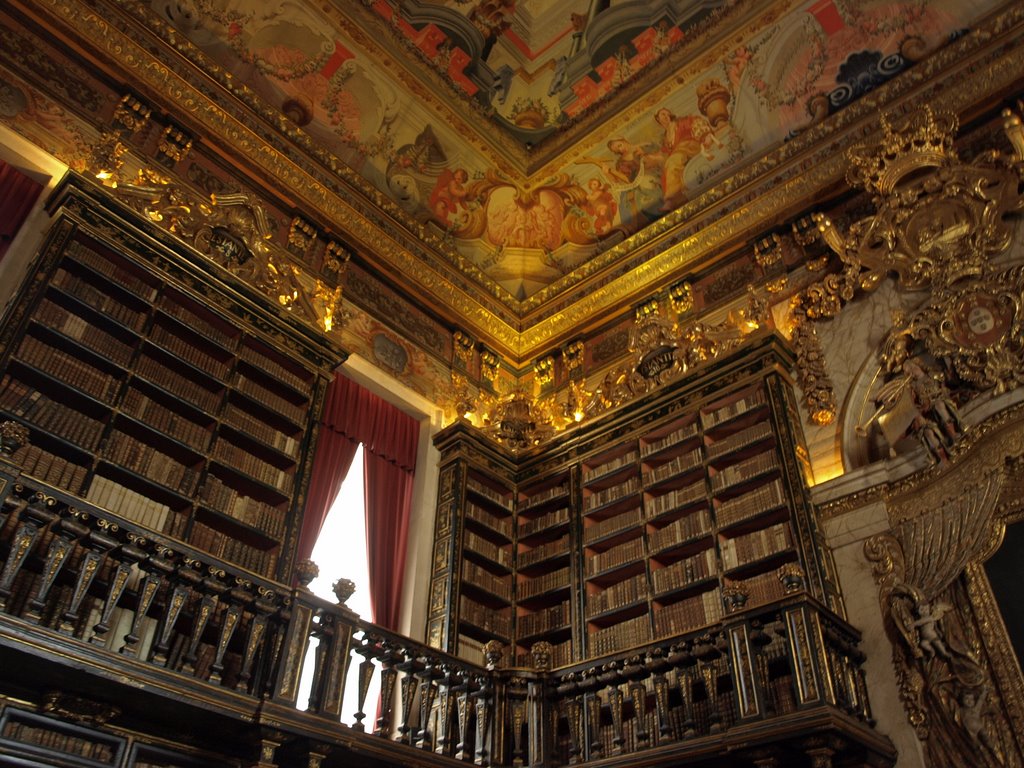
From Roman Conimbriga we moved on to Portugal’s former Moorish stronghold and mediaeval capital Coimbra (and the incongruously named Hotel Oslo). As the day began to cool, we climbed up a great many steps from the Moorish gateway, past linen and ceramic shops, towards the old cathedral and the university at the top (and not until we reached the top did we spot the yellow trams on their alternative route). However the cool blue-and-white café part way up served some of the best (and cheapest) coffee and (on the way down) beer. The old Romanesque cathedral was lovely (we never made it to the new cathedral) and we lingered there before continuing up to the glories of the university’s 18th century Joanina Library (I had to get another library in).

Biblioteca Joanina (Dom João V Library) Coimbra

Biblioteca Joanina (Dom João V Library) Coimbra

This reminded me of academic libraries I had worked in, with its galleries and step ladders. But nothing in my past matched the splendours (and gilding) of this Baroque library. And I had certainly never worked in a library where the bats were encouraged at night (after the tables had been covered over) to feed on any papyrophagus insects which might threaten the ancient volumes.

Back at the foot of the hill, we dined in a small family-run restaurant in a narrow street. The old man cooked, his wife kept popping out and returning with plastic bags, and a daughter waited cheerfully and briskly on a mix of students, locals and tourists. We were glad of the bread and salty sheep’s cheese as we waited for our goat in red wine to cook. Here a carafe of good house red wine cost four euro (a bit of a contrast with the previous night’s prices).

If you’ve read so far, you’ll have shared some of our impressions of Portugal’s Palaeolithic, Roman, Celtic, Visigothic, Moorish, Romanesque, Manueline, Napoleonic and neo-Manueline cultures. As our journey neared its end we wanted to spend the next day seeing something of the Knights Templar and the Jewish community at Tomar. Tomar’s small restored mediaeval synagogue was in an small house at the foot of the hill which had been used as a prison, a barn and a warehouse after the Jews were forced in 1496 to convert or flee Portugal. Now there are not enough Jewish men for a Torah service to be held (the quorum being ten), and it has become a museum. Round the wall are moving letters and cultural gifts from Jewish visitors from around the world.

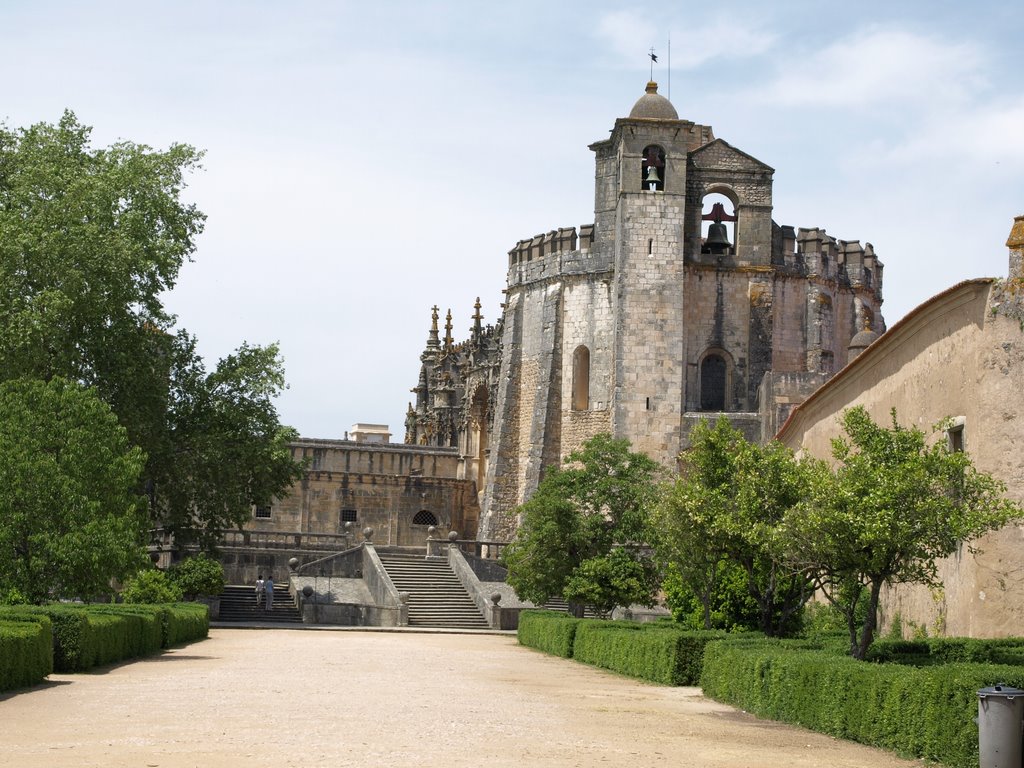
Castle and Convent of the Order of Christ-Knights Templar, Tomar

Castle and Convent of the Order of Christ-Knights Templar, Tomar

By contrast, the Knights Templar Convento de Cristo up on the hill is an enormous, rambling statement of power. This monastic fortress with its crenellated walls to repel the Moors, dominates the town. The vows of poverty of the Knights Templar were not much in evidence as we wandered from one magnificent cloister to another and into the opulently decorated round church and ambulatory (did the KTs really ride their horses there?), the choir (its stalls missing after the Napoleonic troops woz ‘ere), and out again to look at facades dripping with sculpted symbols of maritime power. The T-shaped dormitory corridors at the far end were long, dark and sinister-feeling, with the arching aqueduct outside. After that I began to lose all sense of direction as we followed lower corridors, through the refectory, kitchens (which smelt of recent smoke), stables, a store-room for olive oil and firewood and another containing unlabelled mosaics and a sundial. Children’s screams and laughter could be heard at one point and people emerged from private doorways and disappeared up corridors. An ideally mysterious setting for the occasional five hour performances (with five meal breaks) of Umberto Eco’s “The Name of the Rose.” We spent that night in Constancia, and ate in a blue-tiled tapas bar (veal for me and cod for John, so little change there) watching Inter Milan versus Barcelona. The bar customers seem happy that the Italian team, no doubt due to the leadership of their José Mourinho, beat the Spanish.

Next day we saw more castles, including Almourol on its island, complete with ferryman, before reaching the border town of Castelo de Vide. There we wandered through the attractive old town, with its fountain, flowers and cats. Both the synagogue and castle were closed, by then, but maybe we’d seen enough castles for the day. So we sloped off for a beer in the late afternoon sunshine. To our surprise chicken was on the bar’s menu of the day. What better place for our last dinner in Portugal? When we returned later for soup, chicken in beer (it came, as usual, with chips and rice) and chocolate mousse, a baby was the focus of the tiny room, being passed noisily round the staff so that its harassed parents could tackle their splendid-looking skewers of prawns and chicken. Above, on the small screen, Liverpool were losing in extra time to Atletico Madrid. Our hotel that night was a former girls’ school, fully-booked by cyclists and their supporters for the following night (the next town was hosting a big cycle race). Internet comments had mentioned cramped bathrooms, so we shouldn’t have been surprised that it proved impossible to sit on the loo other than side-saddle (to avoid the sides of the small bath and large bidet-thing).

We visited the Friday market (clothes, hardware and cowbells outside, local produce inside) before leaving next day, then set out for home. We stayed in Ciudad Rodrigo again (same room even), looked round Zamora’s cathedral and castle, had a night in the Holiday Inn outside Vitoria, then decided to take a different route back through France. We had both been thinking nostalgically of our honeymoon camping trip round central France. It was a mistake to think we could recapture the old magic. The Puy de Dome looked great from a distance (and at least there was no volcanic ash), but somebody had moved all the streets of our favourite village from how we remembered them and its magical Café du Centre was closed. Tournus cathedral was somehow less atmospheric and we couldn’t find a decent coffee. And the little hilltop village of Brancion, with a Romanesque church, had been “restored” into a medieval theme park whilst the church’s amazing frescoes had been allowed to deteriorate. Then Bluto got a puncture and we couldn’t get the wheel off to put on the spare and I ended up with diarrhoea. So much for nostalgia. However, we had thoroughly enjoyed our first impressions of northern Portugal. We just need to remember – we’ll never be able to return to Portugal and have the same experiences again (although we might find chicken piri-piri).

(And, in case you hadn’t realised, the food link at the top takes you to the photos of our meals)

Photographs
Zamora
Castel de Vide
Tomar
JoaninaLibrary, Coimbra
Conimbriga Roman ruins
Buçaco Palace Hotel (neo-Manueline)
Bussaco Forest near Coimbra (panorama)
Citania de Briteiros (iron age)
São Pedro de Balsemão Visigothic chapel
Rock carvings of the Foz Coa valley
Almeida
Salamanca
Cathedral Vieja (Old Cathedral), Salamanca (panorama)
Ciudad Rodrigo (Spain)
St Philibert Romanesque Church, Tournus, France (panorama)