As well as the highlighted links in the text,
there are comprehensive set of photographs of
Thanet
and
A circular trip around Norway and Sweden
The printable PDF of the text is E2E2026no3.pdf (six A4 pages)
August started with an alert about the contamination of the Entre-deux-Eaux water supply. We went to collect our initial ration of 3 bottles of water from the village hall. Violetta, one of the commune employees explained that our water supply had failed the latest purity test, the commune had been acquiring supplies and the deputy mayor was out in her car distributing bottles to the housebound. When we got home there were 3 more bottles outside. Were we on the list of elderly housebound?
We had in fact, like older villagers, felt housebound during the long heat wave in June/July. Then, after a brief respite, a second heatwave was forecast for August. What a depressing outlook. So the prospect of a couple of weeks cooling off in the sea breezes near Broadstairs was wonderful, thanks to Jessica’s generosity in lending her childhood home. The first couple of days high tide was ideal for a swim before lunch, though the energetic “breezes” made it less of a swim and more of a case of leaping with the roll and crash of the incoming waves. Invigorating after our previous heat apathy! With all the house windows open to enjoy the breeze, the stillness was broken only by the screech of gulls overhead and the voices of golfers over the garden hedges.

Hockney window
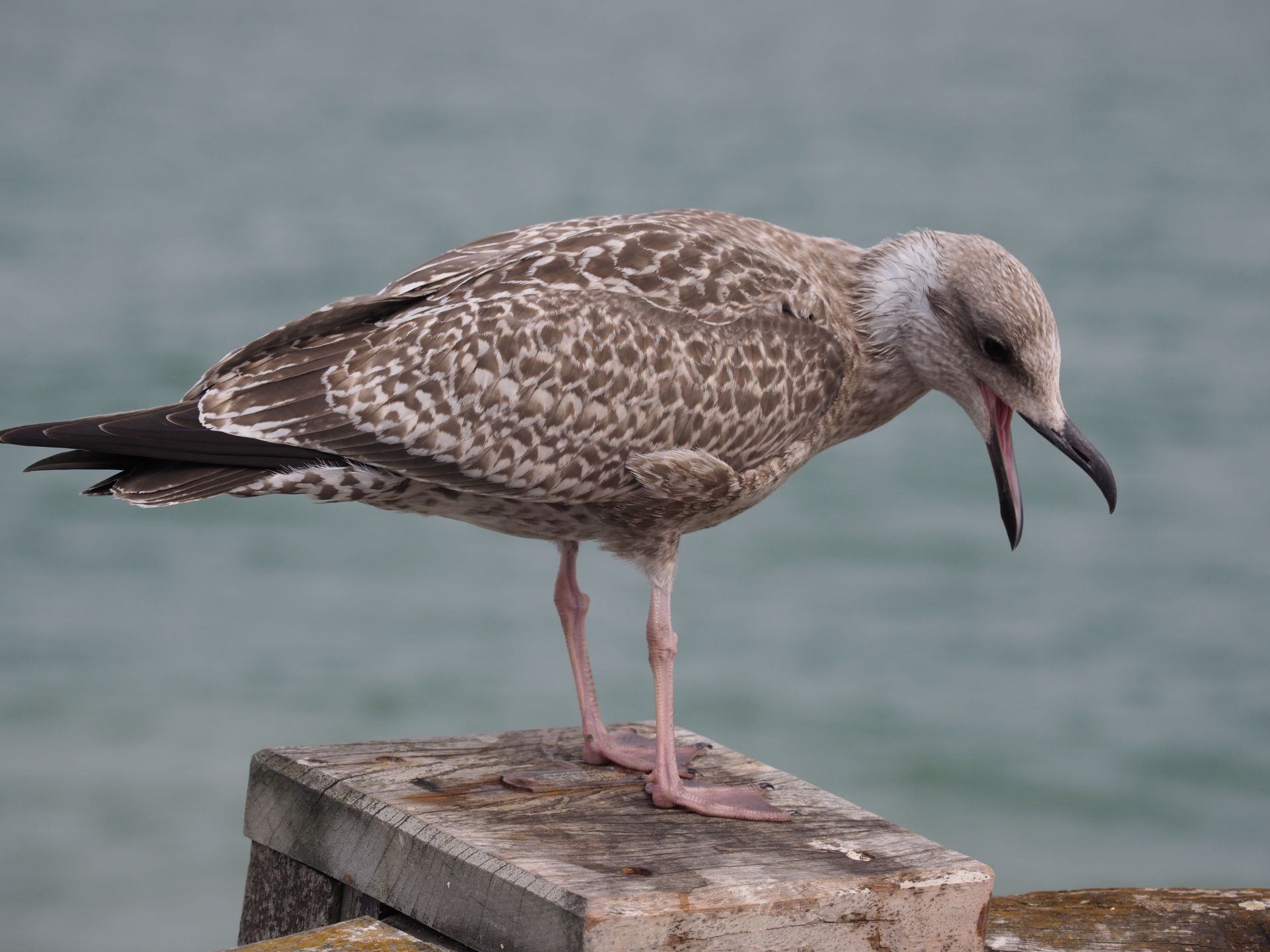
juvenile herring gull
When Jessica joined us she was keen to experiment with cooking the “in” ingredient of octopus, as well as sharing the culinary and architectural changes to the area since she and Helen were teenagers there. So picture us eating cakes with coffee in the former village shop, now a bustling café and children’s bookshop; gazing at the sea and gulls through the Hockney Window in Margate’s Turner Gallery; investigating the new steps, flood defences and seagulls on Margate sea front; and sipping cold drinks with the seagulls on the terrace of Ramsgate’s elegant Royal Victoria Pavilion (now a Weatherspoons and Britain’s largest pub). We also spent a day visiting some of the inland flint churches which we never did as teenagers. Back in the nineteen fifties, visitors to Broadstairs and nearby seaside resorts, had a choice of cafes which all served cheap fish, egg and chips with a cup of tea. Now the fish restaurants have gone up market and have wine and cocktail lists. We ate well at two. But one establishment has not changed – Morelli’s ice cream parlour on Broadstairs sea front.
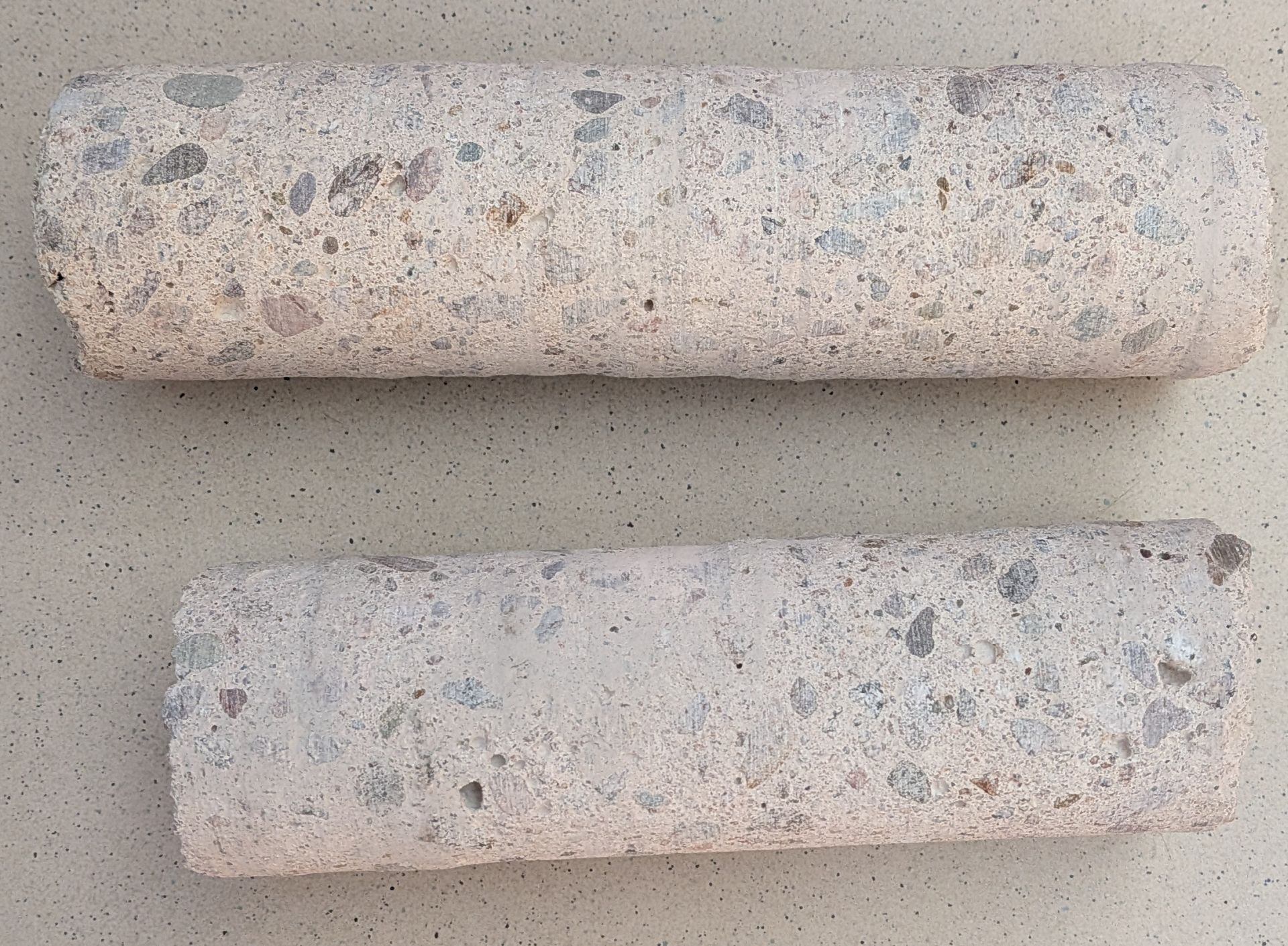
parts of concrete cores
Refreshed by the sea breezes, we returned to Entre-deux-Eaux, where the water contamination scare had been declared a false test result, and the heat wave had ended. Walkers faced a wet day for the traditional end of August village walk and meal. But the rain stopped the next day, which was fortunate for our air-conditioning/heat pump installers, as quite a lot of their work was on ladders outside and involved drilling 7cm holes through 30cm concrete for the piping. They worked hard and did a surprisingly good clean-up job at the end. Since then we have not really needed to use the air-conditioning other than to test it, but have been using it to heat the rooms as it is dual function and currently much cheaper to run than the oil-fired underfloor heating. A few days later our new car went into the garage for the removal of hundred or so hailstorm dents from our Italian trip. So with those appointments and various medical ones fulfilled, and a couple of free weeks, we were ready for another adventure.
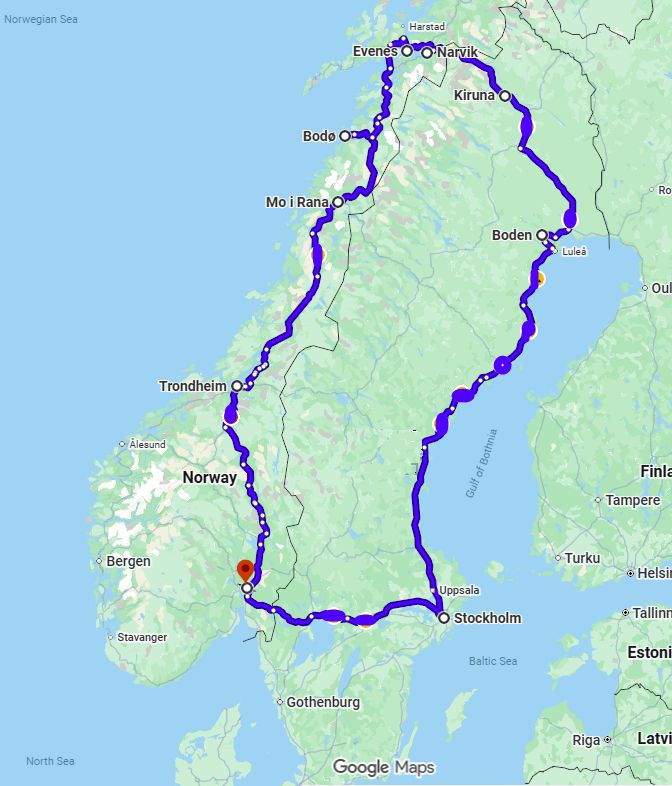
an outline of our route
Regular booklets for the Hurtigruten Norwegian fjord cruises had long lain temptingly on our table, but Helen has no love of boats. So in a week John, with the help of AI, organised a circular train journey through Norway and Sweden to fit our limited time. We would see the fjords from the mountains rather than the mountains from the fjords; seeing the aurora borealis would be a matter of chance and weather. Lugging suitcases around is no longer appealing, so overnight hotels in Oslo, Trondheim, Bodø, Narvik, Kiruna and Stockholm were chosen for their proximity to railway stations. With trains and hotels booked, in mid-September we caught a late afternoon flight from Basel to Oslo.

Oslo Opera House
Our Oslo hotel (with its magnificent Mughal warrior/huntsmen wallpapers in the rooms) was in the regenerated harbour area, so rather than heading to the Royal Palace or the late King Harald’s sarcophagus, we spent the next day round the harbour admiring the sleek lines of the Opera House, seeing the exhibitions in the new MUNCH museum, and looking at the new library (not nearly as exciting as Copenhagen’s). The ever present seagulls, new art gallery and a Tracey Emin sculpture made us both feel that we could have been back on Margate’s sea front (a comparison that would no doubt mortify Oslo inhabitants). The Fiskeriet Bjørvika fish restaurant that evening was crowded and the fish gratin and the ale tasty.
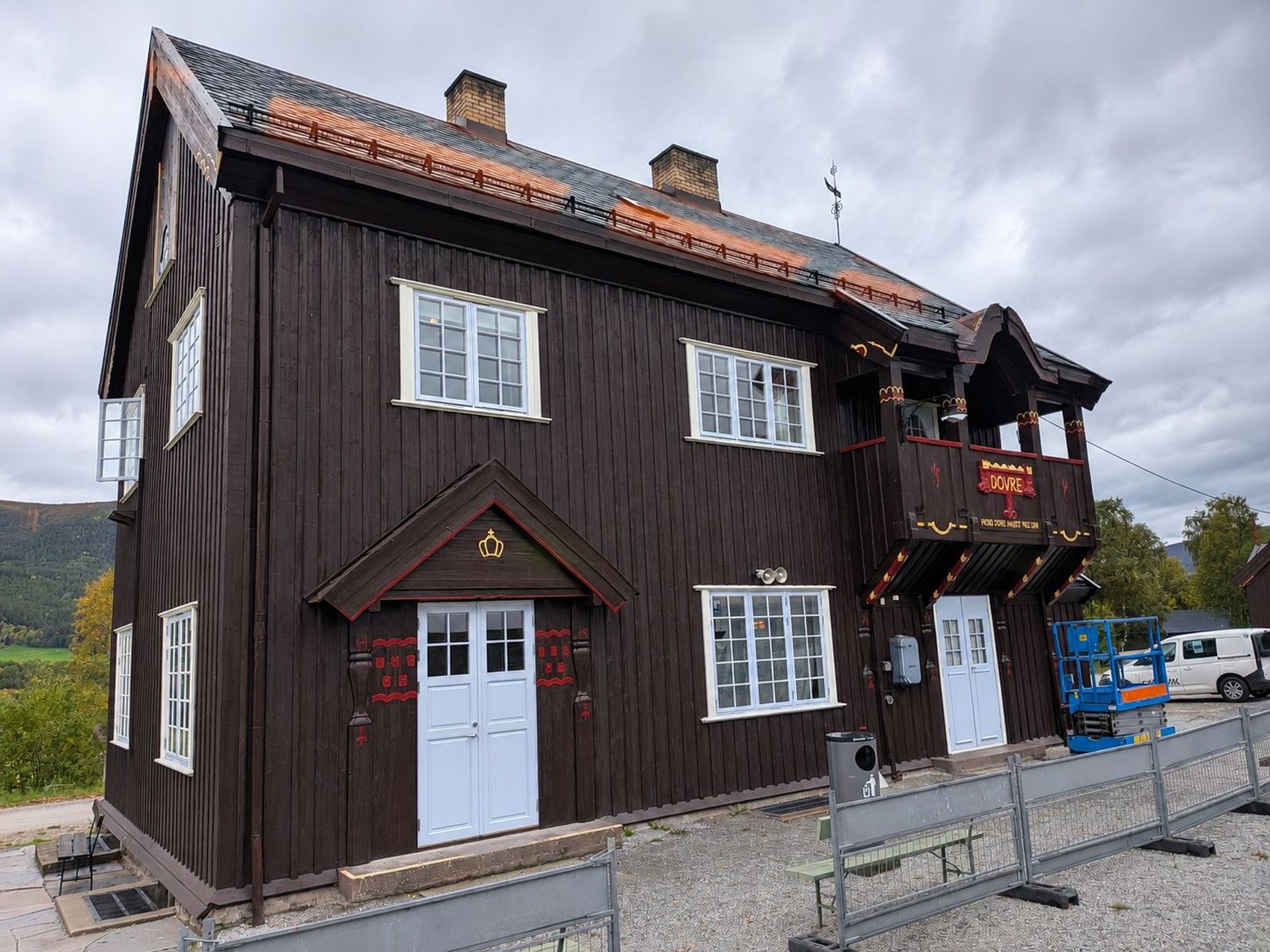
Dovre Station

Dovresjell National Park
Black earth, light industries, scarlet rowans, grey lakes, hay bales and black wooden farmsteads flashed past the train windows next day as we travelled north from Oslo to Trondheim, but sadly the promised musk ox, reindeer and eagles in the Dovrefjell National Park kept well out of sight. The smaller station buildings were black wood with yellow or red window frames and door lintels and one was turf-roofed. Finally the train slowed down and followed the river Nidelva with its moored boats into Trondheim. Our hotel there was in a former huge bakery (cold room, lack of bedside sockets, and sloping ceilings that John banged his head on).

Trondheim Cathedral
The old cathedral was crowded next morning (had a Hurtigruten cruise docked?) and rather grim with its much restored soaring Norman black stone. Sadly the industrial art museum was closed for renovation, with no warning on the website. On the doorstep we met what assumed was another frustrated visitor. She turned out to be the directress and helpfully explained that we could see the tapestries that interested us in Madrid. So we stomped off in the rain to explore the old town with its wooden houses and first cycle lift, Trampe/Cyclocable, (up a very steep hill). With tired feet both evenings, we ate close to our hotel, including mooseburger.
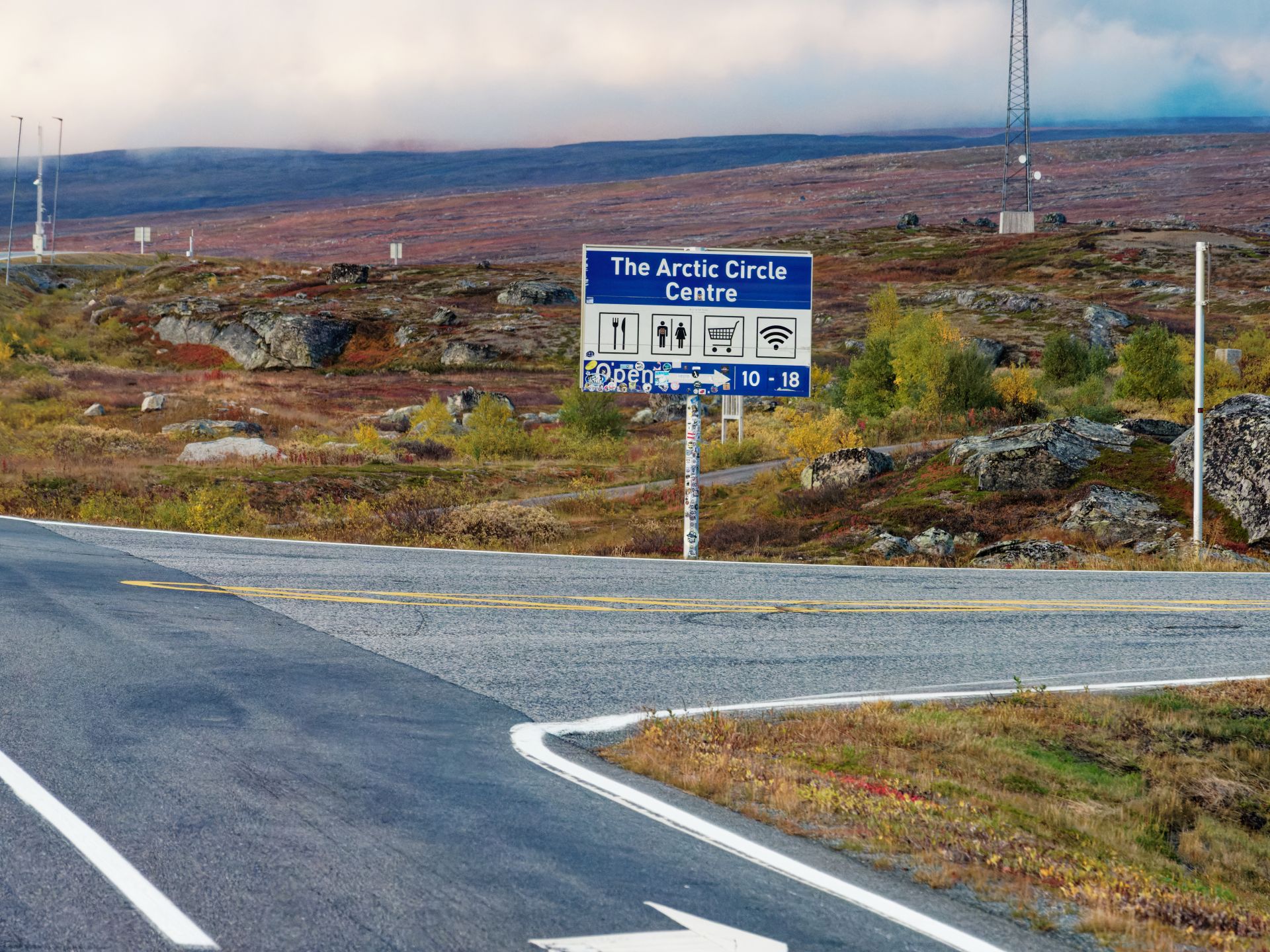
Arctic Circle
Early breakfast next day before the 07.49 train north from Trondheim to Bodø. We had timed our journey round the planned closure of the line for repairs. But it seemed as if the work had not been completed. Our train set off late, and had long waits at multiple passing points for southbound trains as much of the line is single track. Around lunch time when we saw railway workers eating iced buns at their picnic table at the side of the tracks, we got out the bag of cinnamon buns we had prudently purchased but kept our sandwiches for later. The train crawled on a bit further and stopped in a dark forest – the kind of forest where wolves and trolls might lurk at night. By now we were running 2 hours late.  More golden-leaved birch tress, rivers, forests, bare hills and mountains tops, peaty heath, fjords, wind turbines and even a rainbow. Around 5pm a voice announced in Norwegian then English that a train was stuck on the line ahead, so at the harbour town of Mo I Rana we would board a replacement bus for the 3 hour drive to Bodø. Thus it was that we crossed the Arctic Circle not in a train but on what turned out be a very comfortable coach where we had front seats and great views of the most scenic part of the journey. We followed the E6 road at a steady pace through golden trees, at first behind a tractor then with lorries swooping downhill towards us with head lights full on, and then were overtaken by an unexpected open top blue car as we crossed the imaginary line of the Arctic Circle in its bleak, rocky landscape.
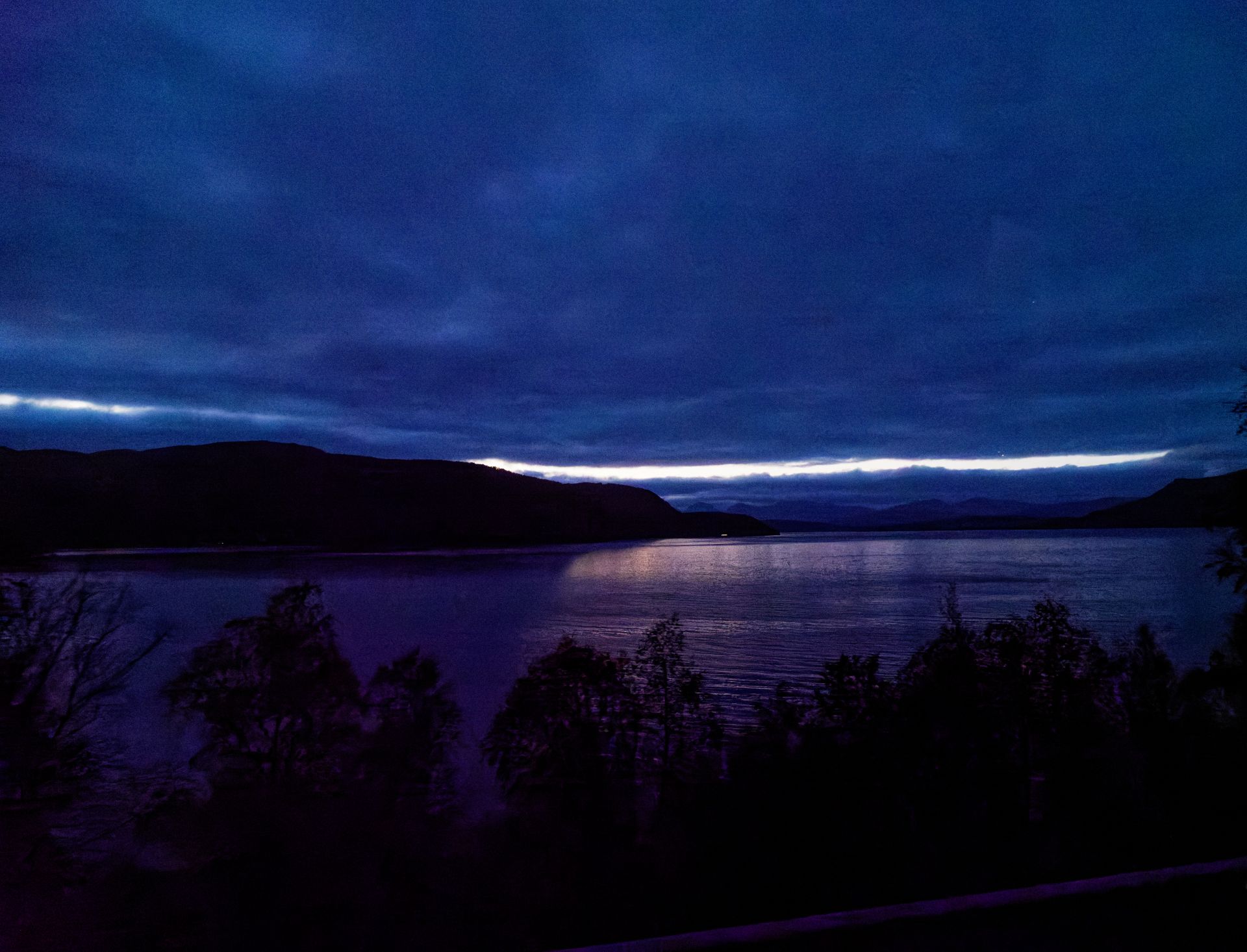
late arrival in Bodø
It was dark by the time we turned off the E6 into small towns where some passengers were headed, then we followed the coastline of the Saltfjorden to Bodø. It must have been nearly 10 pm by the time we reached our waterfront hotel room. Too late to hit the town in search of dinner. What a good thing we had saved our sandwiches.

flight over fjords
We woke late to a splendid view across the sunlit harbour from our 10th floor room. As there was no railway line north to Narvik, we took a 30 minute flight from Bodø airport to Evenes, the nearest landing spot to mountain-encased Narvik. With this combination of train, coach and plane we probably had more varied views of the fjords and curiously shaped mountain tops than we would have had from a cruise ship. The airport bus waited for the flight from Oslo before setting out on the hour’s drive round the Ofotfjorden to Narvik. Hideous hairy trolls in all sizes leered at tourist from gift shops. The Narvik War Museum gave a good account of the Battle of Trondheim (known to Helen only from a Biggles’ adventure), the German occupation and the collaboration dilemmas faced by inhabitants (the hospital treated the injured of all nationalities; the hospital director was highly esteemed by the Germans but used it as a front for his resistance activities). At the Fiskekroken restaurant we chose Arctic char and smoked cod on our first evening and both had halibut in lobster sauce washed down with Lofotpils on the second evening. Delicious. Our best chance of seeing the aurora borealis had been in Narvik, but sadly the weather was too overcast both nights.

Narvik-Abisko bus
Disaster struck on out eighth morning. When straightening up from treating his afflicted big toe, John twinged a disc in his back. We were due to follow a historic train track from Narvik to Kiruna that afternoon and this did not bode well for lugging suitcases and sitting on replacement buses and trains. The track had opened in 1903 to transport iron ore from the mines in Kiruna in Sweden to the ice-free Norwegian port of Narvik (the Baltic ports were not accessible all year). But current engineering works on the Norwegian section meant we took another replacement bus (again comfortable and with good views) over the border with Sweden (where border controllers/customs inspected), picked up a lot of wet weekend hikers with rucksacks and tents, then at Abisko caught the usual train on to Kiruna, a mining town which is literally on the move.
Kiruna was founded in 1899 on land where the Sami people of Lapland used to herd reindeer. However, the world’s largest underground iron ore mine led to cracks developing in buildings as well as subsidence after 2004. It was decided that in order for mining to continue, much of the town, including 6,000 of its inhabitants and the hospital would be relocated to a new town centre 3 km to the east. Our hotel was the nearest one to the railway station and would be moved in the second phase. The friendly receptionist told us that a lot of people stayed there for several months working on projects. Our room was spacious and old fashioned, with plenty of storage space (useful for those long-stay workers). With John’s back not improved by the journey we decided to eat at the adjacent Arctic Thai. It was a large canteen-like room with a hatch along one wall. Thai women stirred huge tureens of food in the kitchen. Men were silently scoffing huge portions of steaming food. Not having endured a hard working day, we were unable to finish all of the tasty food ordered at the hatch and heaped on our plates.

New Kiruna centre
Hotel breakfast next morning did not have the fancy pastries of previous hotels, but included herrings in mustard sauce, finely chopped reindeer in sour cream and pancakes. Kiruna tourism websites recommend spending a day with reindeer or riding a chariot drawn by husky dogs. But, while John rested before the overnight trains to Stockholm, Helen caught a local bus to see the new town centre architecture. There were bulldozers and lorries (and diversions along the bus route) engaged in the first phase of demolition as well as busy constructing the new town centre. The Krystallen, the city hall, was the first new building, whereas the large red timber Kiruna church had been moved intact. The grid of new buildings were not in a uniform style but nor were they very interesting architecturally, apart from the Scandic hotel. However there was a good pharmacy for Ibuprofen supplies and Co-op for food for the overnight journey, as well as the city hall, cultural centre and good library. By the bus stop a large sculpted worker’s fist clutched ore and some crudely sculpted white birds squatted on the pavement, possibly gulls pining for the sea.
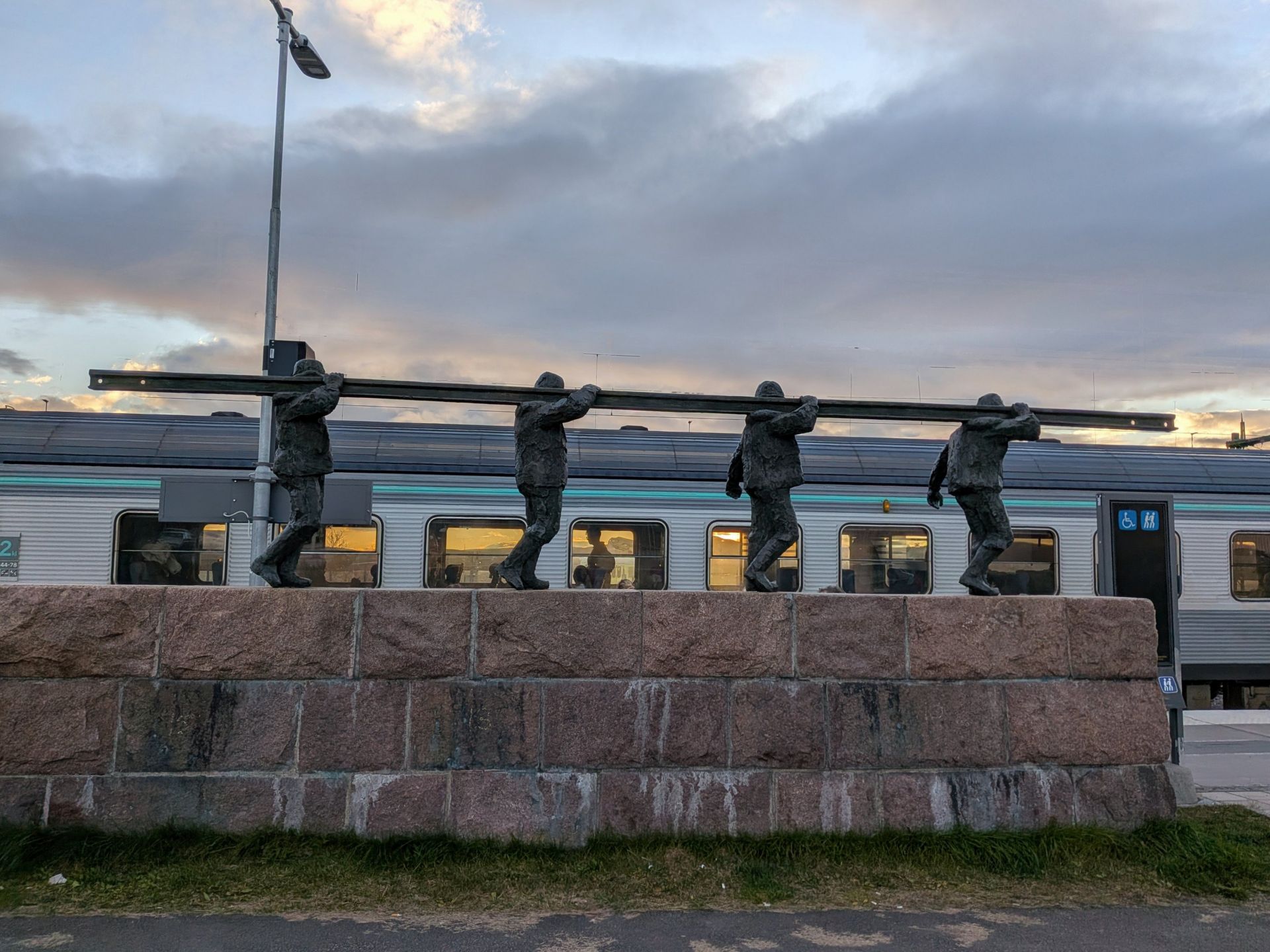
Kiruna station sculpture
Back at Kiruna station that evening we noted another sculpture – four railway builders walking along the top of a wall with a length of rail. We passed mountains of black slag as we pulled out of Kiruna towards Boden, where we changed onto the Stockholm sleeper train.
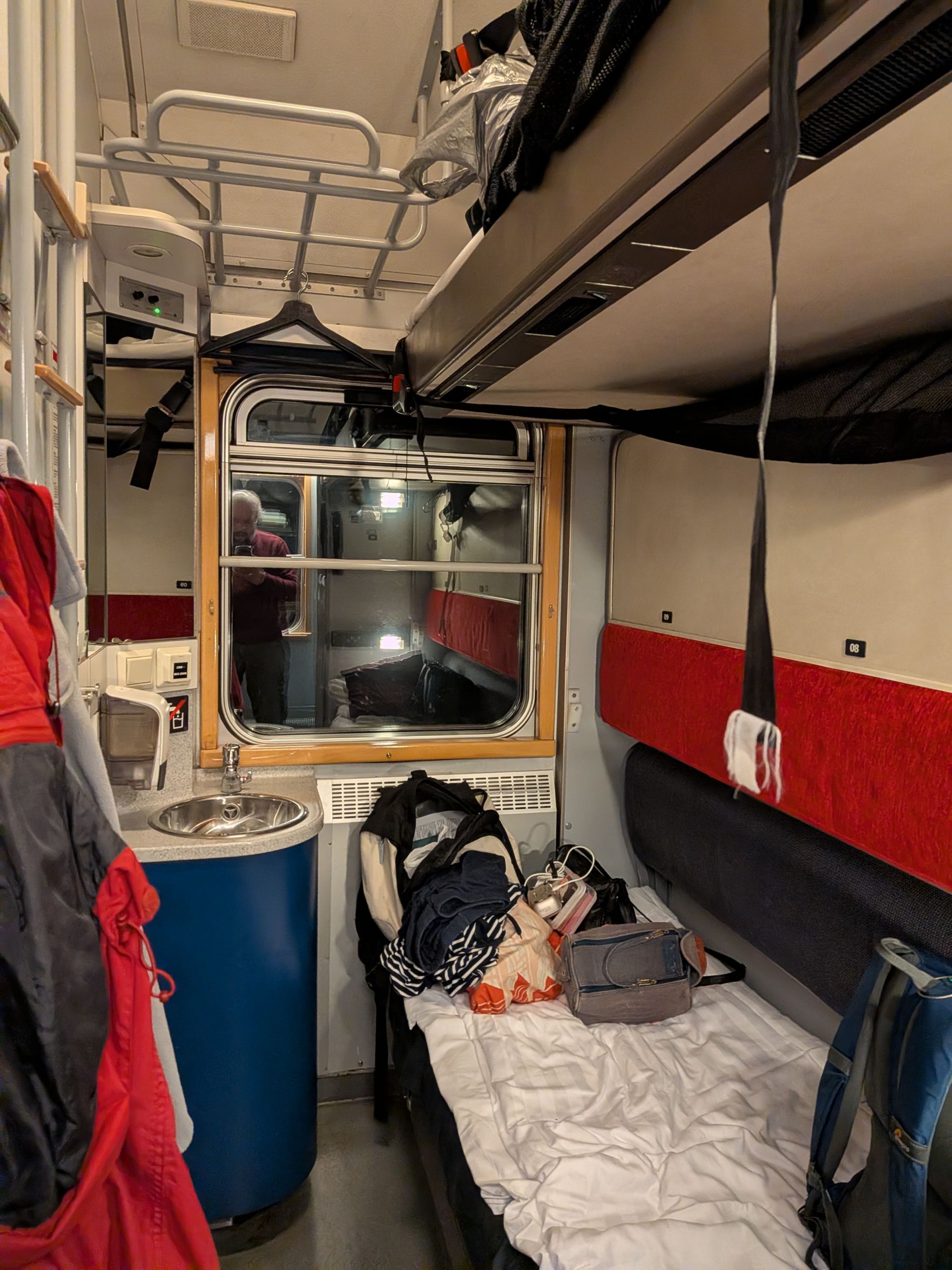 There is still a certain Orient-Express romance about sleeping in a couchette on a train, even if the compartments were narrow and cramped and the ladder to the top bunk rather steep for an octogenarian. We slept for much of the 600 mile journey south from the iron ore mines to the capital and woke to a softer landscape of lakes and isolated red wooden houses. More cinnamon buns with coffee. Our train pulled into Stockholm Central soon after mid-day. Available hotel rooms in Stockholm were scarce that week, and our hotel felt like a converted underground car park or storage unit with its rows of cell-like basement rooms, most without windows (ours did have one but with a view of the railway line). Unfortunately, because of flight timetables we only had one afternoon to explore Stockholm.

Stockholm Dutch gables
We headed for the old town, where we enjoyed the narrow streets, fountains, squares, churches and the colourful Dutch-gabled houses in the Stortorget. As John lowered himself cautiously onto a bench, a bulky American tourist, whose ancestors came from Bergen, commiserated at length about bad backs. We walked on past the cathedral, palace, parliament and the prime minister’s work place (it was former a bank and as there was currently no prime minister to protect between elections, one of the guards chatted and pointed out the coins in the decoration over the doorway). The day concluded with an extremely good Italian meal (with better tiramisu than we’d had anywhere in northern Italy).

Fiskeriet Bjorvika restaurant Oslo
The last leg of our great northern train journey was a five and a half hour train from Stockholm to Oslo, where we stayed at the same Mughal-horsemen-wallpapered hotel. Rain curtailed our exploration of the older part of the town, but the fish at the Fiskeriet restaurant was as good as on the first night. It was a shame our trip ended with a handyman’s late night efforts to unblock our sink (not our fault!), leaving a nasty smell of drains, a leak and a wet floor.
Back in Entre-deux-Eaux after our flight from Oslo to Basel, our neighbour Daniele greeted us with punnets of tomatoes, courgettes, chard and basil from her garden (which must be the most productive in the village this dry year). She also told us the sad news that Nelly Duhaut, the wife of our mayor, had died. Nelly was a kind, homely, modest person who is much missed. We have known her since 1990 when Toby and Leila had played with their son and his friends when we first holidayed in our houses here). The village church was packed for her funeral, with people standing inside and in the graveyard.
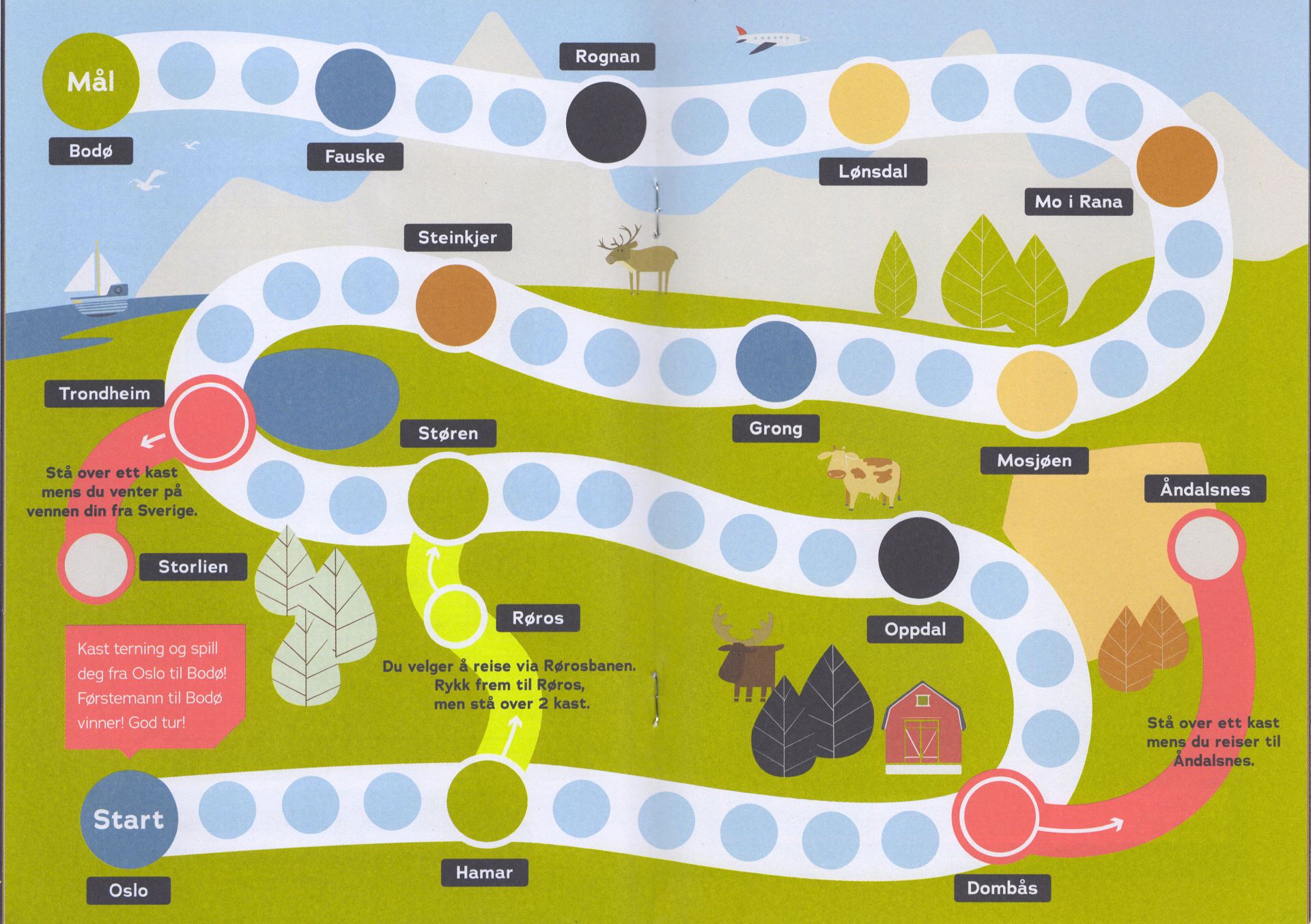
SJ Nord Oslo-Bodø rail puzzle
We did not forget our Norwegian travels. While John downloaded his photos, Helen used some of the puzzles for children in a booklet John had found on the train from Trondheim to Bodø as part of the brain exercises for her group. Last time she led a session they had deciphered Franglais; this time they had to make sense of the Norwegian instructions in order to help a little troll find her way from Oslo to Bodø; perhaps the hazards encountered in a snakes and ladders game should have included “line repairs ahead mean you wait one turn before the replacement bus arrives.”
There were reminders of some of our earlier travels during the Geography Festival in Saint Die at the start of October. Helen enjoyed watching “Lady Nazca” about Maria Reiche’s work on the lines and patterns in the Peruvian dessert which we had once flown over in a small bi-plane. But she met none of the promised Romanian gypsy musicians roaming the rainy streets. Perhaps they preferred to keep their instruments dry.
There has not yet been enough rain to enable water-use restrictions to be lifted in the Meurthe basin where we are. But the cows are out in the fields now as the grass gets greener. Newspapers have reported reduced wine production in other regions due both to the decline in cultivated areas and to yields reduced by a hot and dry summer. So we were pleased that one of the wine-makers in Alsace from whom we have previously bought, wrote that their grapes had ripened quickly this summer; the harvest had started early on 20 August; the volume and quality were fine, and the first juices promise a good 2026 vintage. Cheers!
