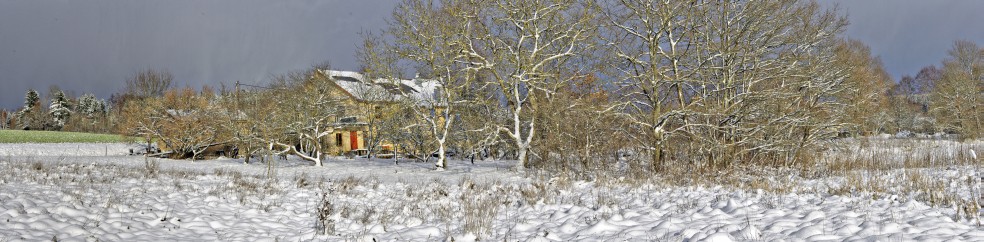
Seagulls and replacement bus services: escaping the heat of Entre-deux-Eaux, August – September 2026

As well as the highlighted links in the text to click on,
you can click on the photographs for larger views
These are the links to comprehensive sets of photographs of
Thanet
and
A circular trip around Norway and Sweden

The printable PDF of the text is E2E2026no3.pdf (six A4 pages)

August started with an alert about the contamination of the Entre-deux-Eaux water supply. We went to collect our initial ration of 3 bottles of water from the village hall. Violetta, one of the commune employees explained that our water supply had failed the latest purity test, the commune had been acquiring supplies and the deputy mayor was out in her car distributing bottles to the housebound. When we got home there were 3 more bottles outside. Were we on the list of elderly housebound?

We had in fact, like older villagers, felt housebound during the long heat wave in June/July. Then, after a brief respite, a second heatwave was forecast for August. What a depressing outlook. So the prospect of a couple of weeks cooling off in the sea breezes near Broadstairs was wonderful, thanks to Jessica’s generosity in lending her childhood home. The first couple of days high tide was ideal for a swim before lunch, though the energetic “breezes” made it less of a swim and more of a case of leaping with the roll and crash of the incoming waves. Invigorating after our previous heat apathy! With all the house windows open to enjoy the breeze, the stillness was broken only by the screech of gulls overhead and the voices of golfers over the garden hedges.

Hockney window
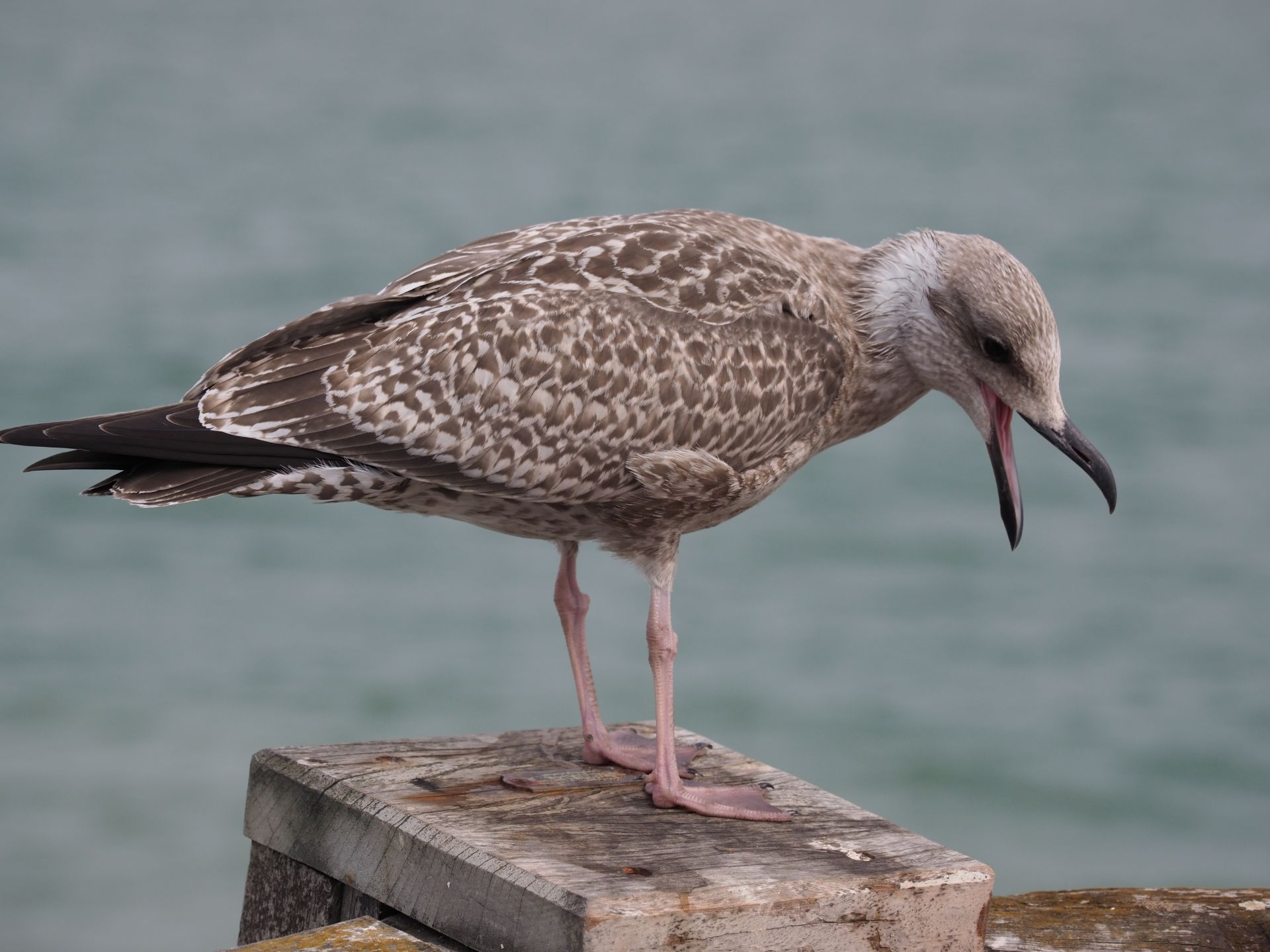
juvenile herring gull

When Jessica joined us she was keen to experiment with cooking the “in” ingredient of octopus, as well as sharing the culinary and architectural changes to the area since she and Helen were teenagers there. So picture us eating cakes with coffee in the former village shop, now a bustling café and children’s bookshop; gazing at the sea and gulls through the Hockney Window in Margate’s Turner Gallery; investigating the new steps, flood defences and seagulls on Margate sea front; and sipping cold drinks with the seagulls on the terrace of Ramsgate’s elegant Royal Victoria Pavilion (now a Weatherspoons and Britain’s largest pub). We also spent a day visiting some of the inland flint churches which we never did as teenagers. Back in the nineteen fifties, visitors to Broadstairs and nearby seaside resorts, had a choice of cafes which all served cheap fish, egg and chips with a cup of tea. Now the fish restaurants have gone up market and have wine and cocktail lists. We ate well at two. But one establishment has not changed – Morelli’s ice cream parlour on Broadstairs sea front.
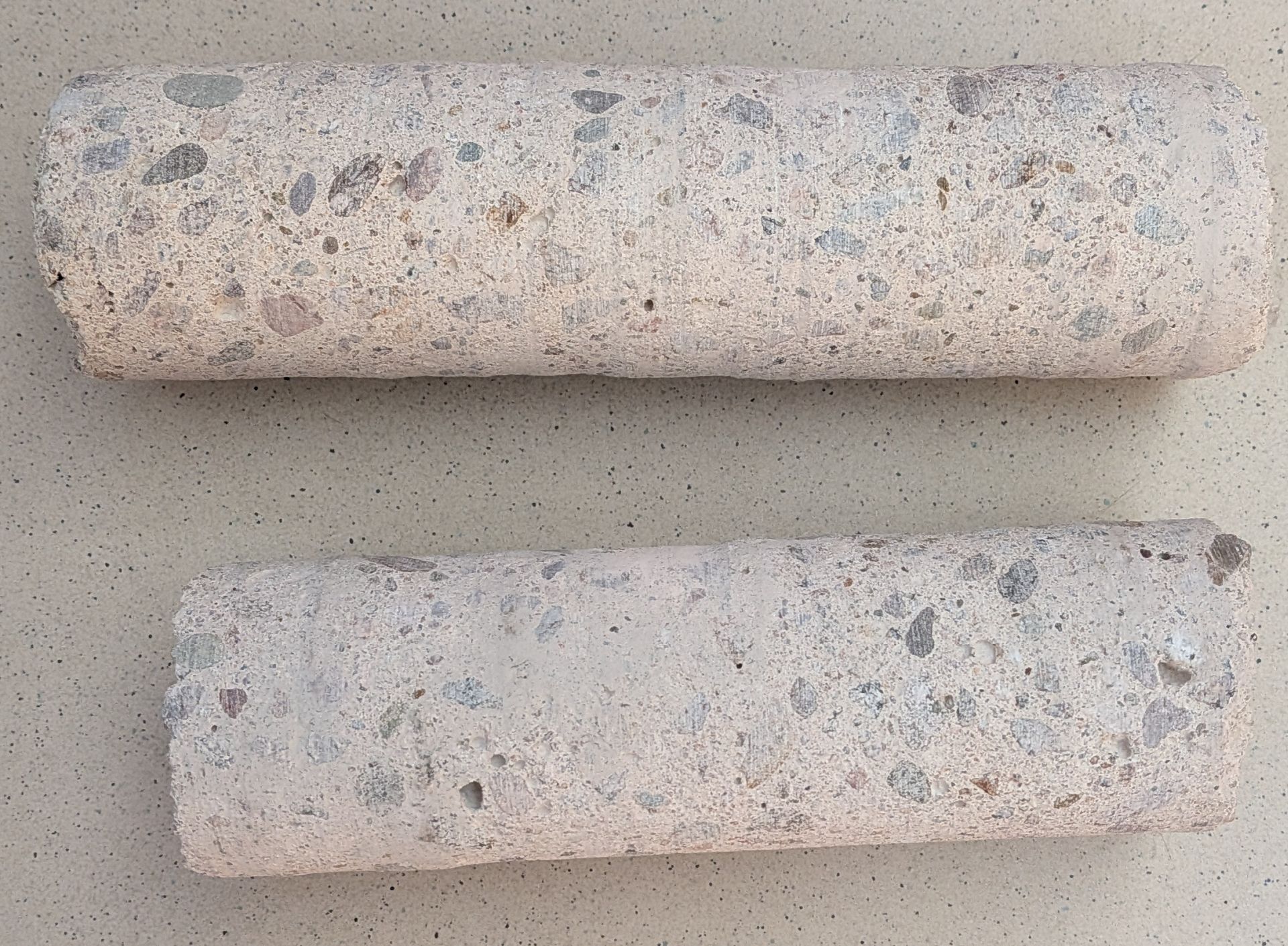
parts of concrete cores

Refreshed by the sea breezes, we returned to Entre-deux-Eaux, where the water contamination scare had been declared a false test result, and the heat wave had ended. Walkers faced a wet day for the traditional end of August village walk and meal. But the rain stopped the next day, which was fortunate for our air-conditioning/heat pump installers, as quite a lot of their work was on ladders outside and involved drilling 7cm holes through 30cm concrete for the piping. They worked hard and did a surprisingly good clean-up job at the end. Since then we have not really needed to use the air-conditioning other than to test it, but have been using it to heat the rooms as it is dual function and currently much cheaper to run than the oil-fired underfloor heating. A few days later our new car went into the garage for the removal of hundred or so hailstorm dents from our Italian trip. So with those appointments and various medical ones fulfilled, and a couple of free weeks, we were ready for another adventure.
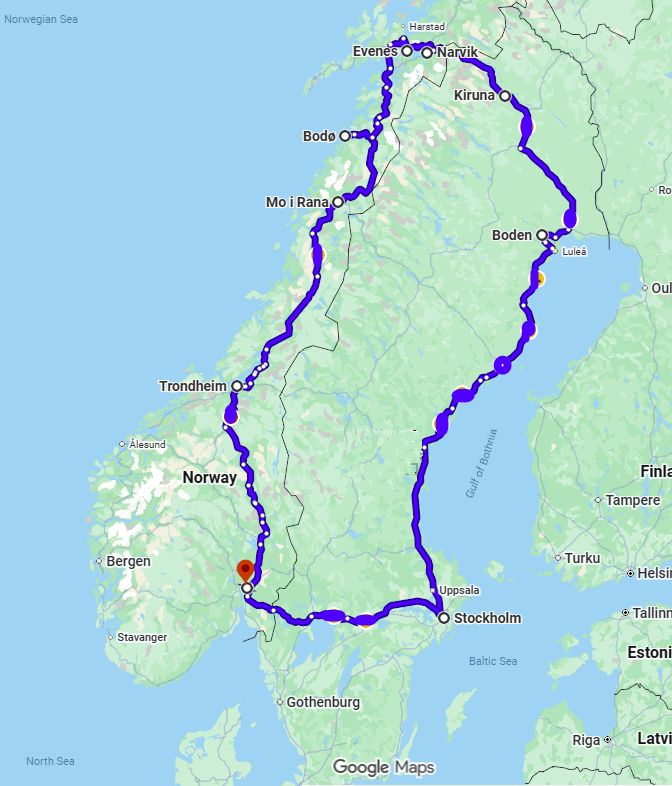
an outline of our route

Regular booklets for the Hurtigruten Norwegian fjord cruises had long lain temptingly on our table, but Helen has no love of boats. So in a week John, with the help of AI, organised a circular train journey through Norway and Sweden to fit our limited time. We would see the fjords from the mountains rather than the mountains from the fjords; seeing the aurora borealis would be a matter of chance and weather. Lugging suitcases around is no longer appealing, so overnight hotels in Oslo, Trondheim, Bodø, Narvik, Kiruna and Stockholm were chosen for their proximity to railway stations. With trains and hotels booked, in mid-September we caught a late afternoon flight from Basel to Oslo.

Oslo Opera House

Our Oslo hotel (with its magnificent Mughal warrior/huntsmen wallpapers in the rooms) was in the regenerated harbour area, so rather than heading to the Royal Palace or the late King Harald’s sarcophagus, we spent the next day round the harbour admiring the sleek lines of the Opera House, seeing the exhibitions in the new MUNCH museum, and looking at the new library (not nearly as exciting as Copenhagen’s). The ever present seagulls, new art gallery and a Tracey Emin sculpture made us both feel that we could have been back on Margate’s sea front (a comparison that would no doubt mortify Oslo inhabitants). The Fiskeriet Bjørvika fish restaurant that evening was crowded and the fish gratin and the ale tasty.
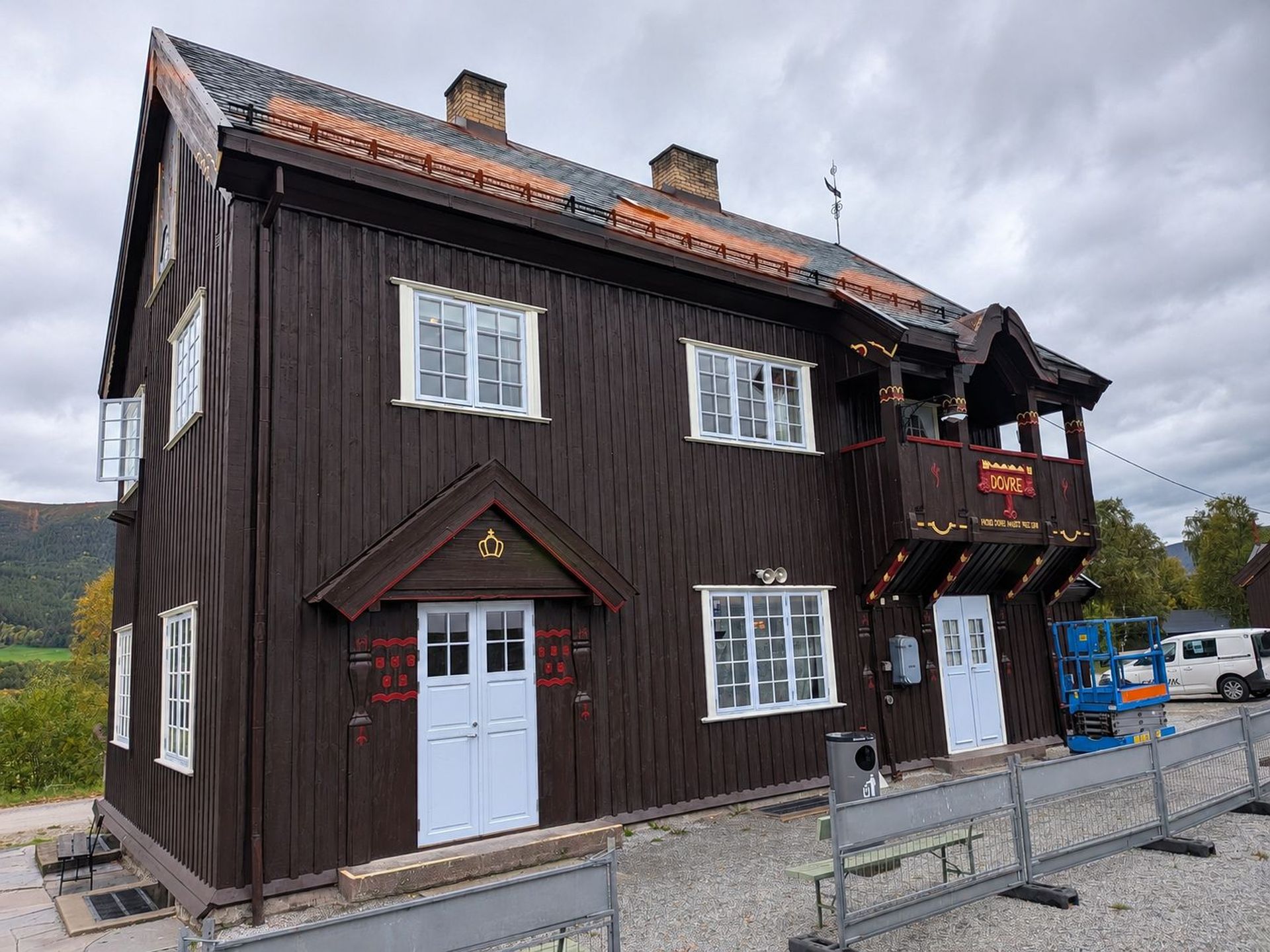
Dovre Station

Dovresjell National Park

Black earth, light industries, scarlet rowans, grey lakes, hay bales and black wooden farmsteads flashed past the train windows next day as we travelled north from Oslo to Trondheim, but sadly the promised musk ox, reindeer and eagles in the Dovrefjell National Park kept well out of sight. The smaller station buildings were black wood with yellow or red window frames and door lintels and one was turf-roofed. Finally the train slowed down and followed the river Nidelva with its moored boats into Trondheim. Our hotel there was in a former huge bakery (cold room, lack of bedside sockets, and sloping ceilings that John banged his head on).

Trondheim Cathedral

The old cathedral was crowded next morning (had a Hurtigruten cruise docked?) and rather grim with its much restored soaring Norman black stone. Sadly the industrial art museum was closed for renovation, with no warning on the website. On the doorstep we met what assumed was another frustrated visitor. She turned out to be the directress and helpfully explained that we could see the tapestries that interested us in Madrid. So we stomped off in the rain to explore the old town with its wooden houses and first cycle lift, Trampe/Cyclocable, (up a very steep hill). With tired feet both evenings, we ate close to our hotel, including mooseburger.
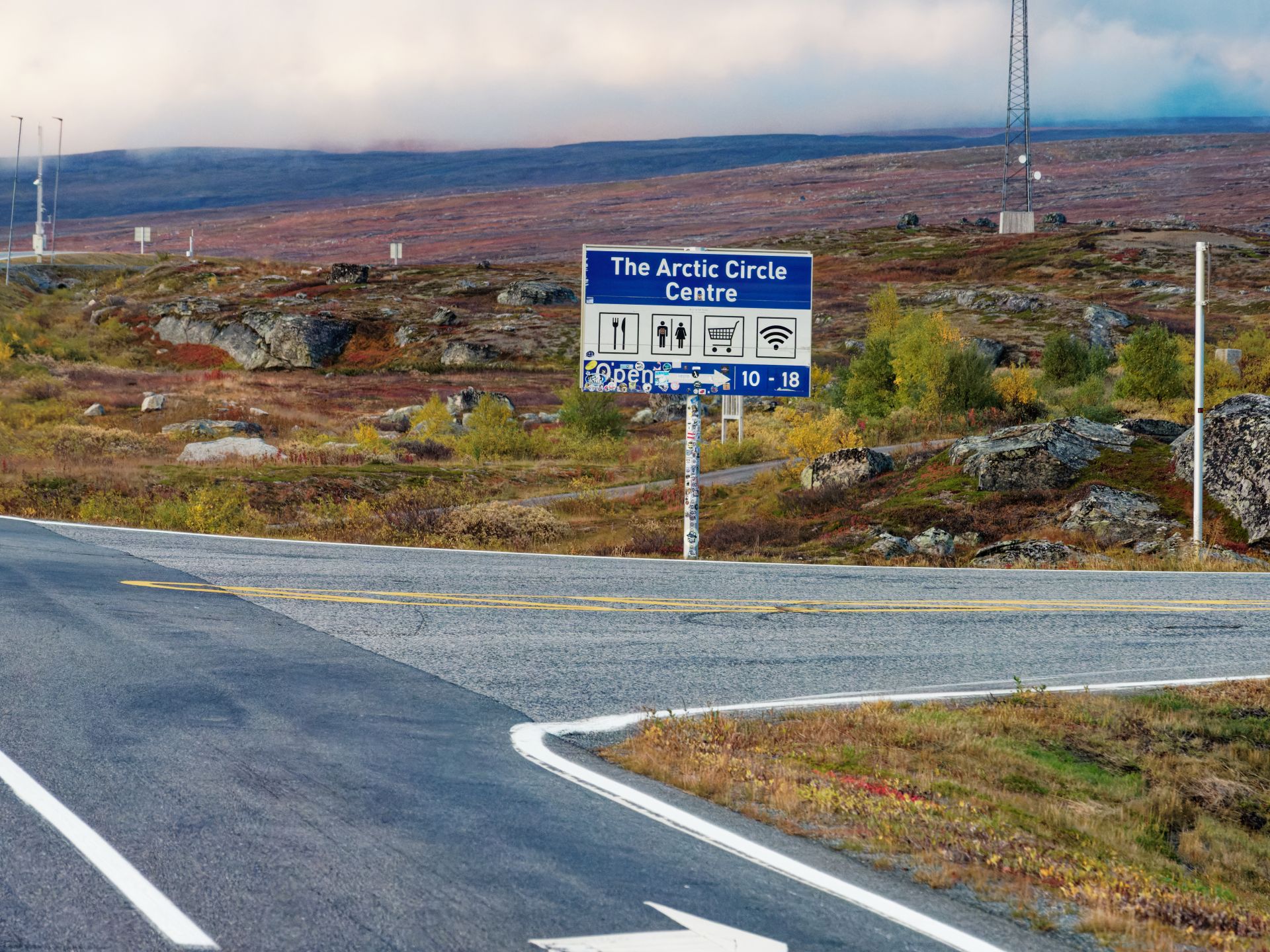
Arctic Circle

Early breakfast next day before the 07.49 train north from Trondheim to Bodø. We had timed our journey round the planned closure of the line for repairs. But it seemed as if the work had not been completed. Our train set off late, and had long waits at multiple passing points for southbound trains as much of the line is single track. Around lunch time when we saw railway workers eating iced buns at their picnic table at the side of the tracks, we got out the bag of cinnamon buns we had prudently purchased but kept our sandwiches for later. The train crawled on a bit further and stopped in a dark forest – the kind of forest where wolves and trolls might lurk at night. By now we were running 2 hours late. More golden-leaved birch tress, rivers, forests, bare hills and mountains tops, peaty heath, fjords, wind turbines and even a rainbow. Around 5pm a voice announced in Norwegian then English that a train was stuck on the line ahead, so at the harbour town of Mo I Rana we would board a replacement bus for the 3 hour drive to Bodø. Thus it was that we crossed the Arctic Circle not in a train but on what turned out be a very comfortable coach where we had front seats and great views of the most scenic part of the journey. We followed the E6 road at a steady pace through golden trees, at first behind a tractor then with lorries swooping downhill towards us with head lights full on, and then were overtaken by an unexpected open top blue car as we crossed the imaginary line of the Arctic Circle in its bleak, rocky landscape.
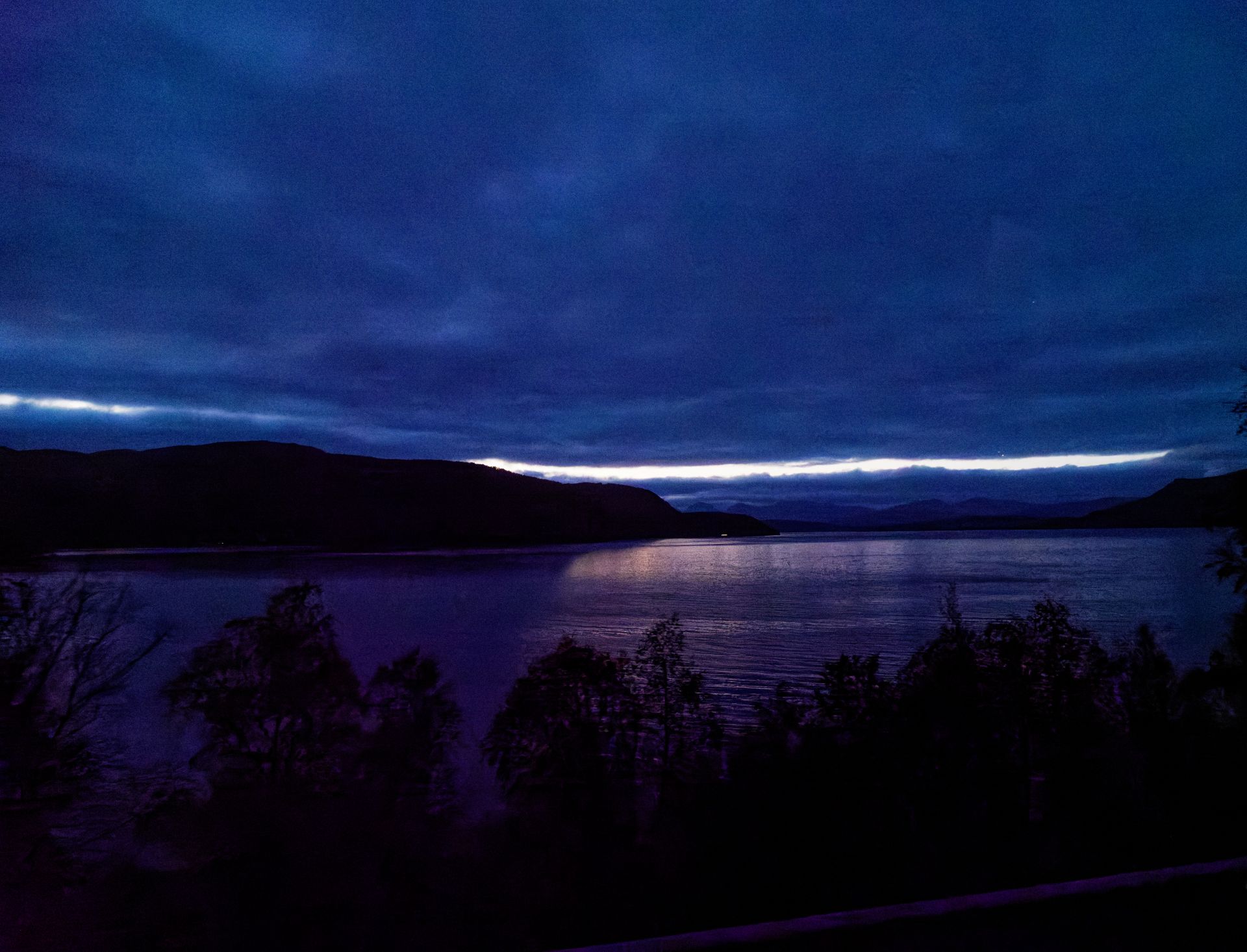
late arrival in Bodø

It was dark by the time we turned off the E6 into small towns where some passengers were headed, then we followed the coastline of the Saltfjorden to Bodø. It must have been nearly 10 pm by the time we reached our waterfront hotel room. Too late to hit the town in search of dinner. What a good thing we had saved our sandwiches.

flight over fjords

We woke late to a splendid view across the sunlit harbour from our 10th floor room. As there was no railway line north to Narvik, we took a 30 minute flight from Bodø airport to Evenes, the nearest landing spot to mountain-encased Narvik. With this combination of train, coach and plane we probably had more varied views of the fjords and curiously shaped mountain tops than we would have had from a cruise ship. The airport bus waited for the flight from Oslo before setting out on the hour’s drive round the Ofotfjorden to Narvik. Hideous hairy trolls in all sizes leered at tourist from gift shops. The Narvik War Museum gave a good account of the Battle of Trondheim (known to Helen only from a Biggles’ adventure), the German occupation and the collaboration dilemmas faced by inhabitants (the hospital treated the injured of all nationalities; the hospital director was highly esteemed by the Germans but used it as a front for his resistance activities). At the Fiskekroken restaurant we chose Arctic char and smoked cod on our first evening and both had halibut in lobster sauce washed down with Lofotpils on the second evening. Delicious. Our best chance of seeing the aurora borealis had been in Narvik, but sadly the weather was too overcast both nights.

Narvik-Abisko bus

Disaster struck on out eighth morning. When straightening up from treating his afflicted big toe, John twinged a disc in his back. We were due to follow a historic train track from Narvik to Kiruna that afternoon and this did not bode well for lugging suitcases and sitting on replacement buses and trains. The track had opened in 1903 to transport iron ore from the mines in Kiruna in Sweden to the ice-free Norwegian port of Narvik (the Baltic ports were not accessible all year). But current engineering works on the Norwegian section meant we took another replacement bus (again comfortable and with good views) over the border with Sweden (where border controllers/customs inspected), picked up a lot of wet weekend hikers with rucksacks and tents, then at Abisko caught the usual train on to Kiruna, a mining town which is literally on the move.

Kiruna was founded in 1899 on land where the Sami people of Lapland used to herd reindeer. However, the world’s largest underground iron ore mine led to cracks developing in buildings as well as subsidence after 2004. It was decided that in order for mining to continue, much of the town, including 6,000 of its inhabitants and the hospital would be relocated to a new town centre 3 km to the east. Our hotel was the nearest one to the railway station and would be moved in the second phase. The friendly receptionist told us that a lot of people stayed there for several months working on projects. Our room was spacious and old fashioned, with plenty of storage space (useful for those long-stay workers). With John’s back not improved by the journey we decided to eat at the adjacent Arctic Thai. It was a large canteen-like room with a hatch along one wall. Thai women stirred huge tureens of food in the kitchen. Men were silently scoffing huge portions of steaming food. Not having endured a hard working day, we were unable to finish all of the tasty food ordered at the hatch and heaped on our plates.

New Kiruna centre

Hotel breakfast next morning did not have the fancy pastries of previous hotels, but included herrings in mustard sauce, finely chopped reindeer in sour cream and pancakes. Kiruna tourism websites recommend spending a day with reindeer or riding a chariot drawn by husky dogs. But, while John rested before the overnight trains to Stockholm, Helen caught a local bus to see the new town centre architecture. There were bulldozers and lorries (and diversions along the bus route) engaged in the first phase of demolition as well as busy constructing the new town centre. The Krystallen, the city hall, was the first new building, whereas the large red timber Kiruna church had been moved intact. The grid of new buildings were not in a uniform style but nor were they very interesting architecturally, apart from the Scandic hotel. However there was a good pharmacy for Ibuprofen supplies and Co-op for food for the overnight journey, as well as the city hall, cultural centre and good library. By the bus stop a large sculpted worker’s fist clutched ore and some crudely sculpted white birds squatted on the pavement, possibly gulls pining for the sea.
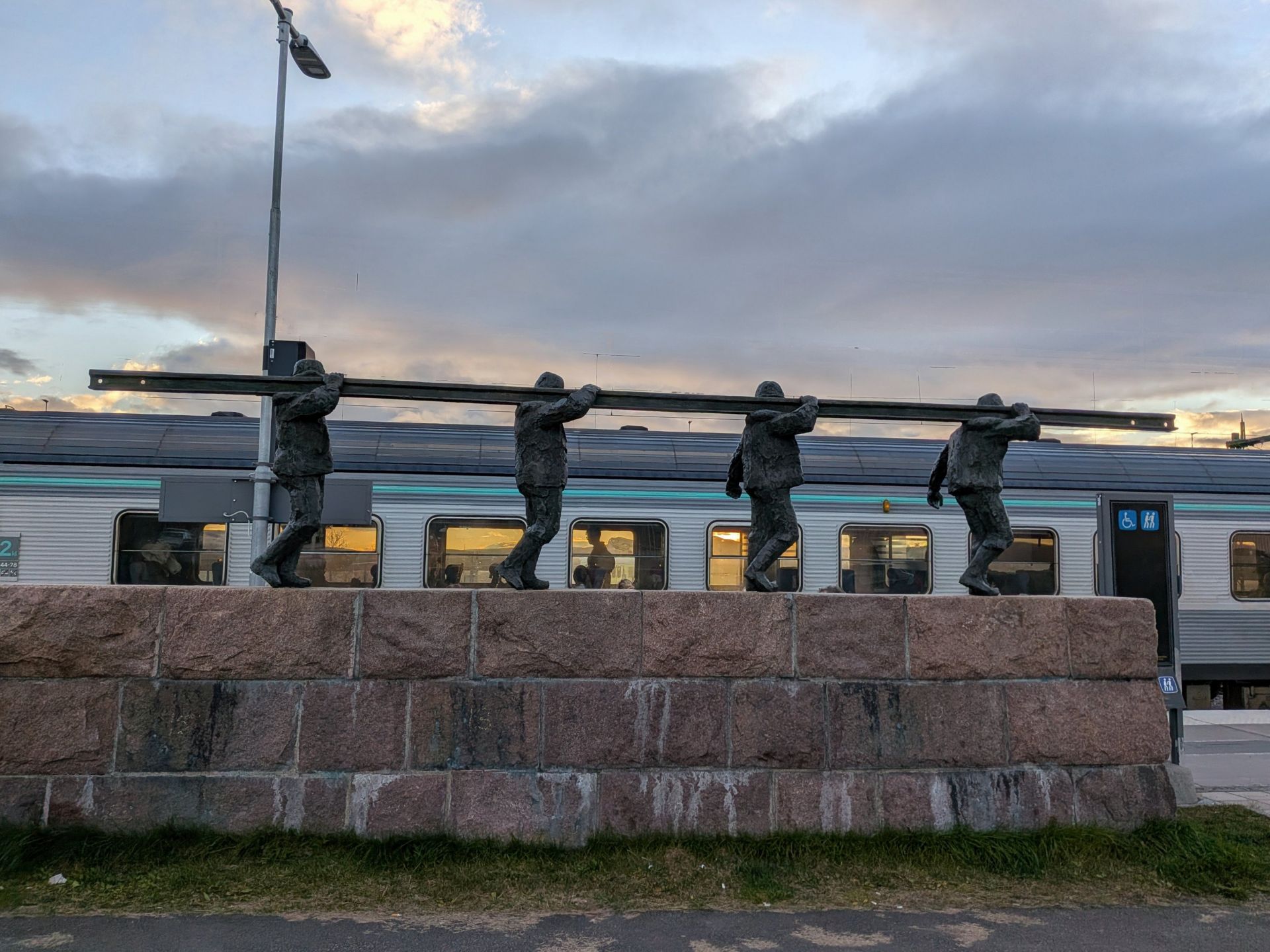
Kiruna station sculpture

Back at Kiruna station that evening we noted another sculpture – four railway builders walking along the top of a wall with a length of rail. We passed mountains of black slag as we pulled out of Kiruna towards Boden, where we changed onto the Stockholm sleeper train.
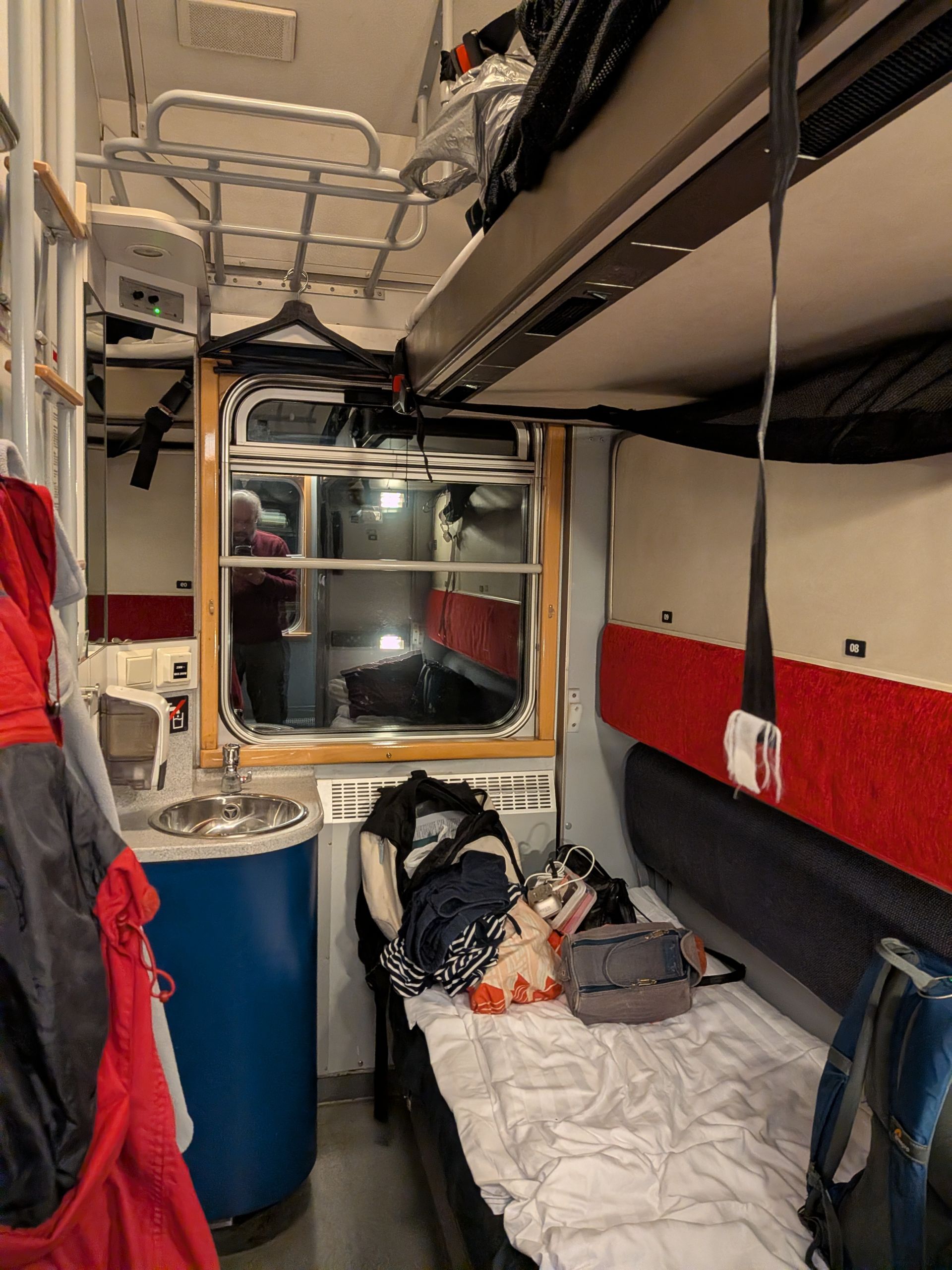
There is still a certain Orient-Express romance about sleeping in a couchette on a train, even if the compartments were narrow and cramped and the ladder to the top bunk rather steep for an octogenarian. We slept for much of the 600 mile journey south from the iron ore mines to the capital and woke to a softer landscape of lakes and isolated red wooden houses. More cinnamon buns with coffee. Our train pulled into Stockholm Central soon after mid-day. Available hotel rooms in Stockholm were scarce that week, and our hotel felt like a converted underground car park or storage unit with its rows of cell-like basement rooms, most without windows (ours did have one but with a view of the railway line). Unfortunately, because of flight timetables we only had one afternoon to explore Stockholm.

Stockholm Dutch gables

We headed for the old town, where we enjoyed the narrow streets, fountains, squares, churches and the colourful Dutch-gabled houses in the Stortorget. As John lowered himself cautiously onto a bench, a bulky American tourist, whose ancestors came from Bergen, commiserated at length about bad backs. We walked on past the cathedral, palace, parliament and the prime minister’s work place (it was former a bank and as there was currently no prime minister to protect between elections, one of the guards chatted and pointed out the coins in the decoration over the doorway). The day concluded with an extremely good Italian meal (with better tiramisu than we’d had anywhere in northern Italy).

Fiskeriet Bjorvika restaurant Oslo

The last leg of our great northern train journey was a five and a half hour train from Stockholm to Oslo, where we stayed at the same Mughal-horsemen-wallpapered hotel. Rain curtailed our exploration of the older part of the town, but the fish at the Fiskeriet restaurant was as good as on the first night. It was a shame our trip ended with a handyman’s late night efforts to unblock our sink (not our fault!), leaving a nasty smell of drains, a leak and a wet floor.

Back in Entre-deux-Eaux after our flight from Oslo to Basel, our neighbour Daniele greeted us with punnets of tomatoes, courgettes, chard and basil from her garden (which must be the most productive in the village this dry year). She also told us the sad news that Nelly Duhaut, the wife of our mayor, had died. Nelly was a kind, homely, modest person who is much missed. We have known her since 1990 when Toby and Leila had played with their son and his friends when we first holidayed in our houses here). The village church was packed for her funeral, with people standing inside and in the graveyard.
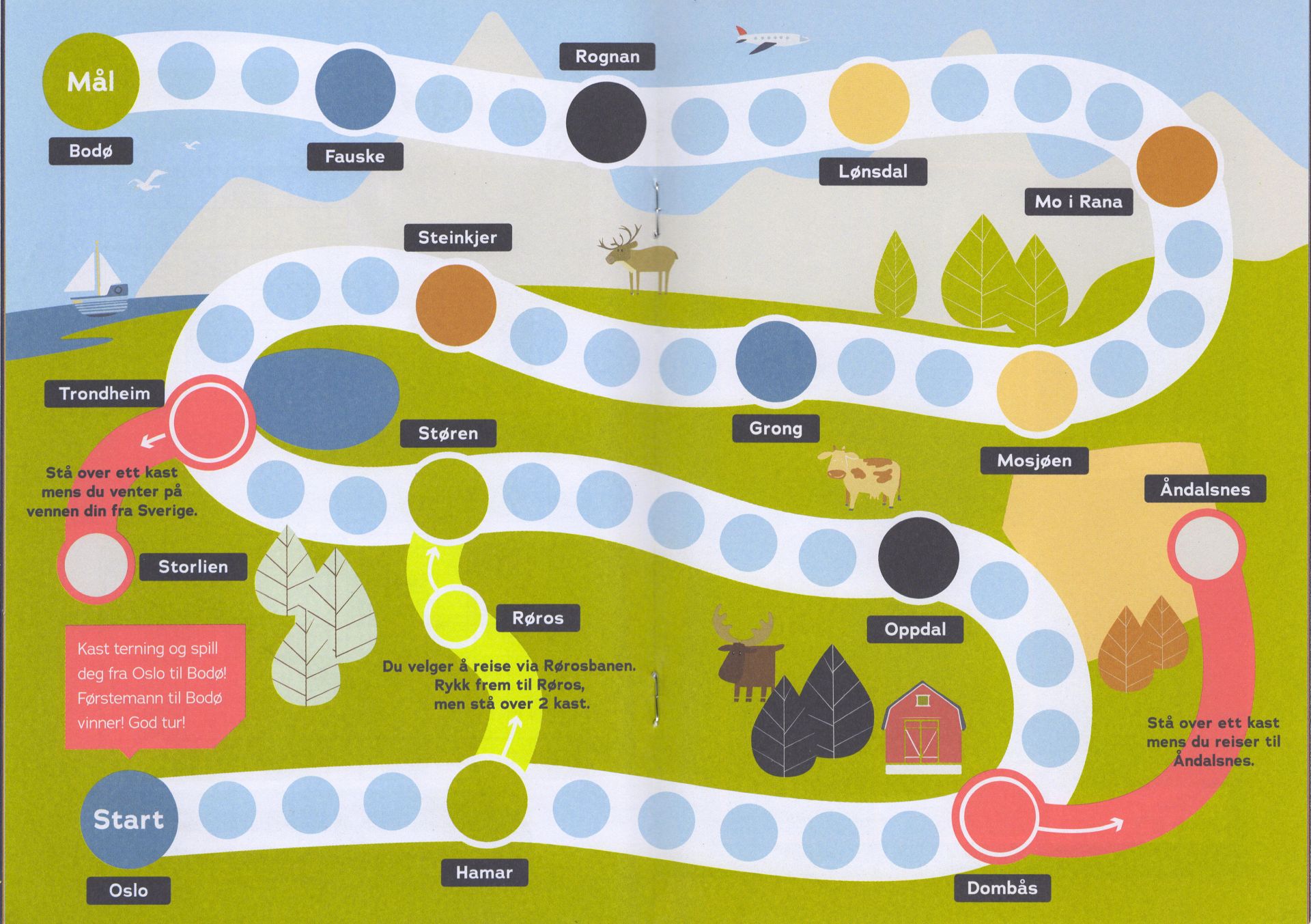
SJ Nord Oslo-Bodø rail puzzle

We did not forget our Norwegian travels. While John downloaded his photos, Helen used some of the puzzles for children in a booklet John had found on the train from Trondheim to Bodø as part of the brain exercises for her group. Last time she led a session they had deciphered Franglais; this time they had to make sense of the Norwegian instructions in order to help a little troll find her way from Oslo to Bodø; perhaps the hazards encountered in a snakes and ladders game should have included “line repairs ahead mean you wait one turn before the replacement bus arrives.”

There were reminders of some of our earlier travels during the Geography Festival in Saint Die at the start of October. Helen enjoyed watching “Lady Nazca” about Maria Reiche’s work on the lines and patterns in the Peruvian dessert which we had once flown over in a small bi-plane. But she met none of the promised Romanian gypsy musicians roaming the rainy streets. Perhaps they preferred to keep their instruments dry.

There has not yet been enough rain to enable water-use restrictions to be lifted in the Meurthe basin where we are. But the cows are out in the fields now as the grass gets greener. Newspapers have reported reduced wine production in other regions due both to the decline in cultivated areas and to yields reduced by a hot and dry summer. So we were pleased that one of the wine-makers in Alsace from whom we have previously bought, wrote that their grapes had ripened quickly this summer; the harvest had started early on 20 August; the volume and quality were fine, and the first juices promise a good 2026 vintage. Cheers!
Lethargy, marriage and mosaics: Everyday life in and away from Entre-deux-Eaux, April – July 2026

As well as the highlighted links in the text,
there is comprehensive set of photographs of the
Italy and Switzerland trip
including the World Heritage sites
Biblioteca Queriniana Brescia
Capitolium Brescia
Santa Giula Museum Brescia
Massi di Cemmo archaelogical Park Capo di Ponte
Naquane Rock Engravings National Park Capo di Ponte
Seradina-Bedolina Parco Archeologico Communale Capo di Ponte
Saint John Convent Munstair

The printable PDF of the text is E2E2026no2.pdf (six A4 pages)

14 July, Bastille Day. Normally the scene of exuberant firework displays. And this year the added excitement of France’s semi-final world cup match in the evening. But all firework displays were cancelled or postponed because of the heatwave and fires. And to add to that night’s disappointment, France lost against Spain.

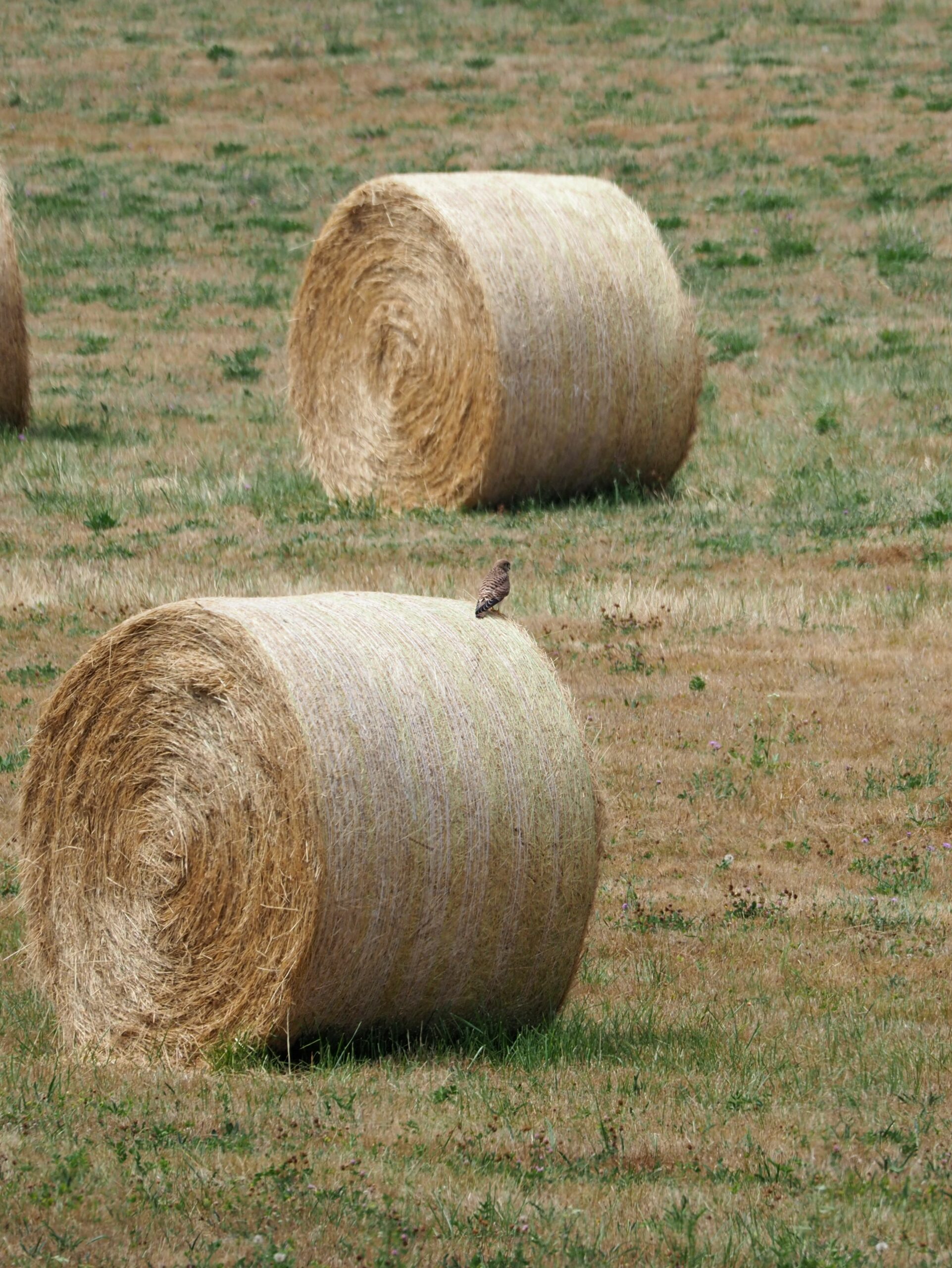
hay bales and kestrel

During the June-July heatwave, or canicule, our everyday life in Entre-deux-Eaux was reduced to pre-breakfast sorties into the garden to pick dwindling quantities of raspberries and blueberries, followed by sedentary indoor activities with the blinds down and several electric fans blowing on high. Neither walks not indoor exercise in temperatures up to 38°C appealed as we reclined listlessly, and most of our contacts also stayed indoors. The June activities of the Marguerites club like the final board games session, the BBQ by the pond and the petanque contest were all cancelled. Feux de Saint Jean bonfires and 14 July fireworks were cancelled everywhere. On the last weekend in June, Saint Dié cancelled not only their Feux de Saint Jean but also the shooting competition, World Refugee Day activities, a canine agility competition, a duck race, and a rock concert. It began to feel a bit like the isolation of the Covid lock-down. Only our medical appointments continued as normal. Outside the farmers worked hard, usually by night, hay-making and adorning the fields with huge golden bales.

But the hay bales were to become a danger. One Friday in July, on men’s semi-finals day at Wimbledon, John was just about to make mid-day coffee when the fans and other electrical appliances stopped abruptly. The radio and computers limped on until the several back-up UPS ran out. Time passed with no coffee and no indication of how long the power cut would last. The tennis semi-finals were far less exciting when watched on a mobile phone screen. The ENEDIS (electricity distribution) web site update stated supplies would be restored by 14.30, but eventually changed and just said the power cut was ongoing, Then, over four and a half hours later, the fans whirred back into action. We received an e-mail from the mairie. There had been a big harvest fire in the fields behind the football pitch that morning, fought by over fifty firemen as it spread towards surrounding forest; the power had been cut as a precaution when an overhead cable was threatened by a burning wood pile immediately below it. Residents were requested to be sparing in their use of water as it had not been possible for water to be pumped through from the nearby village of Saint Leonard during the outage to top up the storage. We were initially surprised that we had not smelt the smoke or heard any emergency vehicle sirens, but the football pitch is about 2.5km away on the other side of the hill, so we were shielded from the fire. Gendarmes have been investigating but it is not known if the fire was deliberate or careless. Of course, this village fire was nothing like relentless forest fires affecting huge areas elsewhere, but it was a local drama.

There is now a strict ban on watering gardens and fields, using hose pipes, filling pools and washing cars. Even commercial car washes have had to shut despite their obligatory water recycling/filtering systems.

juvenile kestrels 23/6

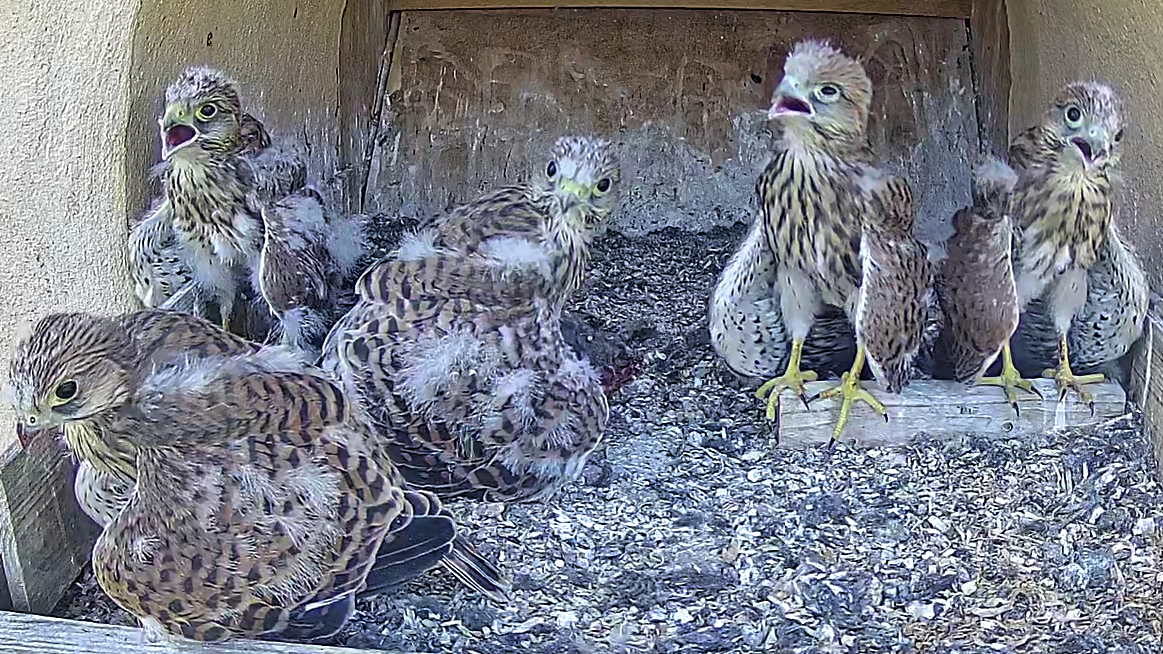
This year’s baby kestrels also suffered during the heatwave. The first egg was laid on 22 April and followed by five more. All six had hatched by the end of May but the weakest died a few days later. Kestrels only get water through food, and during the canicule, the adult kestrels found it difficult to find food for their chicks. The juveniles fledged at the end of June, a few days later than the usual time after hatching. They are still in the trees around and have occasionally visited their old home on our attic windowsill during July.

One of our rare sorties in the heat was to a local firm, following their engineer’s visit, to sign a contract to install air-air heat pump/air conditioning units on 20 July. But there have been supply delays, followed by holiday closures, so it will now start at the end of August. Meanwhile, after several years, a reduction in VAT from 20% to 5.5% on air-air heat pump units has been announced (it was already 5.5% on air-water heat pumps). Fortunately the end of July has been a bit cooler but there are further heat wave warnings.

During this welcome lull in the heatwave, we have taken full advantage. Helen joined a walk round Saint Dié’s Art Nouveau buildings, and we booked lunch at a couple of restaurants. We have been going to the Frankenbourg restaurant Alsace over the last 30 years and watched it go up market and also gain a Michelin star. We used to see workmen enjoying the menu of the day in the old more basic restaurant. Now it is businessmen in suits who bring their clients to the spacious up-market extension. Their reminder of our latest booking included the words, “to preserve the refined atmosphere of our establishment, we kindly ask you to dress smartly for your visit. Simple and relaxed elegance will be perfectly appreciated.” Would we be sufficiently refined for them? It brought back memories for Helen of those snooty head waiters of the sixties and seventies talking down to clients. Guillaume explained, when questioned after our meal, that he felt that standards were slipping now when clients wore shorts, jogging outfits and football shirts. Acolytes in Selestat had no such requirements, the clients were well dressed, the atmosphere calm and the 4 course menu delicious.

During the worst of the heat, humidity and lethargy of June and July, it was pleasant to look back on Toby and Rachel’s wedding on 2 May and our early June trip to northern Italy.

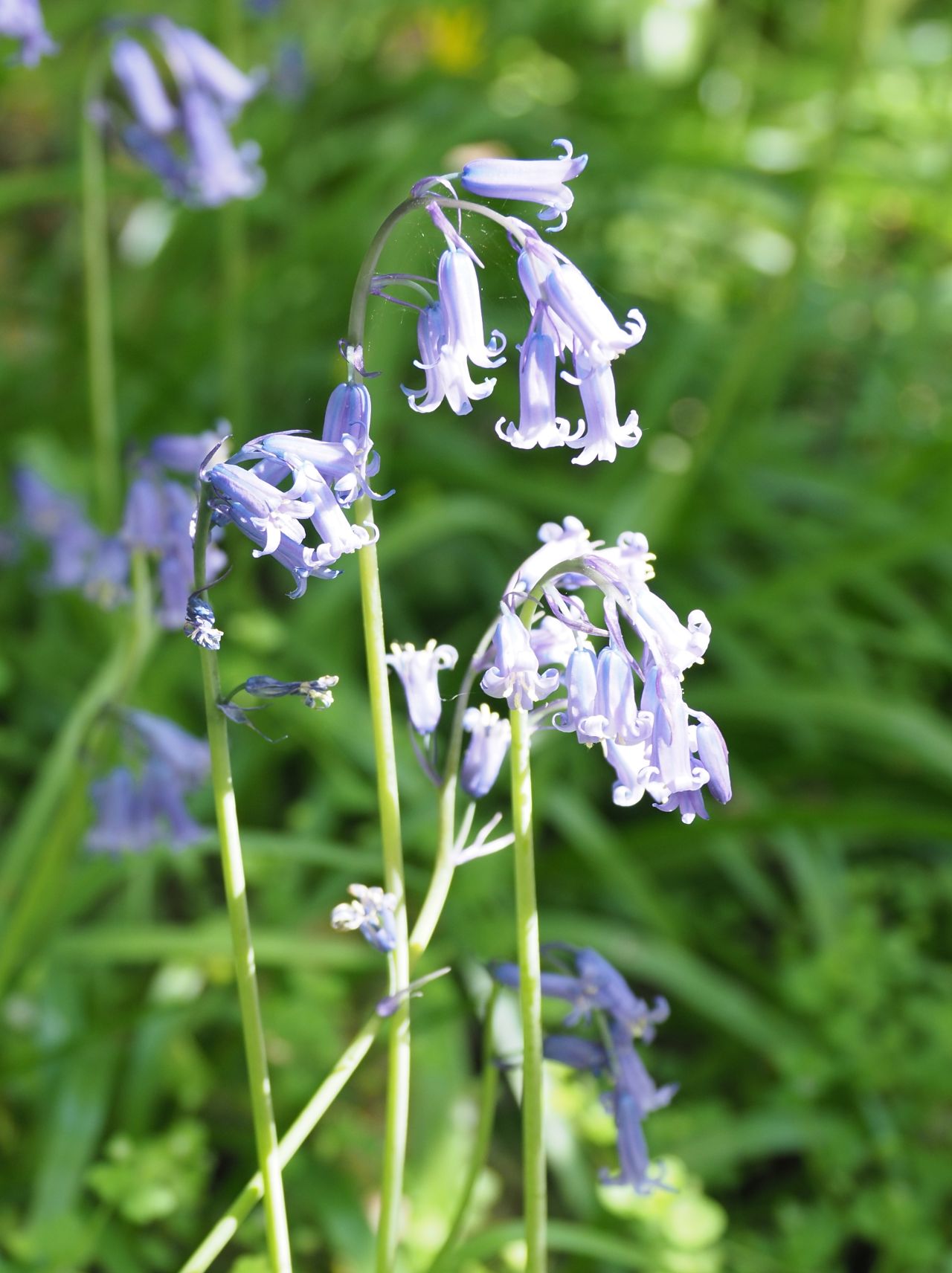
In mid-April we drove from Entre-deux-Eaux, via the Channel Tunnel, to Ann and Derek’s in Tenterden. It is always pleasant to start our UK visits catching up with them, and we were able to co-ordinate our plans around the wedding. Ann also mentioned that the bluebells in the adjacent woods were almost over. It seemed early for them to be fading (perhaps another indication of climate change) as Helen’s childhood birthdays were always celebrated in mid-May with a bluebell picnic. So next morning we strolled into the copse, enjoying the delicate scent and the blue/mauve colour stretching to haziness.

When Toby had talked on the phone about buying suits for himself and for Jacob for the wedding, we started to think about our own outfits and rummaged in our wardrobes for formal clothes. The kipper ties, flares and op-art skirts evoked happy memories, but we soon realised that good food and reduced exercise had taken their toll over recent years. Our elegant jackets and waisted dresses of past years would no longer button up. So our first few days in the UK were spent shopping. John found a suit in M&S on Stevenage’s Roaring Meg retail estate (the name always sounds like a raggle-taggle gypsy-O) and Helen found a dress in the ever reliable John Lewis in Cambridge, but John’s Indian silk tie and Helen’s velvet jacket were relics from the past. (Perhaps we should have worn the outfits for our meal at the Frankenbourg as our contribution to Guillaume’s refined atmosphere)

It might have been well past Easter, but UK supermarkets were still flogging hot cross buns in a wide variety of flavours. We tested some of the less outrageous combinations, but you can’t beat the traditional taste. Remember the days when they were only available on Good Friday? The smells outside bakeries as you queued for freshly baked buns?

With wedding outfits and breakfasts sorted, Helen had a last minute thought. The spokes on her folding umbrella had broken, and it might be unwise to attend a wedding with a defective umbrella. We remembered the torrential rain at one family wedding in the Lake District, the barrage of umbrellas at the lych gate and the bride’s wellington boots. We also recalled a wonderful London umbrella shop. As its website proclaims, “The gentlemen of London have entrusted the making of their umbrellas to James Smith and Sons for over 185 years. Whether combining a bowler hat with a Slim Rolled Umbrella in the City of London or using a Solid Stick Umbrella as a walking aid, the little umbrella shop on the corner of New Oxford Street continues to produce umbrellas of the best quality.” But which local shop to try in Letchworth? Charity shops, supermarkets and hardware shops were distinctly lacking in umbrellas. One shop even said it was the wrong time of year for them! However, the staff in the large B&M store thought they might have some, probably in the centre by the garden furniture (no, those were large garden furniture parasols). Finally a bin was found beyond the check-out tills, handy for a wet get-away.

Ann and Derek stayed overnight in Letchworth with us, and we drove up separately to Melton Mowbray the day before the wedding. They had rented an Airbnb, and we were staying in one of the two rooms above the Hammer & Pincers restaurant in Wymeswold, but we dropped off some crémant at Toby and Rachel’s on our way. Toby had just returned from the barber’s and Rachel and Farrah returned later from shopping. It was good to see Toby’s old university friends, Jordan and Ed, again. Jordan would be best man next day while Jacob would be the ring bearer. As the doorbell rang and more friends arrived, we left them in controlled chaos. After we had booked to stay at the Hammer & Pincers, Farrah had co-incidentally started working some shifts there in addition to her shifts at the Tap and Run pub and her college catering timetable, so the owners knew all about the wedding. Later Leila joined us there for dinner after she finished work, along with Ann and Derek.

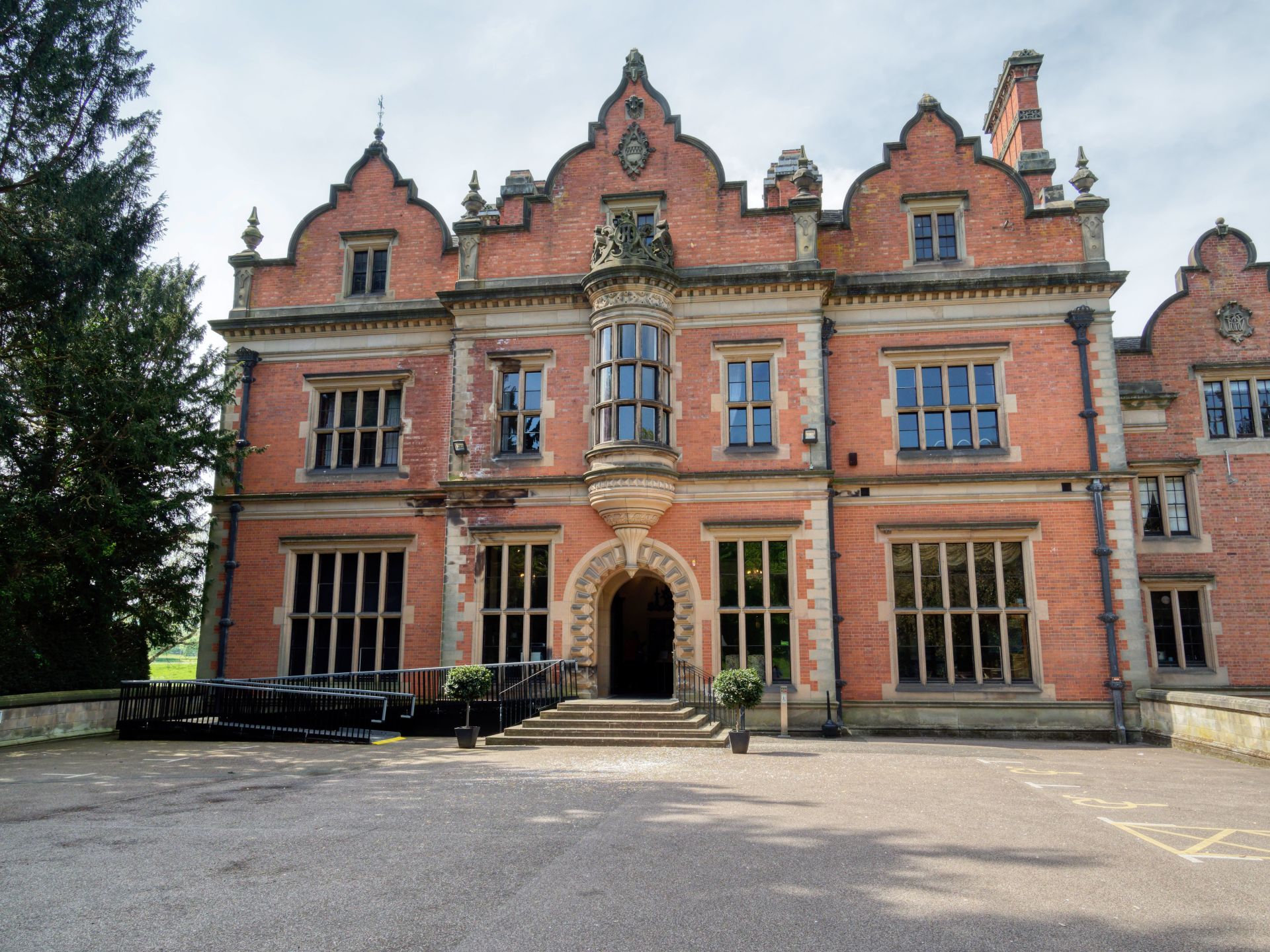
Beaumanor Hall

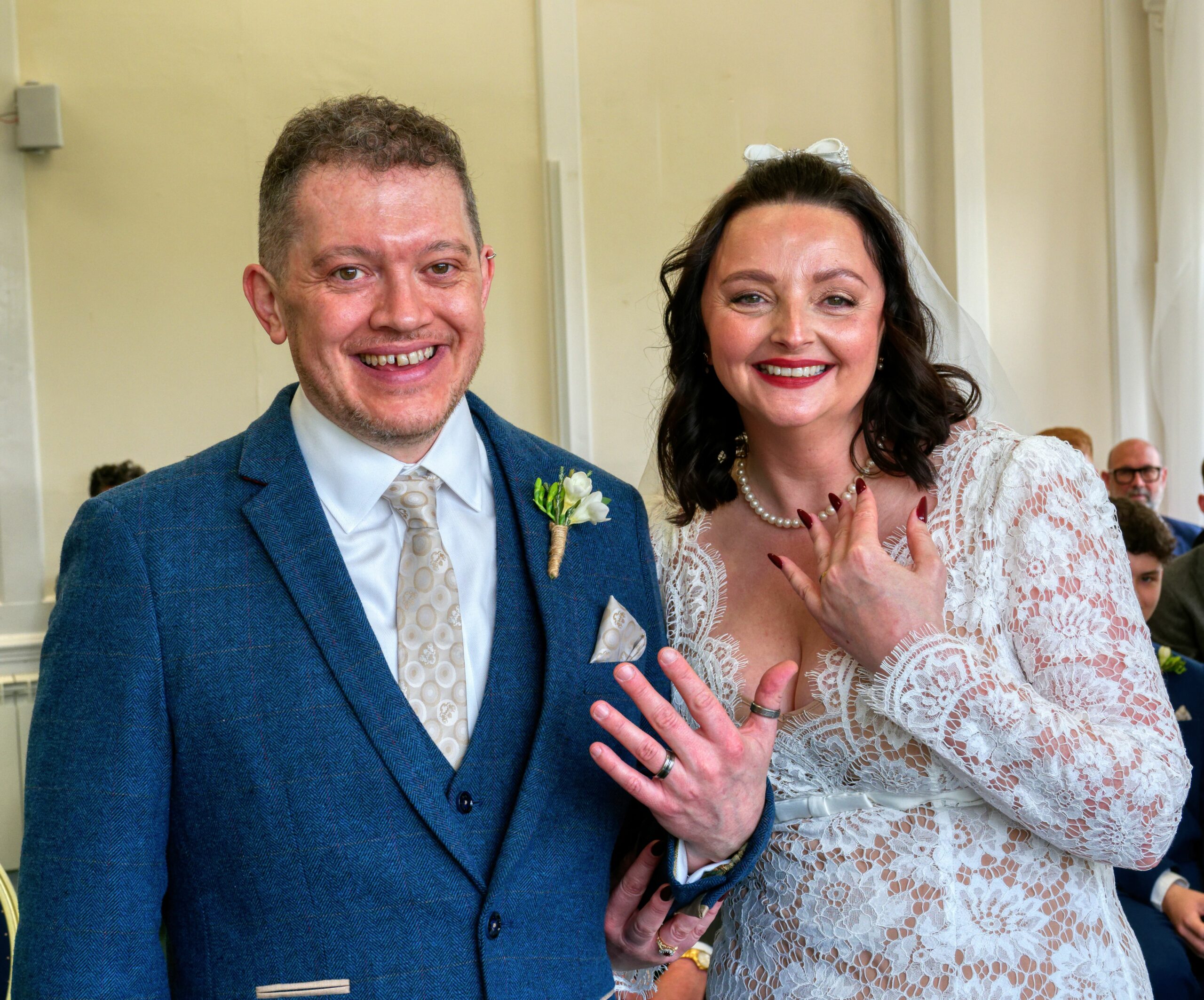
The wedding day was lovely and sunny. Who needs an umbrella? We had originally pictured an impersonal registry office, but Beaumanor Hall in Woodhouse is an imposing 1840s country mansion set in extensive grounds and the weddings were well spaced out. We had been asked to arrive by 1.40pm. and the previous wedding couple had vanished in an omnibus bearing their names as our wedding party sat by their cars munching the sandwiches they had prudently brought. (We had stoked up at the Hammer and Pincers on the chef’s full English breakfast before being waved off in style to the wedding by his wife). The ceremony was held on the first floor of the Hall, and we swept up a magnificent carved wood staircase which was illuminated by a large stained glass window. The registrar was welcoming and gracious and spoke throughout as if she had known Toby and Rachel all their lives, so it was very personal. Rachel’s three daughters sat together, elegant in their long dresses/trouser suit (Holly looking a little nervous about her reading), and Jacob sat quietly by them holding the ring box. John and Ed were encouraged to take photos. Then tears welled up as Rachel’s father walked slowly up the aisle with his stick in one hand and Rachel on his other arm, Rachel elegant in a white lace dress with a posy of white freesias. The registrar led a really meaningful exchange of vows and love, Jacob quietly produced the ring, Holly read beautifully, and Leila and Rachel’s sister witnessed their signatures. Toby had requested some photos on the staircase with the stained glass behind, and there was also time for some photos in the garden. Then the guests left the splendour of Beaumanor Hall in search of the contrasting-sounding reception venue of the Old Cow Shed in Kirby Bellars.

Originally guests had been invited for food back at their house, but the event had grown and Toby and Rachel had booked the converted barns, covered yard and bar of a former farm, which made a pleasantly informal wedding venue where guests chatted in the paddock over bubbly, lots more photos were taken and the best man gave his speech. All this time the sky was clouding over. Most people had retreated to the tables and chairs (and bar) in the covered courtyard by the time the pizza van in one corner started serving. After the pizzas, Jacob organised card games with his cousins, aunts, uncles and grandparents. And then, when we were all warm, fed and entertained, the heavens opened and the roof covering was pounded by heavy rain. And where was Helen’s new umbrella? In the car which was parked in another field. It was late by the time the guests started to disperse after the rain had abated, leaving the wedding party to retire to their on-site stables and shepherd’s hut at the end of a beautiful, happy day.

In the next few days we were able to catch up with old friends in Nottingham over morning coffee, lunch and afternoon tea. Leila also booked a table for Sunday lunch with the three of us, Ann, Derek and Steven’s family in the pub near our former Wollaton house. And we saw Toby and Rachel after their return from the Old Cow Shed. (Their honeymoon was to be in Tenerife a few weeks later). We were pleased to meet up with other friends before we returned to France, though sorry that illness prevented some visits, and that long delays on the M25 reduced our time with another friend before we took the Eurotunnel back to France.

Lac des Quatre Cantons, Lake Lucerne

After the usual medical appointments that awaited us in France, we made some last-minute travel plans to drive through Switzerland to northern Italy, and set out on 7 June. This time we had the necessary vignette for Swiss motorways, so admired the views of Basel from the motorway (remembering our pleasant few days there in March). John had found a hotel off the motorway with views across Lake Lucerne for our first night.

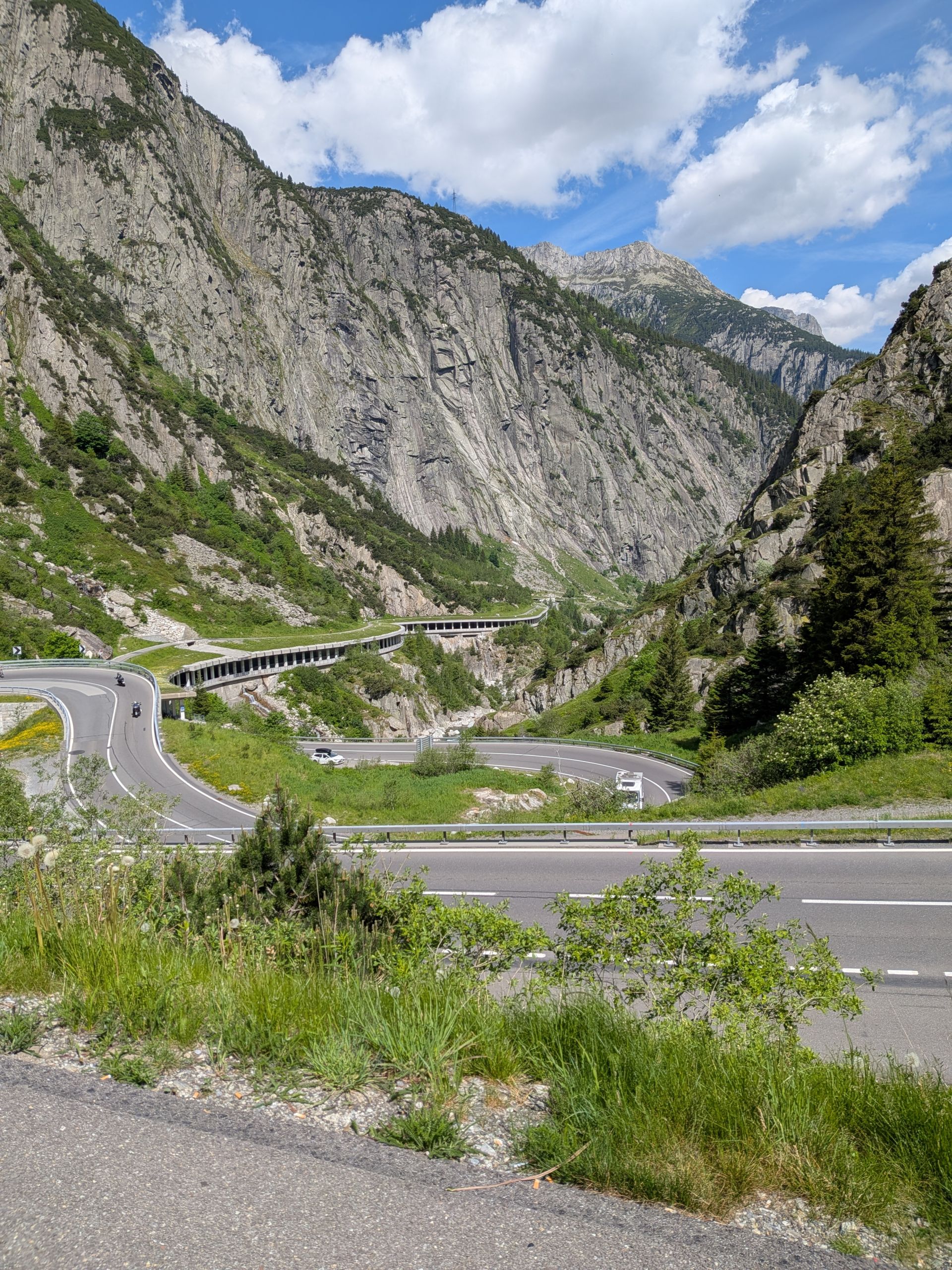
going up the Saint Gotthard pass

The next day we decided it would be more fun to take the road over the Gotthard Pass, hairpin bends and all, rather than queue for the long (16.9 km) motorway tunnel. When we pulled over after one bend to admire the view behind us, John noticed that the car parked in front of us was leaking coolant. The young English owners were already on the phone for assistance, and we do hope they did not have a long wait in the heat by the roadside. The pass itself felt bleak despite the sunshine, and there was still snow to be seen in the crevices, but the views as we dropped down on the other side were spectacular. It was also interesting to be travelling in the opposite direction to our rail journey over the Gotthard a couple of years ago.

Fiat 1100 SM (Gobbone) 1948

We had decided to spend our first days in Italy in Brescia. Mosaics, frescoes, tired feet, re-routed buses, octopus salad, broken sandals, glue and hailstones jostle together in memory. The Mille Miglia vintage car endurance race was taking place that week, so there was little choice of accommodation. We were fortunate in that our ground-floor apartment, seemed newly furnished and equipped; we may have been the first renters. We were on a convenient bus route from our leafy suburb to the centre. But unfortunately all the buses on our first day were rerouted and skirted the centre because of the race, so we did a lot of unexpected walking to reach the Santa Giulia museum and had very tired feet that evening. There were no temporary route maps or revised timetables and the locals were equally confused.

The museum, in a former monastery, was fascinating, though so rambling that among the prehistoric, Roman and mediaeval exhibits we missed one of the chapels with its frescoes and had to go back next day and beg to be readmitted. We found the round Romanesque old cathedral and its crypt more interesting than the adjacent Baroque cathedral, and lingered even longer there when we heard the heavy rain storm outside. We got back to our apartment that evening before a violent hail storm which briefly turned the garden white. Later, John was upset to see that it had also pitted the bodywork of our new car quite badly. The bus route was flooded, with cars sending up arcs of spray as they drove past, and that night’s restaurant staff must have worked hard to restore the courtyard dining area next day. Other Brescia sights included the dramatic remains of the Roman Capitol with the Winged Victory inside, a massive suspended bronze rhinoceros pretentiously entitled the weight of suspended time, and the peaceful Queriniana Library founded by a Cardinal and donated to the public in 1750; in 2026 its tables were filled with students with their laptops, ignoring the shelves of dusty volumes.

Naquane Rock Engravings National Park

Seradina-Bedolina Parco Archeologico

We decided to give Milan and Bergamo a miss in the heat and at the height of the tourist season and next headed north to the Valle Camonica to see some of the prehistoric inscribed rock carvings which have become a World Heritage site. Our accommodation for those two nights was a more basic “bed and living” overlooking the railway line with a breakfast voucher for a coffee and croissant at the nearby Break Bar. As John read some of the more earnest interpretations of the rock incisions in the museum, he wondered aloud whether some of them were just as likely to have been made by bored shepherd boys than as sacred art. Over three days we scrambled round three of the sites in the heat. Some of the incisions were easier to see than others, and we could pick out animals, figures (some with weapons), ploughs, a four wheeled cart and a possible settlement map, but they looked like individual images rather than a design for a whole boulder face.

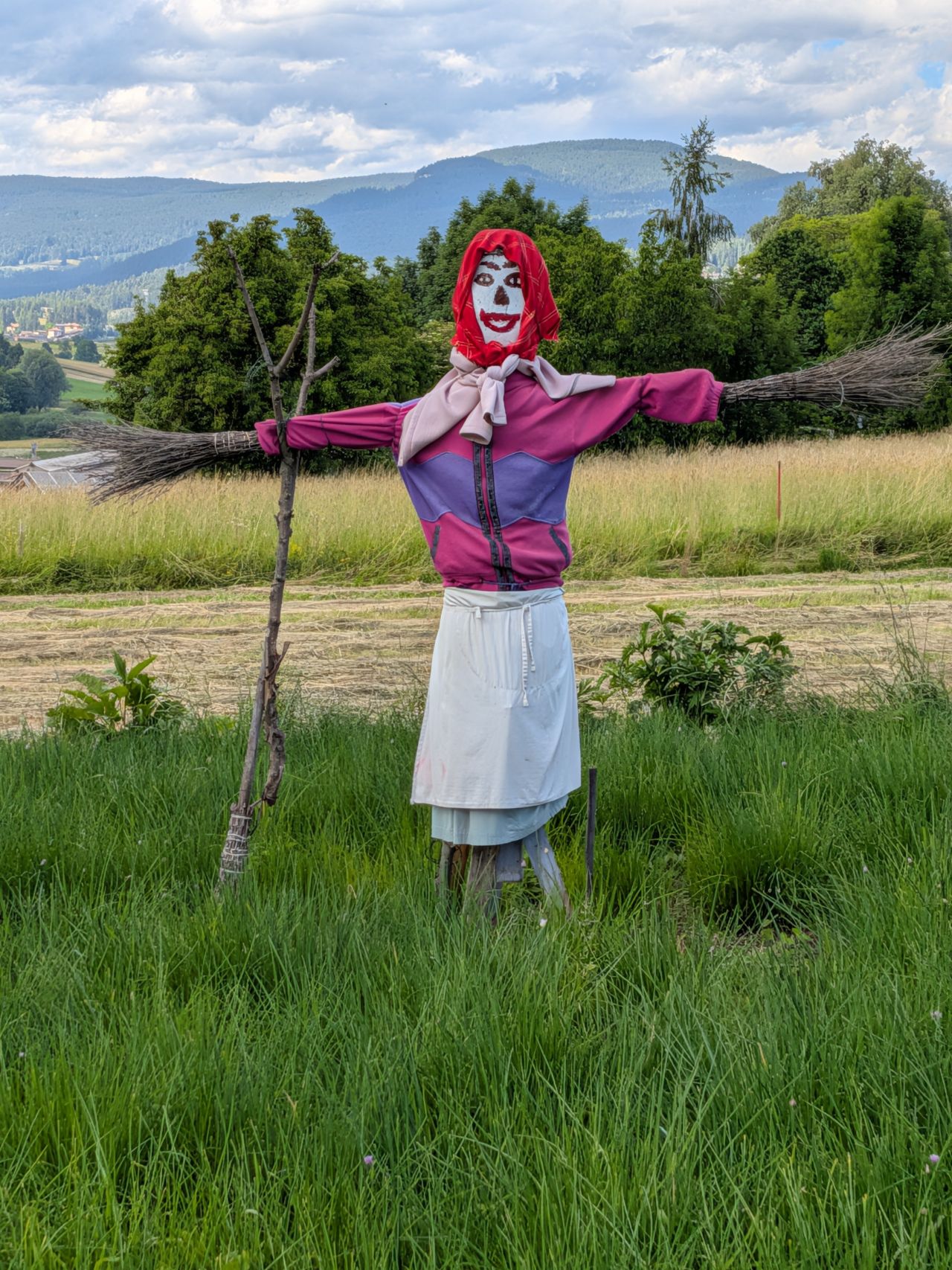
After a week of “culture” we were ready for a day of relaxation. We continued north up the valley, crossed the Paso del Tonale along with the Sunday strings of suicidal motorcyclists, and dropped down into valleys of apple espaliers around Bolzano. The Hotel Rosa Resort with its turrets and wooden balconies and female staff in traditional long skirts and bodices had a bit of a Ruritanian feel. The décor was “Trentino traditional”, with wood panelled walls, ceramic stoves, gilt framed landscapes, embroideries, patterned sofas, curtain swags and candelabra. Roses were everywhere, blooming in the garden, filling vases, and on the walls in paintings. Beyond the rose garden, a cheerful scarecrow guarded the chive patch, a farmer was haymaking and in the distance rose the mountains. The wifi in our room was hopeless, the food hearty, the apple strudel good and G&Ts potent. Jupiter was bright in the night sky above us.

Saint Johann Kirche

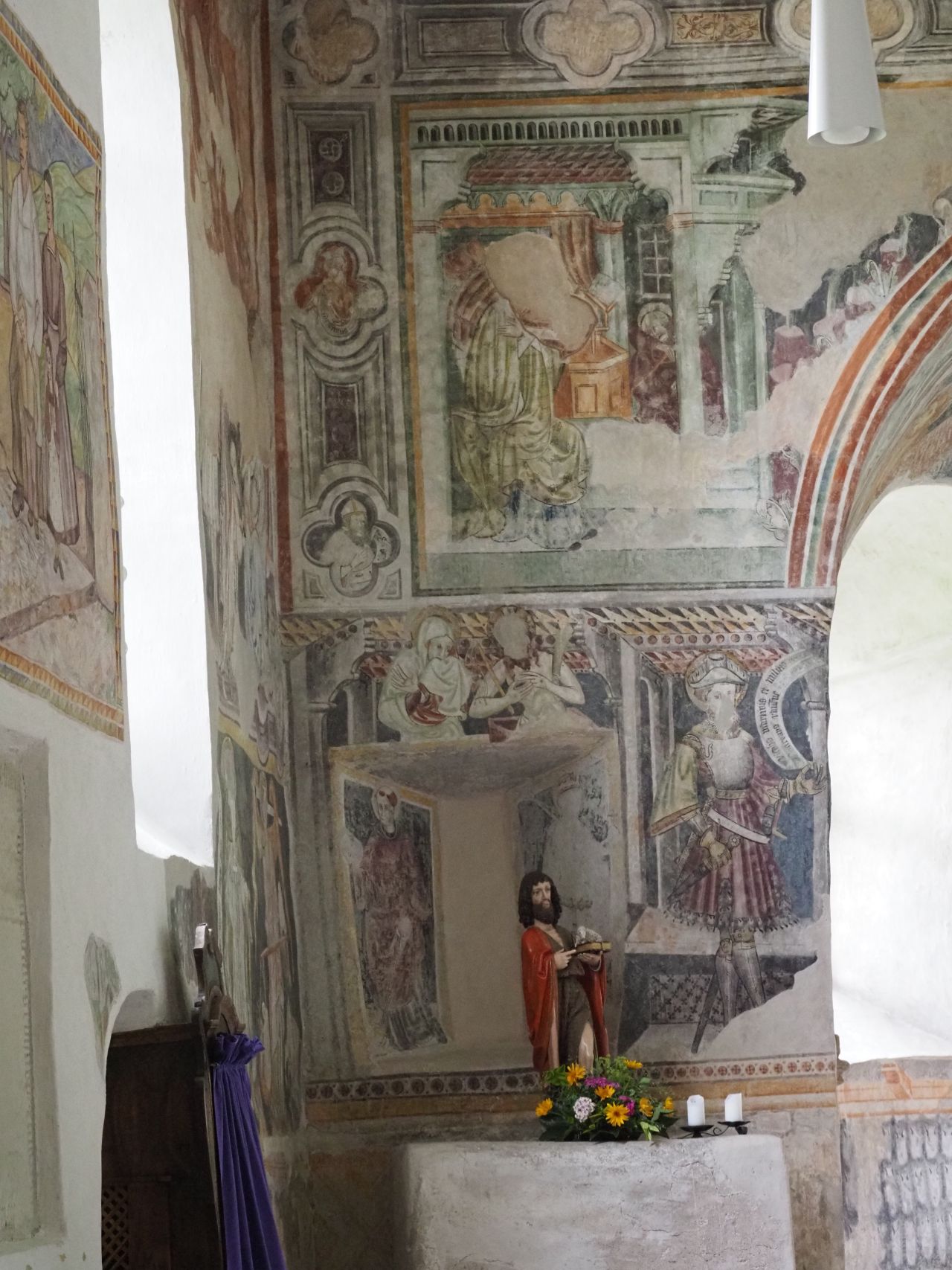
As we drove towards the Swiss border after our rosy relaxation day, we heard a mix of Italian and German dialects. We gave the Bolzano Iceman a miss, paused in the thermal town of Merano for coffee, cathedral and the Hapsburg splendour of the kurhaus and concert hall, and ended up at the Gasthof Stein in the small town of Prato allo Stelvio at the foot of the Stelvio Pass. We walked up to its Saint Johann Kirche, but were disappointed to find it locked and the keyholder on holiday. John managed to photograph some of the frescoes from 1420 and 1948 through small patterned glass windows.

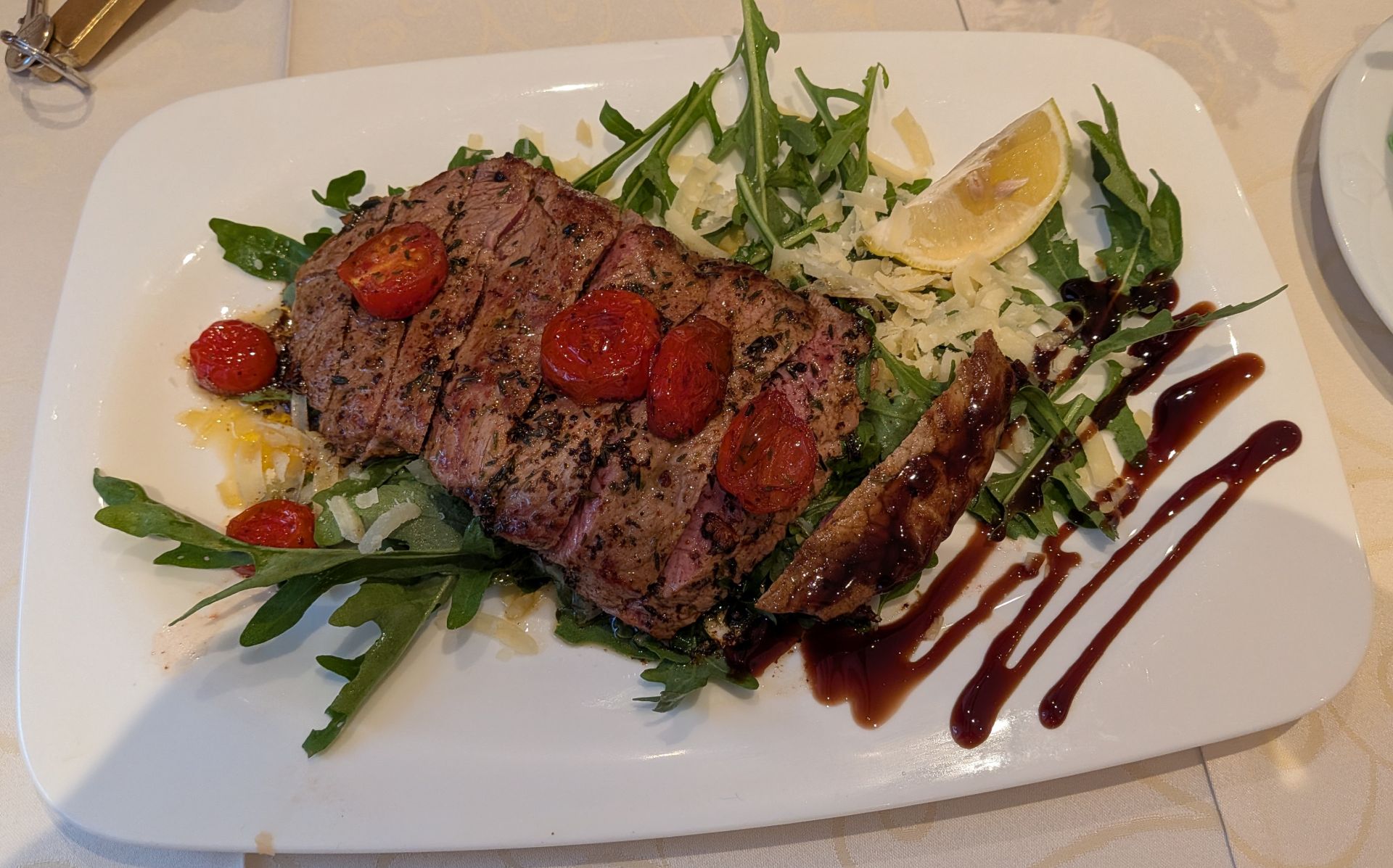
tagliata beef strips

Our last meal in northern Italy that evening was the best of the holiday with John’s tagliata beef strips on rocket, and Helen‘s taglierini and an even spicier apple strudel.

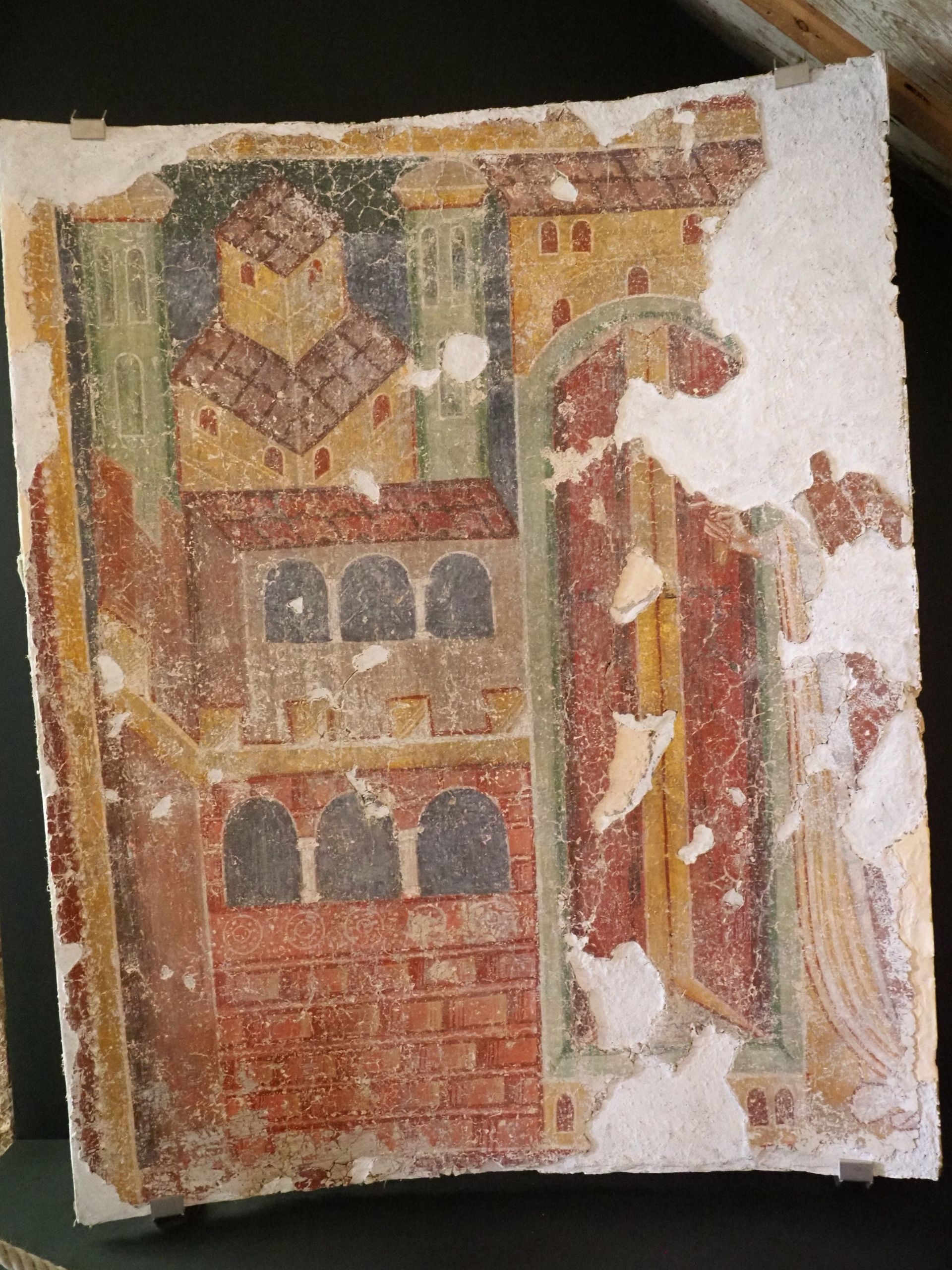
fresco in Munstair convent

We crossed the border next morning to the Benedictine Convent of Saint John of Mustair with its 9th century frescoes. The oldest buildings have World Heritage status, but eight nuns still live and work in other parts and there were recordings in the old cells at the top of the tower of some of them talking about joining the convent and their lives there. The art work of one of the sisters was also on display.

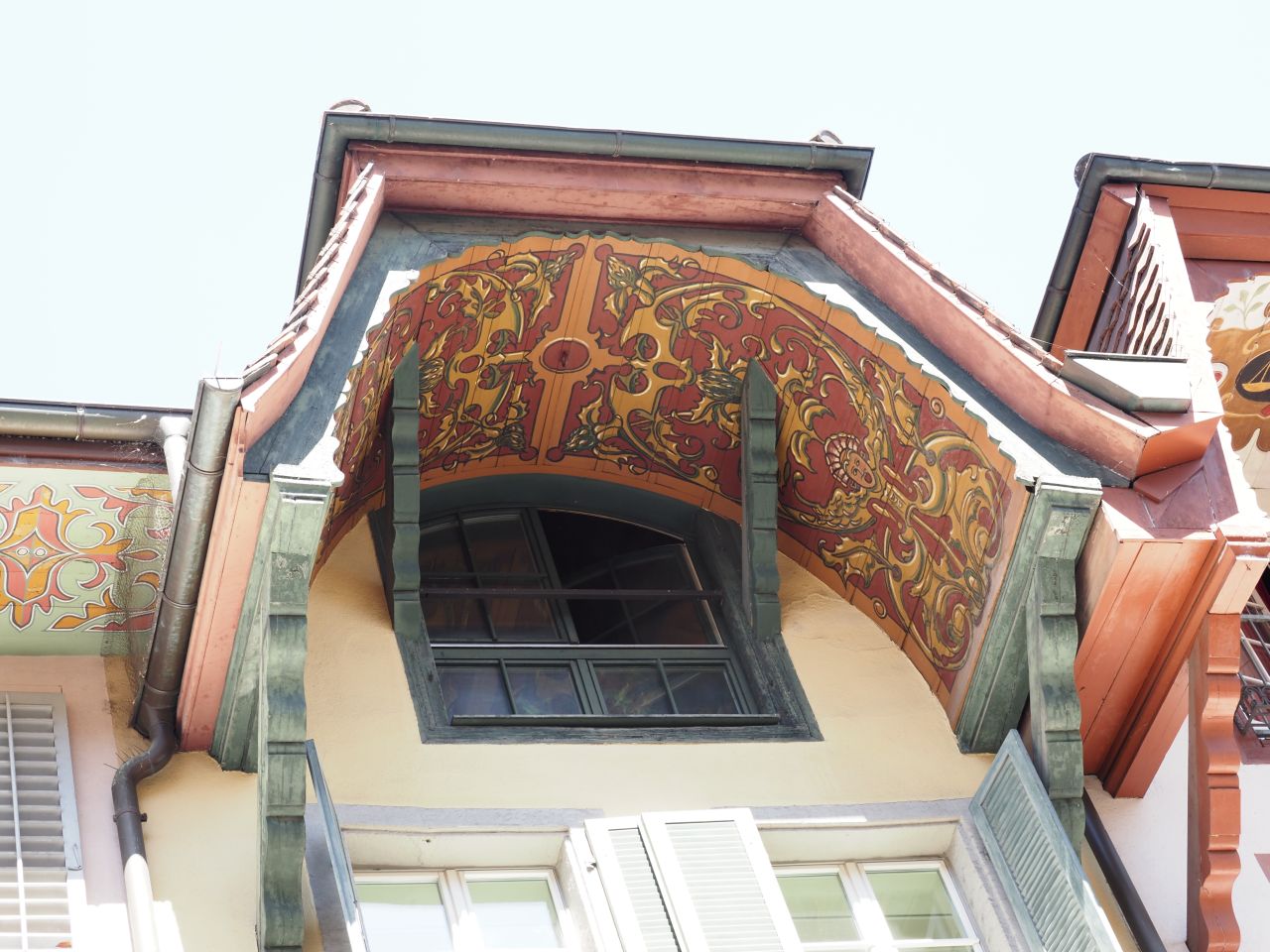
Aarau painted eave

Our last two nights in Switzerland were spent in Davos, which did not impress us, then (after admiring the painted eaves in Aarau) in Olten whose streets were deserted in the evening as Switzerland played Bosnia-Herzegovina in the World Cup. With temperatures going up to 36 degrees, we were pleased to reach Entre-deux-Eaux at the end of our impromptu holiday.

Since we got back, we have had the repair of the Italian-hail-damaged new car assessed and authorised for repair by the insurance. As we sweltered in the heat, it was frustrating to hear that Toby and Rachel in Tenerife and Jessica in Andros were having cooler weather than us! And now, after the welcome few days of lower temperatures, we are in the next round of the canicule in the east.