As well as the highlighted links in the text,
there is comprehensive set of photographs of the
Italy and Switzerland trip
including the World Heritage sites
Biblioteca Queriniana Brescia
Capitolium Brescia
Santa Giula Museum Brescia
Massi di Cemmo archaelogical Park Capo di Ponte
Naquane Rock Engravings National Park Capo di Ponte
Seradina-Bedolina Parco Archeologico Communale Capo di Ponte
Saint John Convent Munstair
The printable PDF of the text is E2E2026no2.pdf (six A4 pages)
14 July, Bastille Day. Normally the scene of exuberant firework displays. And this year the added excitement of France’s semi-final world cup match in the evening. But all firework displays were cancelled or postponed because of the heatwave and fires. And to add to that night’s disappointment, France lost against Spain.
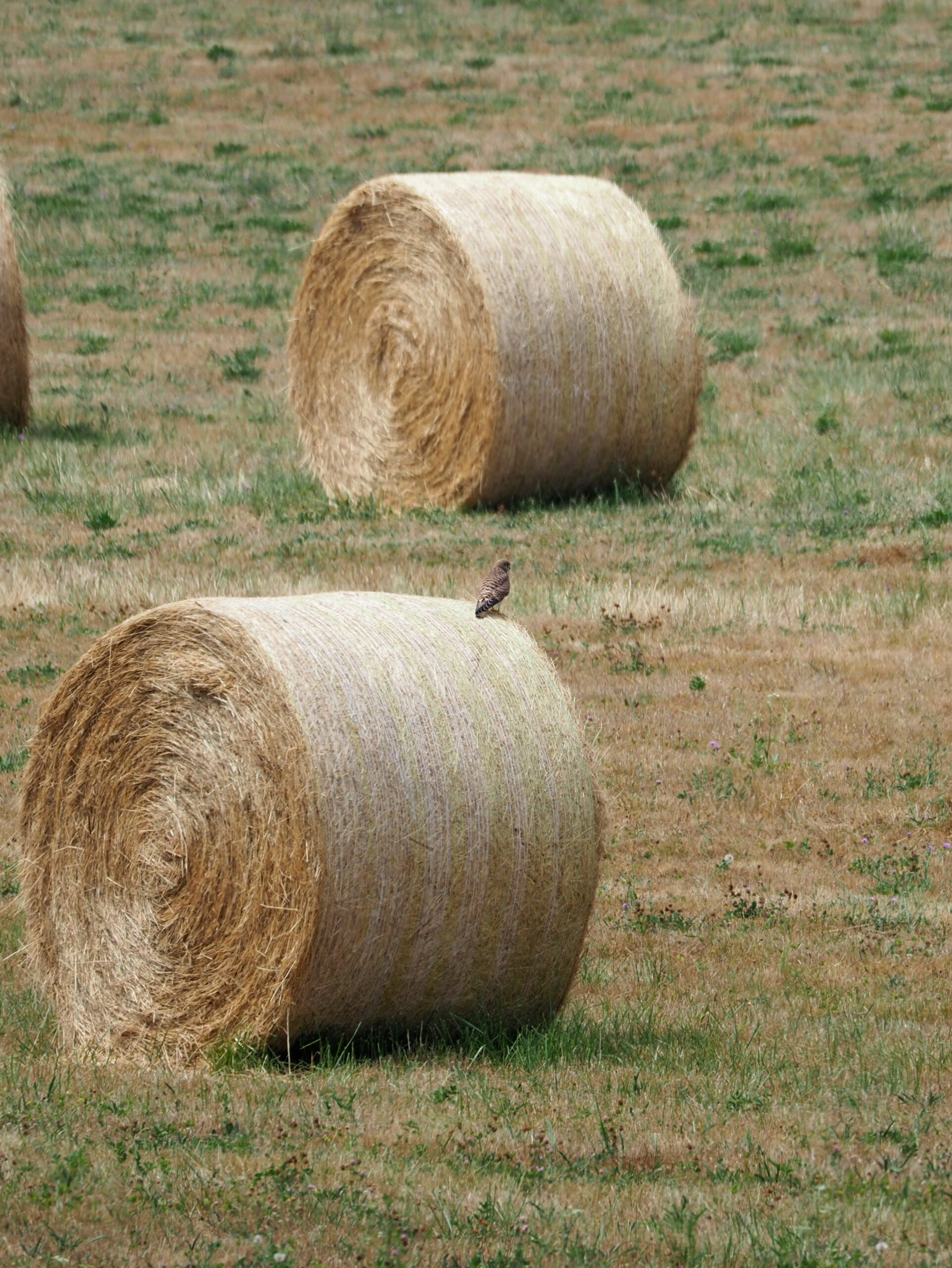
hay bales and kestrel
During the June-July heatwave, or canicule, our everyday life in Entre-deux-Eaux was reduced to pre-breakfast sorties into the garden to pick dwindling quantities of raspberries and blueberries, followed by sedentary indoor activities with the blinds down and several electric fans blowing on high. Neither walks not indoor exercise in temperatures up to 38°C appealed as we reclined listlessly, and most of our contacts also stayed indoors. The June activities of the Marguerites club like the final board games session, the BBQ by the pond and the petanque contest were all cancelled. Feux de Saint Jean bonfires and 14 July fireworks were cancelled everywhere. On the last weekend in June, Saint Dié cancelled not only their Feux de Saint Jean but also the shooting competition, World Refugee Day activities, a canine agility competition, a duck race, and a rock concert. It began to feel a bit like the isolation of the Covid lock-down. Only our medical appointments continued as normal. Outside the farmers worked hard, usually by night, hay-making and adorning the fields with huge golden bales.
But the hay bales were to become a danger. One Friday in July, on men’s semi-finals day at Wimbledon, John was just about to make mid-day coffee when the fans and other electrical appliances stopped abruptly. The radio and computers limped on until the several back-up UPS ran out. Time passed with no coffee and no indication of how long the power cut would last. The tennis semi-finals were far less exciting when watched on a mobile phone screen. The ENEDIS (electricity distribution) web site update stated supplies would be restored by 14.30, but eventually changed and just said the power cut was ongoing, Then, over four and a half hours later, the fans whirred back into action. We received an e-mail from the mairie. There had been a big harvest fire in the fields behind the football pitch that morning, fought by over fifty firemen as it spread towards surrounding forest; the power had been cut as a precaution when an overhead cable was threatened by a burning wood pile immediately below it. Residents were requested to be sparing in their use of water as it had not been possible for water to be pumped through from the nearby village of Saint Leonard during the outage to top up the storage. We were initially surprised that we had not smelt the smoke or heard any emergency vehicle sirens, but the football pitch is about 2.5km away on the other side of the hill, so we were shielded from the fire. Gendarmes have been investigating but it is not known if the fire was deliberate or careless. Of course, this village fire was nothing like relentless forest fires affecting huge areas elsewhere, but it was a local drama.
There is now a strict ban on watering gardens and fields, using hose pipes, filling pools and washing cars. Even commercial car washes have had to shut despite their obligatory water recycling/filtering systems.
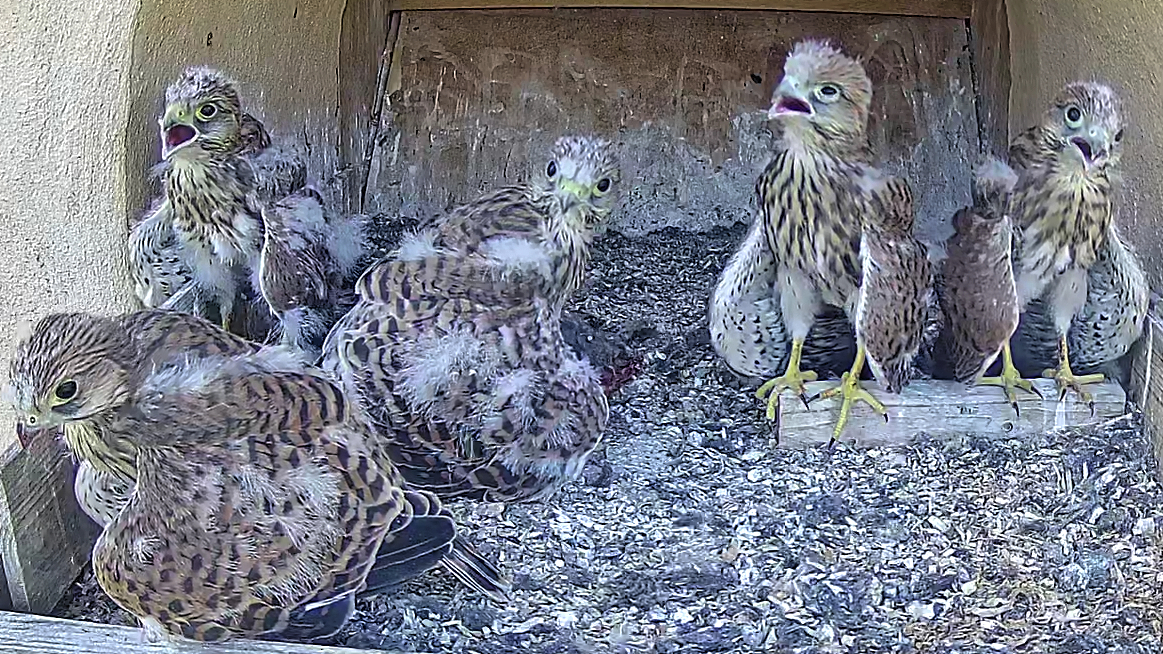
juvenile kestrels 23/6
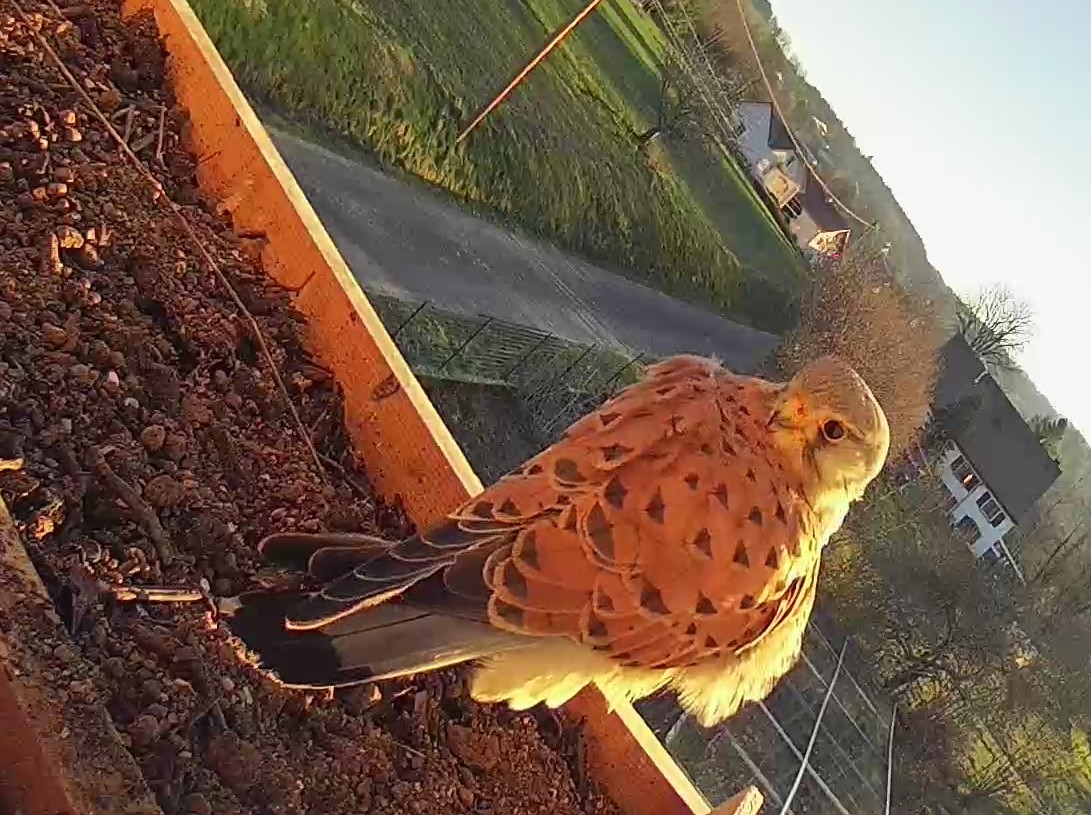
This year’s baby kestrels also suffered during the heatwave. The first egg was laid on 22 April and followed by five more. All six had hatched by the end of May but the weakest died a few days later. Kestrels only get water through food, and during the canicule, the adult kestrels found it difficult to find food for their chicks. The juveniles fledged at the end of June, a few days later than the usual time after hatching. They are still in the trees around and have occasionally visited their old home on our attic windowsill during July.
One of our rare sorties in the heat was to a local firm, following their engineer’s visit, to sign a contract to install air-air heat pump/air conditioning units on 20 July. But there have been supply delays, followed by holiday closures, so it will now start at the end of August. Meanwhile, after several years, a reduction in VAT from 20% to 5.5% on air-air heat pump units has been announced (it was already 5.5% on air-water heat pumps). Fortunately the end of July has been a bit cooler but there are further heat wave warnings.
During this welcome lull in the heatwave, we have taken full advantage. Helen joined a walk round Saint Dié’s Art Nouveau buildings, and we booked lunch at a couple of restaurants. We have been going to the Frankenbourg restaurant Alsace over the last 30 years and watched it go up market and also gain a Michelin star. We used to see workmen enjoying the menu of the day in the old more basic restaurant. Now it is businessmen in suits who bring their clients to the spacious up-market extension. Their reminder of our latest booking included the words, “to preserve the refined atmosphere of our establishment, we kindly ask you to dress smartly for your visit. Simple and relaxed elegance will be perfectly appreciated.” Would we be sufficiently refined for them? It brought back memories for Helen of those snooty head waiters of the sixties and seventies talking down to clients. Guillaume explained, when questioned after our meal, that he felt that standards were slipping now when clients wore shorts, jogging outfits and football shirts. Acolytes in Selestat had no such requirements, the clients were well dressed, the atmosphere calm and the 4 course menu delicious.
During the worst of the heat, humidity and lethargy of June and July, it was pleasant to look back on Toby and Rachel’s wedding on 2 May and our early June trip to northern Italy.
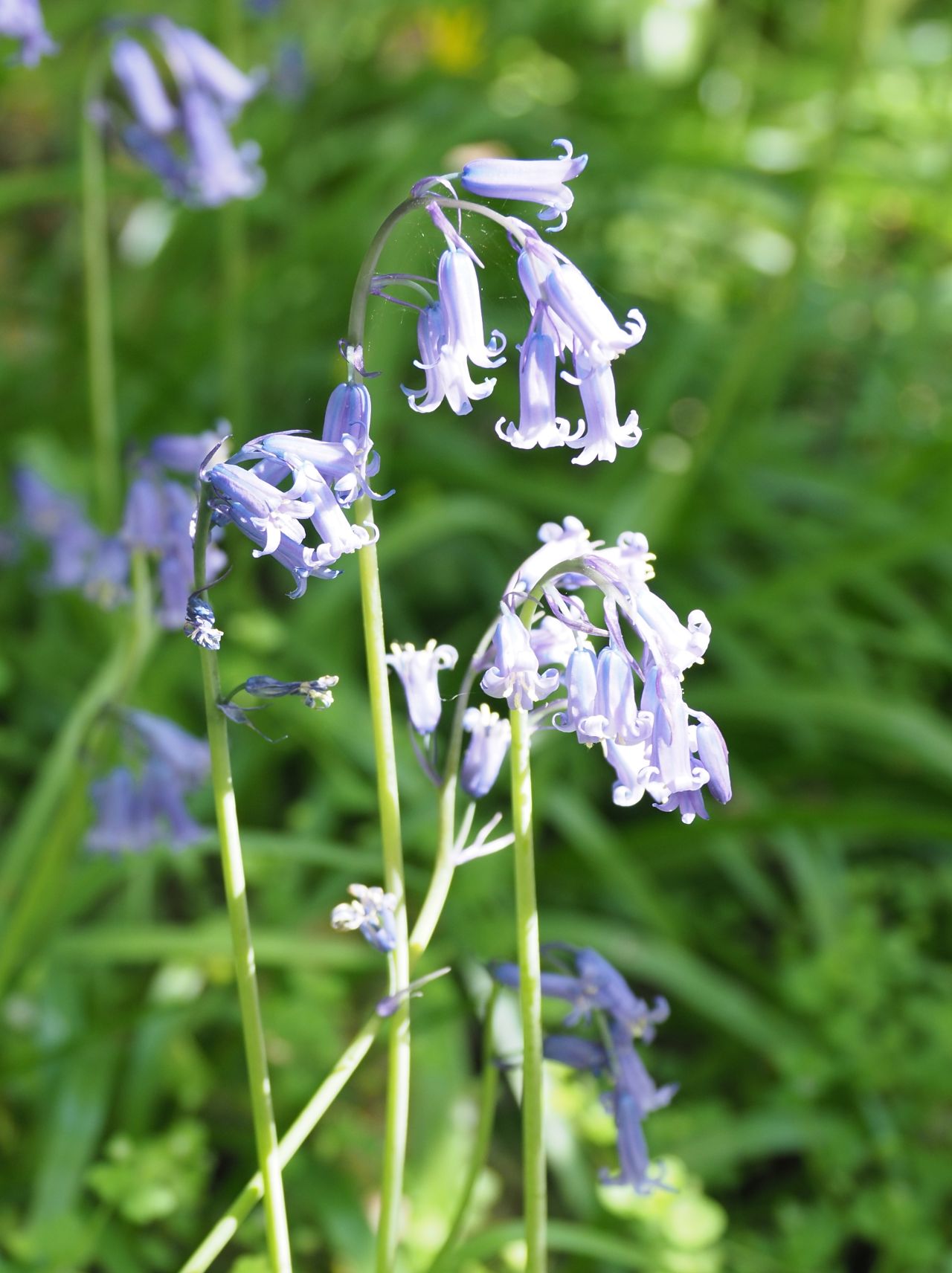 In mid-April we drove from Entre-deux-Eaux, via the Channel Tunnel, to Ann and Derek’s in Tenterden. It is always pleasant to start our UK visits catching up with them, and we were able to co-ordinate our plans around the wedding. Ann also mentioned that the bluebells in the adjacent woods were almost over. It seemed early for them to be fading (perhaps another indication of climate change) as Helen’s childhood birthdays were always celebrated in mid-May with a bluebell picnic. So next morning we strolled into the copse, enjoying the delicate scent and the blue/mauve colour stretching to haziness.
When Toby had talked on the phone about buying suits for himself and for Jacob for the wedding, we started to think about our own outfits and rummaged in our wardrobes for formal clothes. The kipper ties, flares and op-art skirts evoked happy memories, but we soon realised that good food and reduced exercise had taken their toll over recent years. Our elegant jackets and waisted dresses of past years would no longer button up. So our first few days in the UK were spent shopping. John found a suit in M&S on Stevenage’s Roaring Meg retail estate (the name always sounds like a raggle-taggle gypsy-O) and Helen found a dress in the ever reliable John Lewis in Cambridge, but John’s Indian silk tie and Helen’s velvet jacket were relics from the past. (Perhaps we should have worn the outfits for our meal at the Frankenbourg as our contribution to Guillaume’s refined atmosphere)
It might have been well past Easter, but UK supermarkets were still flogging hot cross buns in a wide variety of flavours. We tested some of the less outrageous combinations, but you can’t beat the traditional taste. Remember the days when they were only available on Good Friday? The smells outside bakeries as you queued for freshly baked buns?
With wedding outfits and breakfasts sorted, Helen had a last minute thought. The spokes on her folding umbrella had broken, and it might be unwise to attend a wedding with a defective umbrella. We remembered the torrential rain at one family wedding in the Lake District, the barrage of umbrellas at the lych gate and the bride’s wellington boots. We also recalled a wonderful London umbrella shop. As its website proclaims, “The gentlemen of London have entrusted the making of their umbrellas to James Smith and Sons for over 185 years. Whether combining a bowler hat with a Slim Rolled Umbrella in the City of London or using a Solid Stick Umbrella as a walking aid, the little umbrella shop on the corner of New Oxford Street continues to produce umbrellas of the best quality.” But which local shop to try in Letchworth? Charity shops, supermarkets and hardware shops were distinctly lacking in umbrellas. One shop even said it was the wrong time of year for them! However, the staff in the large B&M store thought they might have some, probably in the centre by the garden furniture (no, those were large garden furniture parasols). Finally a bin was found beyond the check-out tills, handy for a wet get-away.
Ann and Derek stayed overnight in Letchworth with us, and we drove up separately to Melton Mowbray the day before the wedding. They had rented an Airbnb, and we were staying in one of the two rooms above the Hammer & Pincers restaurant in Wymeswold, but we dropped off some crémant at Toby and Rachel’s on our way. Toby had just returned from the barber’s and Rachel and Farrah returned later from shopping. It was good to see Toby’s old university friends, Jordan and Ed, again. Jordan would be best man next day while Jacob would be the ring bearer. As the doorbell rang and more friends arrived, we left them in controlled chaos. After we had booked to stay at the Hammer & Pincers, Farrah had co-incidentally started working some shifts there in addition to her shifts at the Tap and Run pub and her college catering timetable, so the owners knew all about the wedding. Later Leila joined us there for dinner after she finished work, along with Ann and Derek.
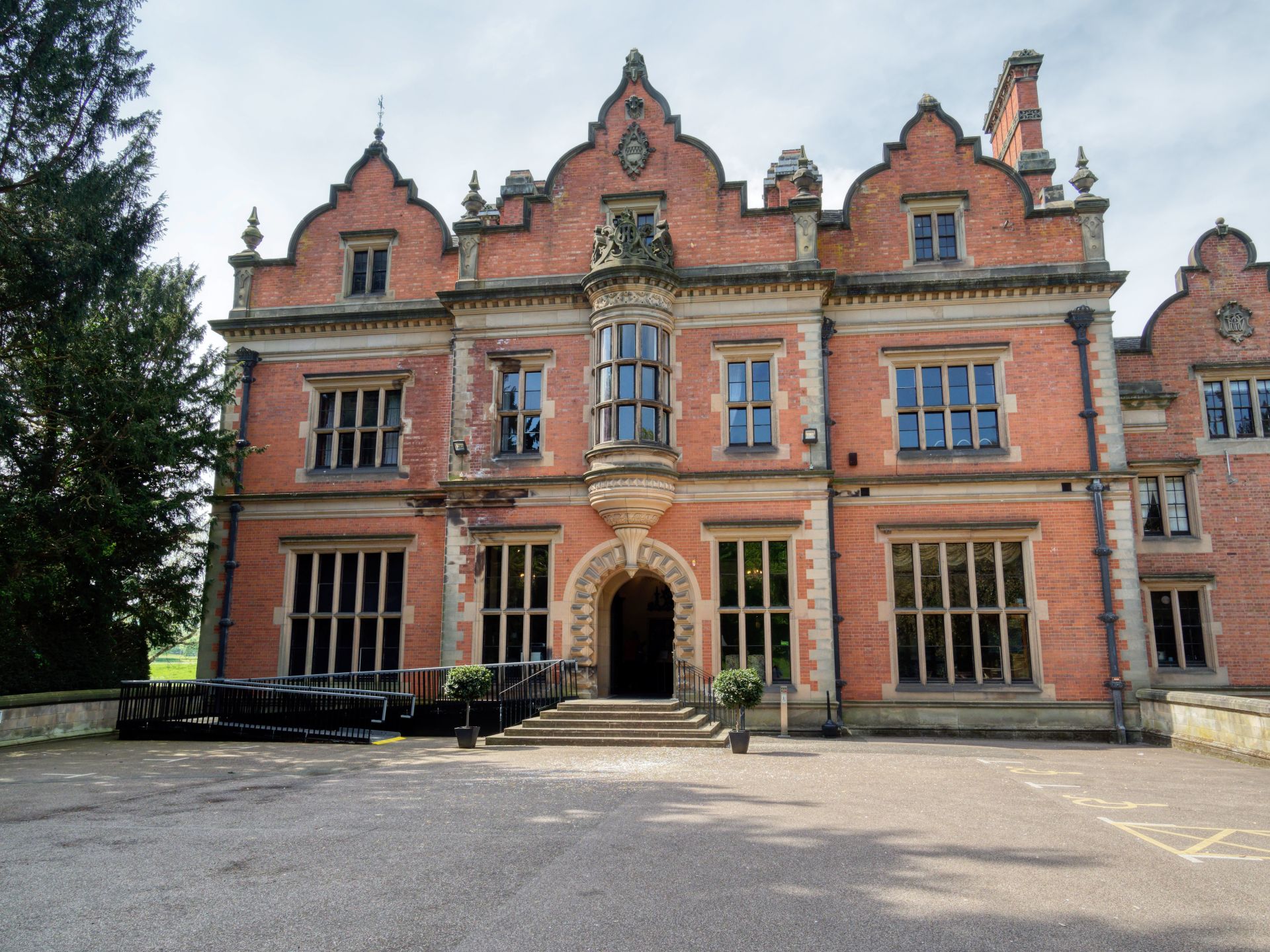
Beaumanor Hall
The wedding day was lovely and sunny. Who needs an umbrella? We had originally pictured an impersonal registry office, but Beaumanor Hall in Woodhouse is an imposing 1840s country mansion set in extensive grounds and the weddings were well spaced out. We had been asked to arrive by 1.40pm. and the previous wedding couple had vanished in an omnibus bearing their names as our wedding party sat by their cars munching the sandwiches they had prudently brought. (We had stoked up at the Hammer and Pincers on the chef’s full English breakfast before being waved off in style to the wedding by his wife). The ceremony was held on the first floor of the Hall, and we swept up a magnificent carved wood staircase which was illuminated by a large stained glass window. The registrar was welcoming and gracious and spoke throughout as if she had known Toby and Rachel all their lives, so it was very personal. Rachel’s three daughters sat together, elegant in their long dresses/trouser suit (Holly looking a little nervous about her reading), and Jacob sat quietly by them holding the ring box. John and Ed were encouraged to take photos. Then tears welled up as Rachel’s father walked slowly up the aisle with his stick in one hand and Rachel on his other arm, Rachel elegant in a white lace dress with a posy of white freesias. The registrar led a really meaningful exchange of vows and love, Jacob quietly produced the ring, Holly read beautifully, and Leila and Rachel’s sister witnessed their signatures. Toby had requested some photos on the staircase with the stained glass behind, and there was also time for some photos in the garden. Then the guests left the splendour of Beaumanor Hall in search of the contrasting-sounding reception venue of the Old Cow Shed in Kirby Bellars.
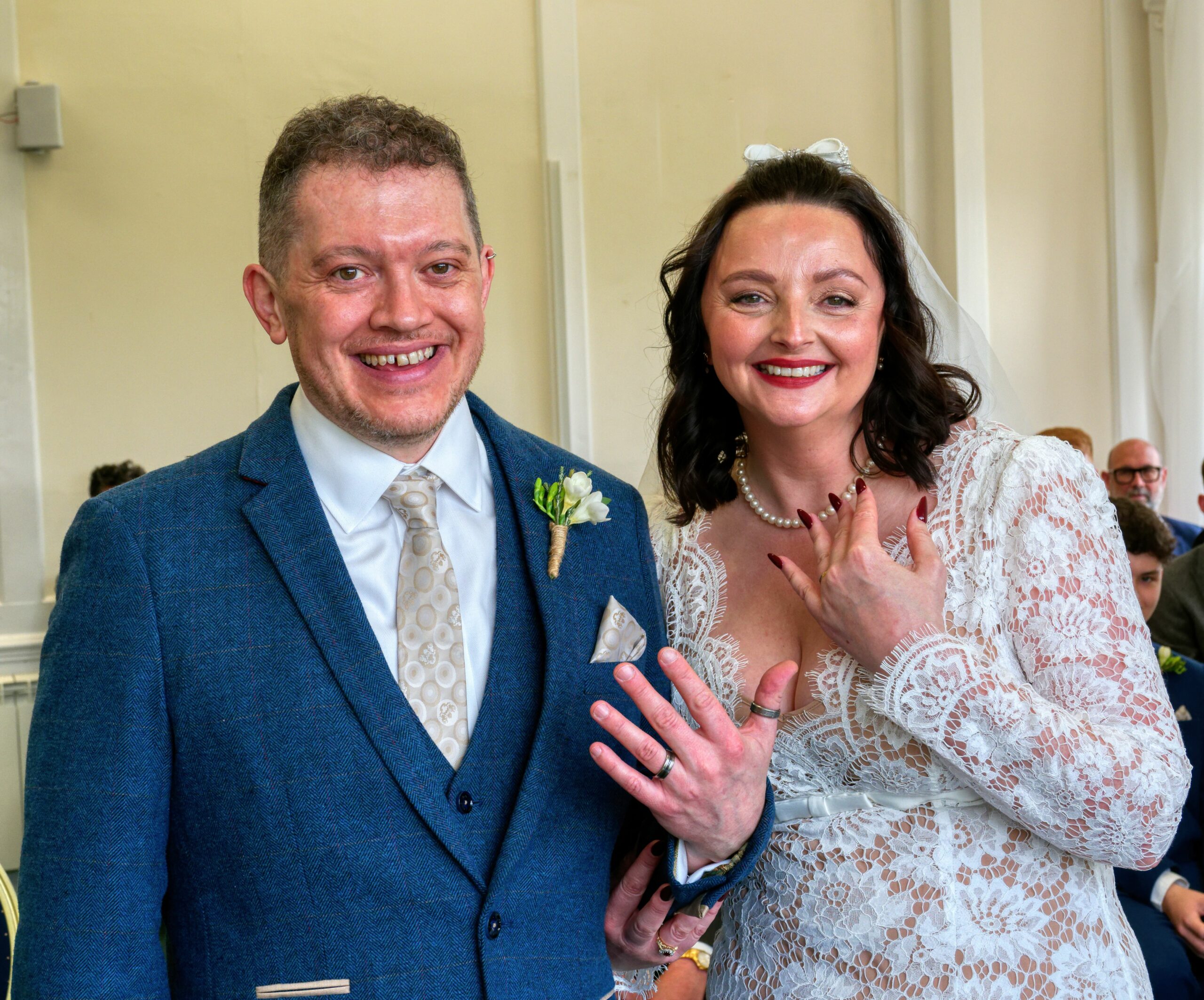 Originally guests had been invited for food back at their house, but the event had grown and Toby and Rachel had booked the converted barns, covered yard and bar of a former farm, which made a pleasantly informal wedding venue where guests chatted in the paddock over bubbly, lots more photos were taken and the best man gave his speech. All this time the sky was clouding over. Most people had retreated to the tables and chairs (and bar) in the covered courtyard by the time the pizza van in one corner started serving. After the pizzas, Jacob organised card games with his cousins, aunts, uncles and grandparents. And then, when we were all warm, fed and entertained, the heavens opened and the roof covering was pounded by heavy rain. And where was Helen’s new umbrella? In the car which was parked in another field. It was late by the time the guests started to disperse after the rain had abated, leaving the wedding party to retire to their on-site stables and shepherd’s hut at the end of a beautiful, happy day.
In the next few days we were able to catch up with old friends in Nottingham over morning coffee, lunch and afternoon tea. Leila also booked a table for Sunday lunch with the three of us, Ann, Derek and Steven’s family in the pub near our former Wollaton house. And we saw Toby and Rachel after their return from the Old Cow Shed. (Their honeymoon was to be in Tenerife a few weeks later). We were pleased to meet up with other friends before we returned to France, though sorry that illness prevented some visits, and that long delays on the M25 reduced our time with another friend before we took the Eurotunnel back to France.

Lac des Quatre Cantons, Lake Lucerne
After the usual medical appointments that awaited us in France, we made some last-minute travel plans to drive through Switzerland to northern Italy, and set out on 7 June. This time we had the necessary vignette for Swiss motorways, so admired the views of Basel from the motorway (remembering our pleasant few days there in March). John had found a hotel off the motorway with views across Lake Lucerne for our first night.
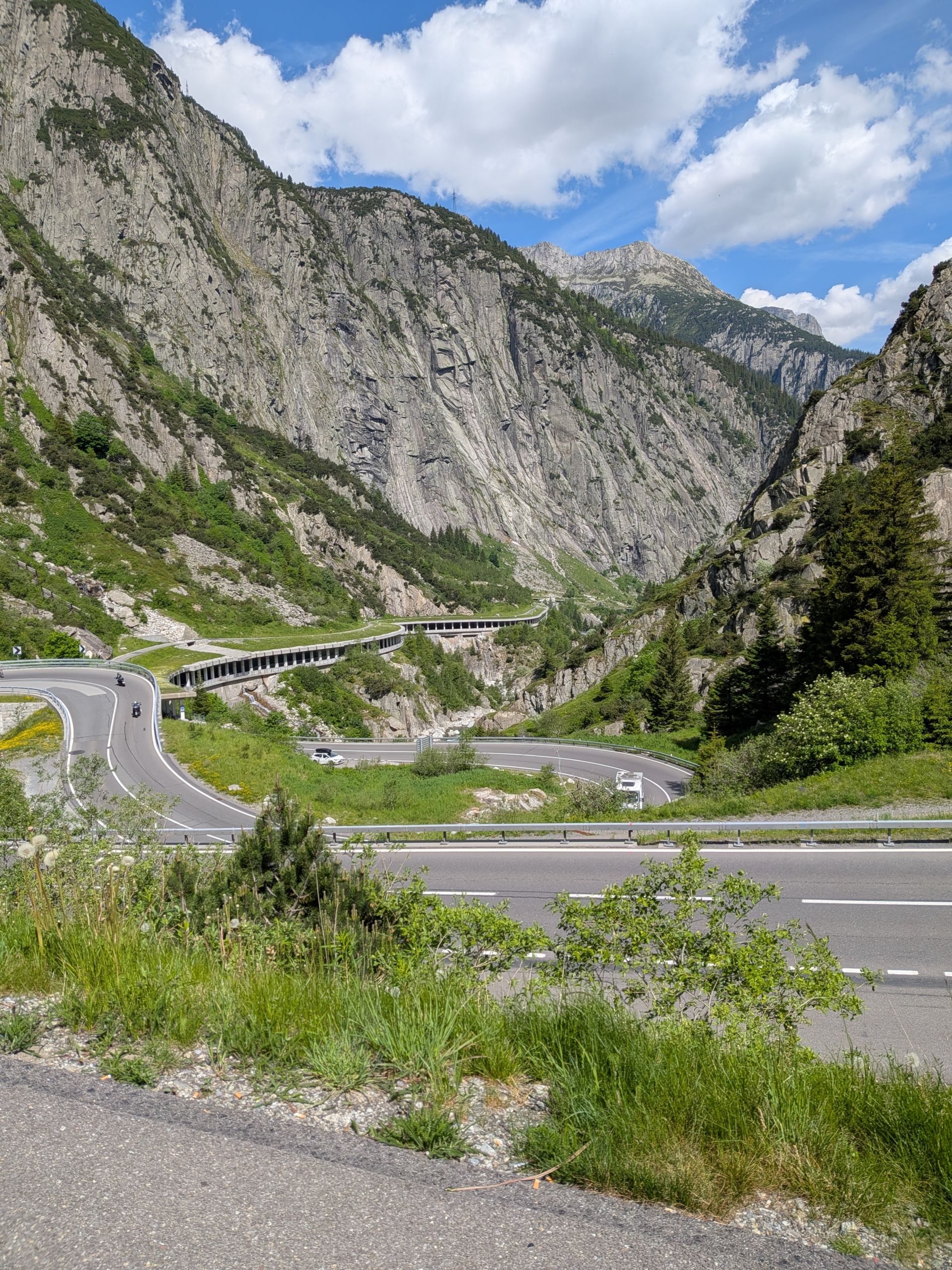
going up the Saint Gotthard pass
The next day we decided it would be more fun to take the road over the Gotthard Pass, hairpin bends and all, rather than queue for the long (16.9 km) motorway tunnel. When we pulled over after one bend to admire the view behind us, John noticed that the car parked in front of us was leaking coolant. The young English owners were already on the phone for assistance, and we do hope they did not have a long wait in the heat by the roadside. The pass itself felt bleak despite the sunshine, and there was still snow to be seen in the crevices, but the views as we dropped down on the other side were spectacular. It was also interesting to be travelling in the opposite direction to our rail journey over the Gotthard a couple of years ago.

Fiat 1100 SM (Gobbone) 1948
We had decided to spend our first days in Italy in Brescia. Mosaics, frescoes, tired feet, re-routed buses, octopus salad, broken sandals, glue and hailstones jostle together in memory. The Mille Miglia vintage car endurance race was taking place that week, so there was little choice of accommodation. We were fortunate in that our ground-floor apartment, seemed newly furnished and equipped; we may have been the first renters. We were on a convenient bus route from our leafy suburb to the centre. But unfortunately all the buses on our first day were rerouted and skirted the centre because of the race, so we did a lot of unexpected walking to reach the Santa Giulia museum and had very tired feet that evening. There were no temporary route maps or revised timetables and the locals were equally confused.
The museum, in a former monastery, was fascinating, though so rambling that among the prehistoric, Roman and mediaeval exhibits we missed one of the chapels with its frescoes and had to go back next day and beg to be readmitted. We found the round Romanesque old cathedral and its crypt more interesting than the adjacent Baroque cathedral, and lingered even longer there when we heard the heavy rain storm outside. We got back to our apartment that evening before a violent hail storm which briefly turned the garden white. Later, John was upset to see that it had also pitted the bodywork of our new car quite badly. The bus route was flooded, with cars sending up arcs of spray as they drove past, and that night’s restaurant staff must have worked hard to restore the courtyard dining area next day. Other Brescia sights included the dramatic remains of the Roman Capitol with the Winged Victory inside, a massive suspended bronze rhinoceros pretentiously entitled the weight of suspended time, and the peaceful Queriniana Library founded by a Cardinal and donated to the public in 1750; in 2026 its tables were filled with students with their laptops, ignoring the shelves of dusty volumes.

Naquane Rock Engravings National Park

Seradina-Bedolina Parco Archeologico
We decided to give Milan and Bergamo a miss in the heat and at the height of the tourist season and next headed north to the Valle Camonica to see some of the prehistoric inscribed rock carvings which have become a World Heritage site. Our accommodation for those two nights was a more basic “bed and living” overlooking the railway line with a breakfast voucher for a coffee and croissant at the nearby Break Bar. As John read some of the more earnest interpretations of the rock incisions in the museum, he wondered aloud whether some of them were just as likely to have been made by bored shepherd boys than as sacred art. Over three days we scrambled round three of the sites in the heat. Some of the incisions were easier to see than others, and we could pick out animals, figures (some with weapons), ploughs, a four wheeled cart and a possible settlement map, but they looked like individual images rather than a design for a whole boulder face.
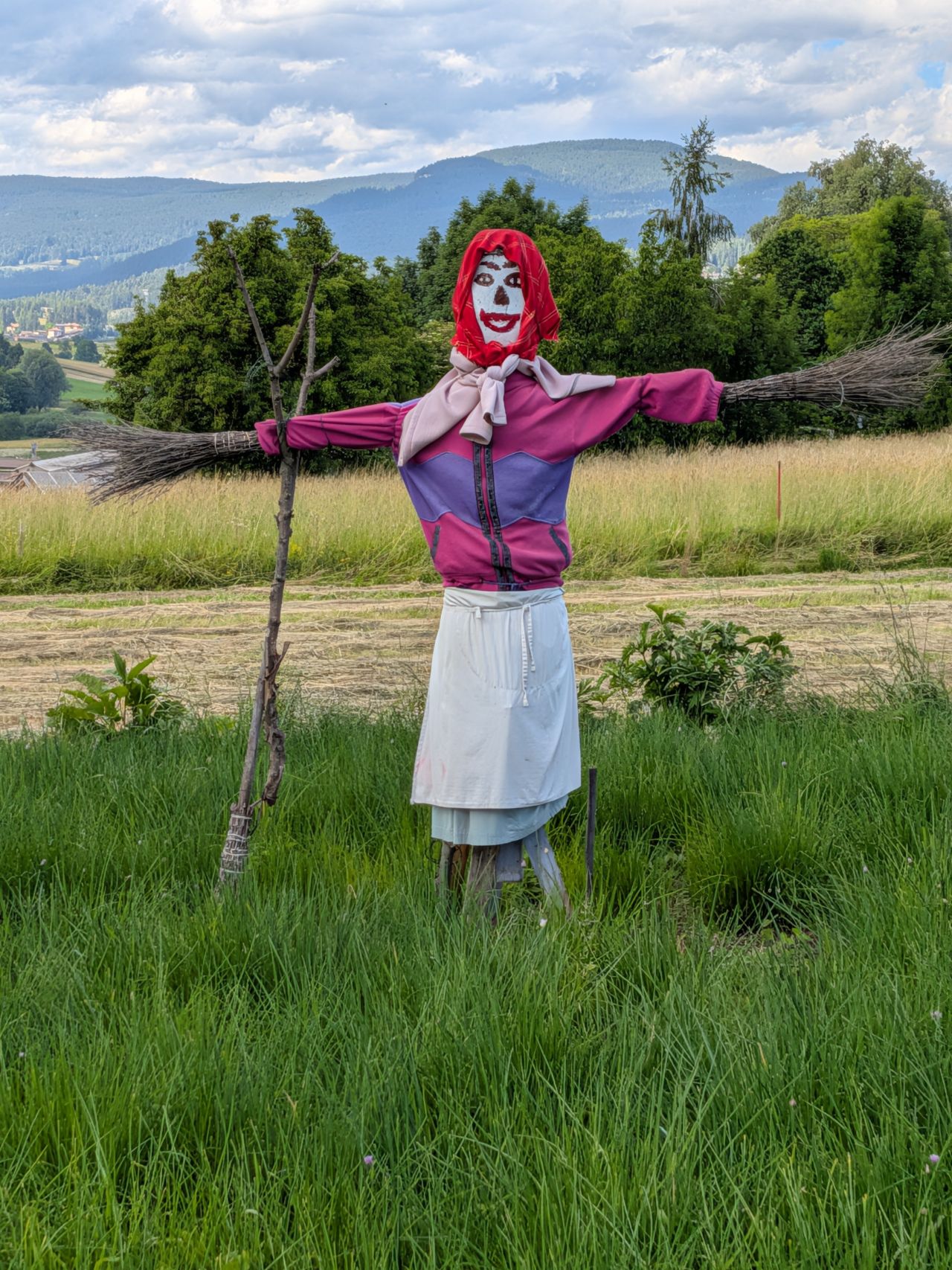 After a week of “culture” we were ready for a day of relaxation. We continued north up the valley, crossed the Paso del Tonale along with the Sunday strings of suicidal motorcyclists, and dropped down into valleys of apple espaliers around Bolzano. The Hotel Rosa Resort with its turrets and wooden balconies and female staff in traditional long skirts and bodices had a bit of a Ruritanian feel. The décor was “Trentino traditional”, with wood panelled walls, ceramic stoves, gilt framed landscapes, embroideries, patterned sofas, curtain swags and candelabra. Roses were everywhere, blooming in the garden, filling vases, and on the walls in paintings. Beyond the rose garden, a cheerful scarecrow guarded the chive patch, a farmer was haymaking and in the distance rose the mountains. The wifi in our room was hopeless, the food hearty, the apple strudel good and G&Ts potent. Jupiter was bright in the night sky above us.
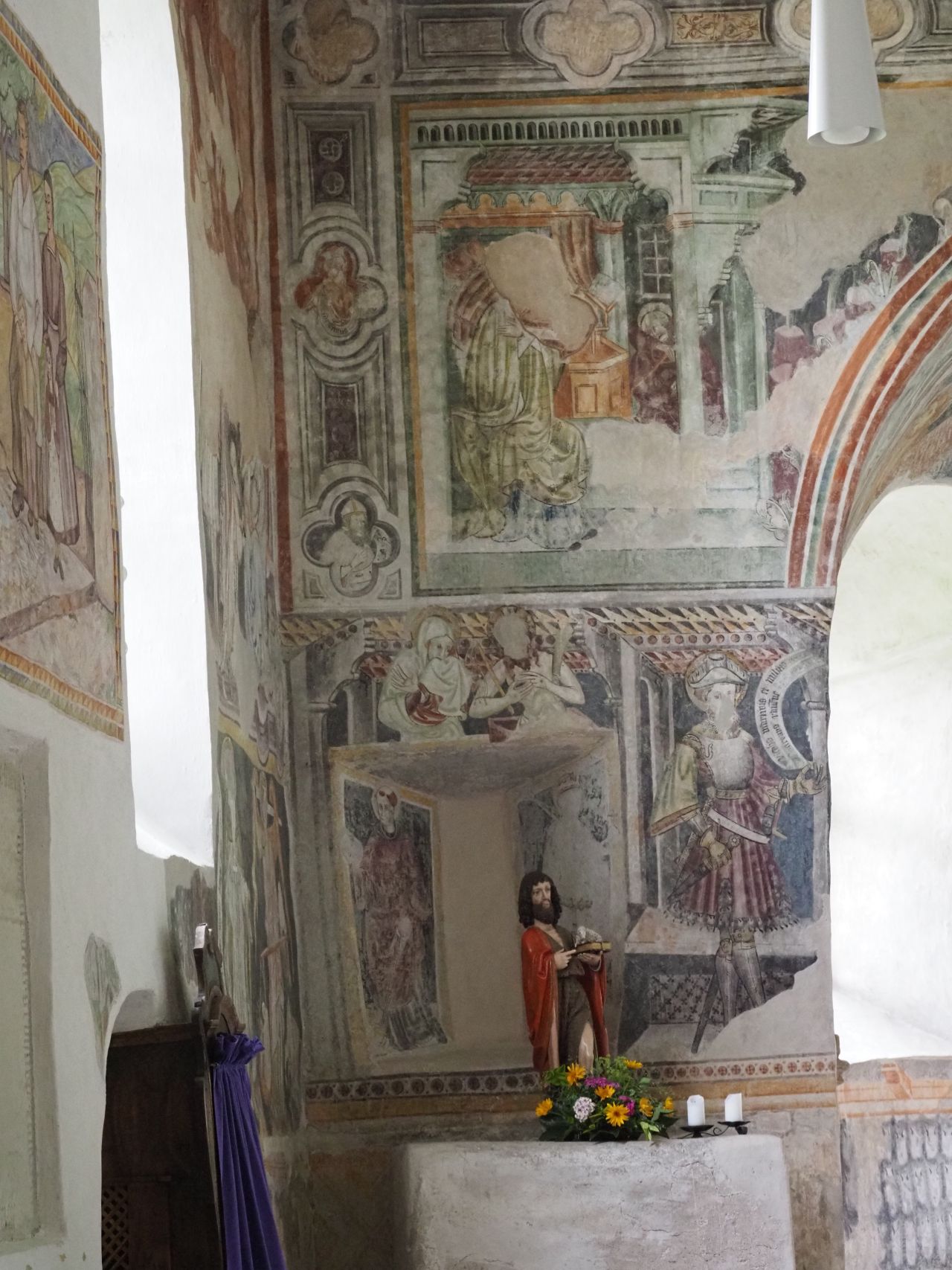
Saint Johann Kirche
As we drove towards the Swiss border after our rosy relaxation day, we heard a mix of Italian and German dialects. We gave the Bolzano Iceman a miss, paused in the thermal town of Merano for coffee, cathedral and the Hapsburg splendour of the kurhaus and concert hall, and ended up at the Gasthof Stein in the small town of Prato allo Stelvio at the foot of the Stelvio Pass. We walked up to its Saint Johann Kirche, but were disappointed to find it locked and the keyholder on holiday. John managed to photograph some of the frescoes from 1420 and 1948 through small patterned glass windows.
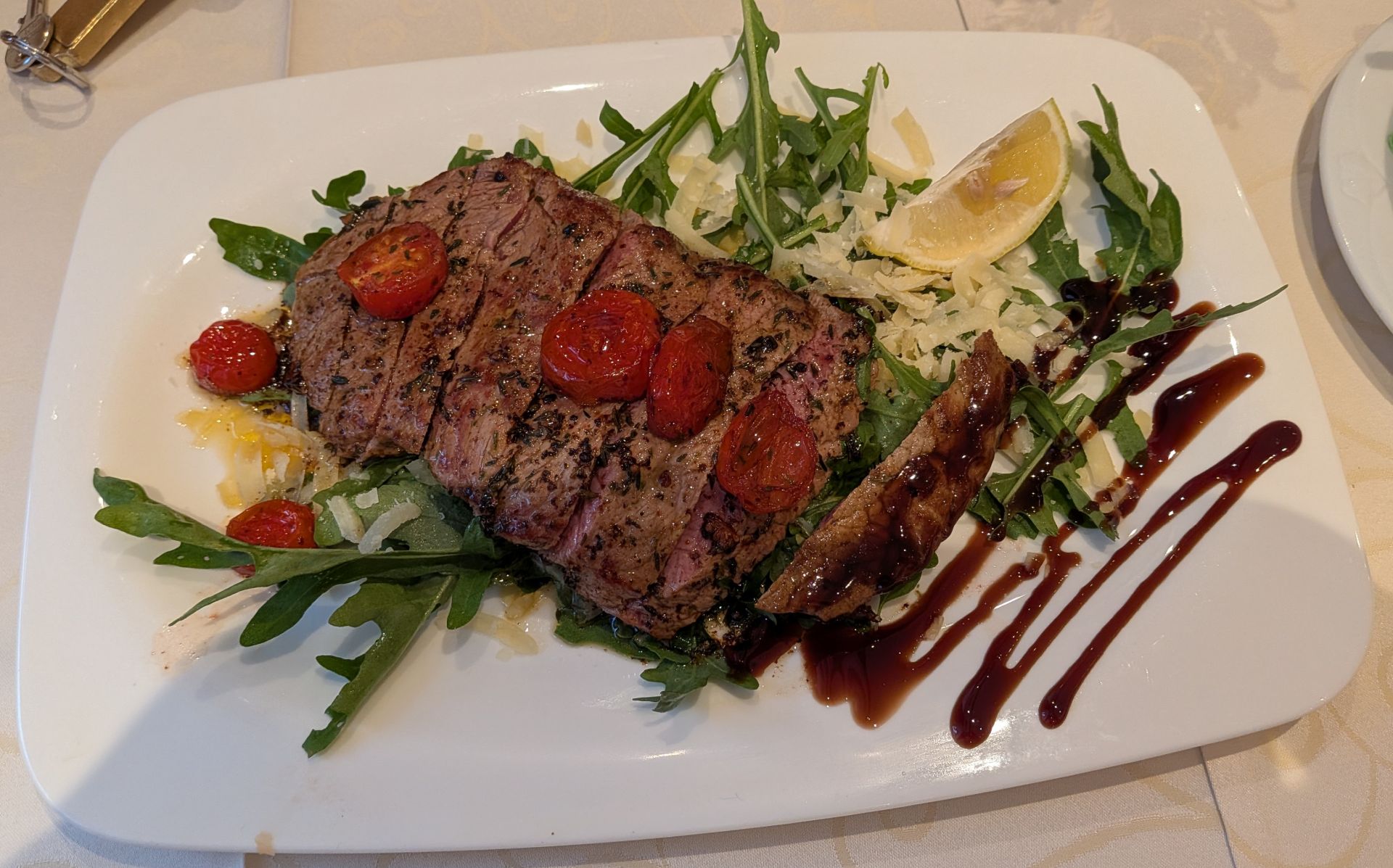
tagliata beef strips
Our last meal in northern Italy that evening was the best of the holiday with John’s tagliata beef strips on rocket, and Helen‘s taglierini and an even spicier apple strudel.
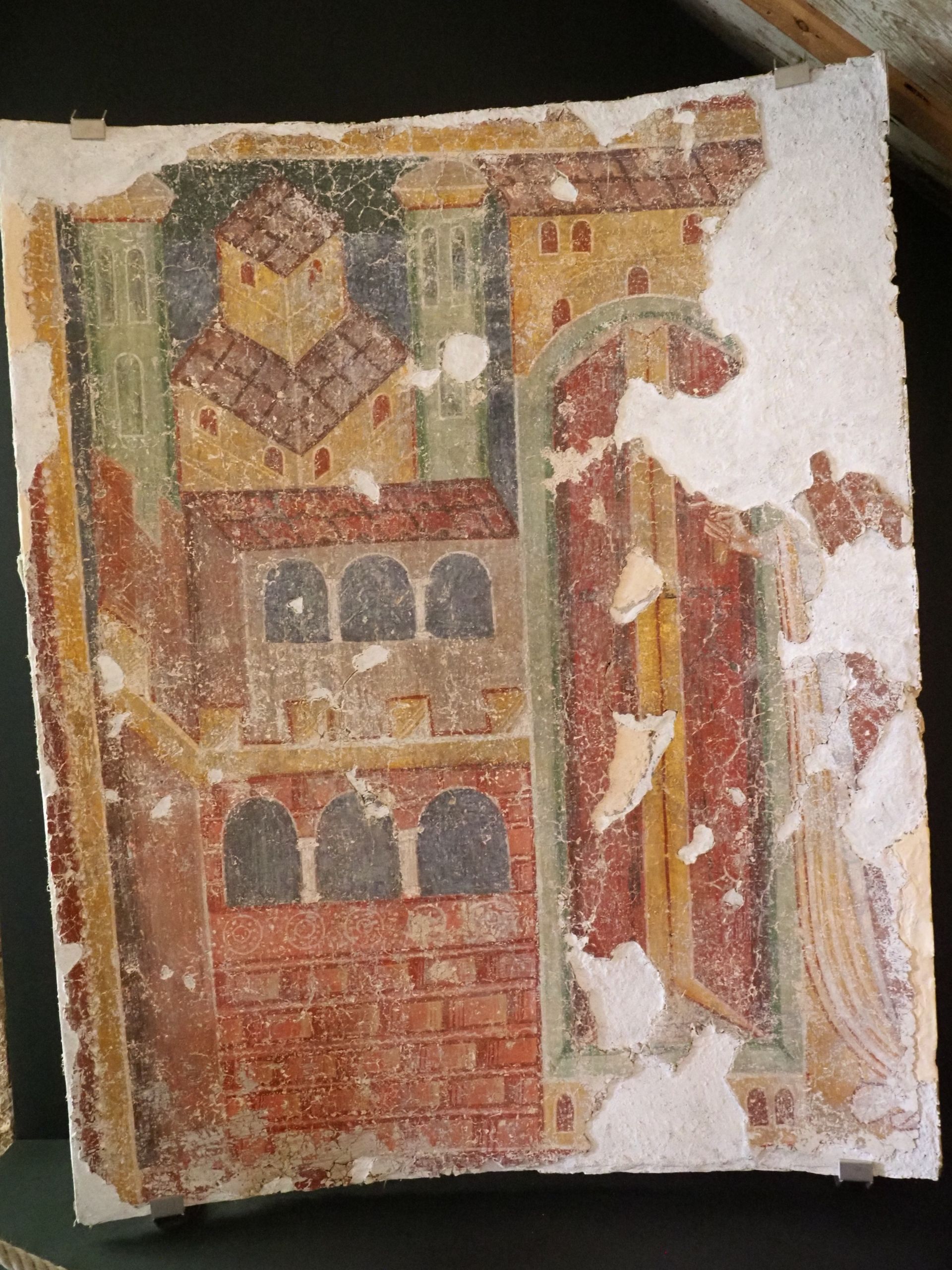
fresco in Munstair convent
We crossed the border next morning to the Benedictine Convent of Saint John of Mustair with its 9th century frescoes. The oldest buildings have World Heritage status, but eight nuns still live and work in other parts and there were recordings in the old cells at the top of the tower of some of them talking about joining the convent and their lives there. The art work of one of the sisters was also on display.
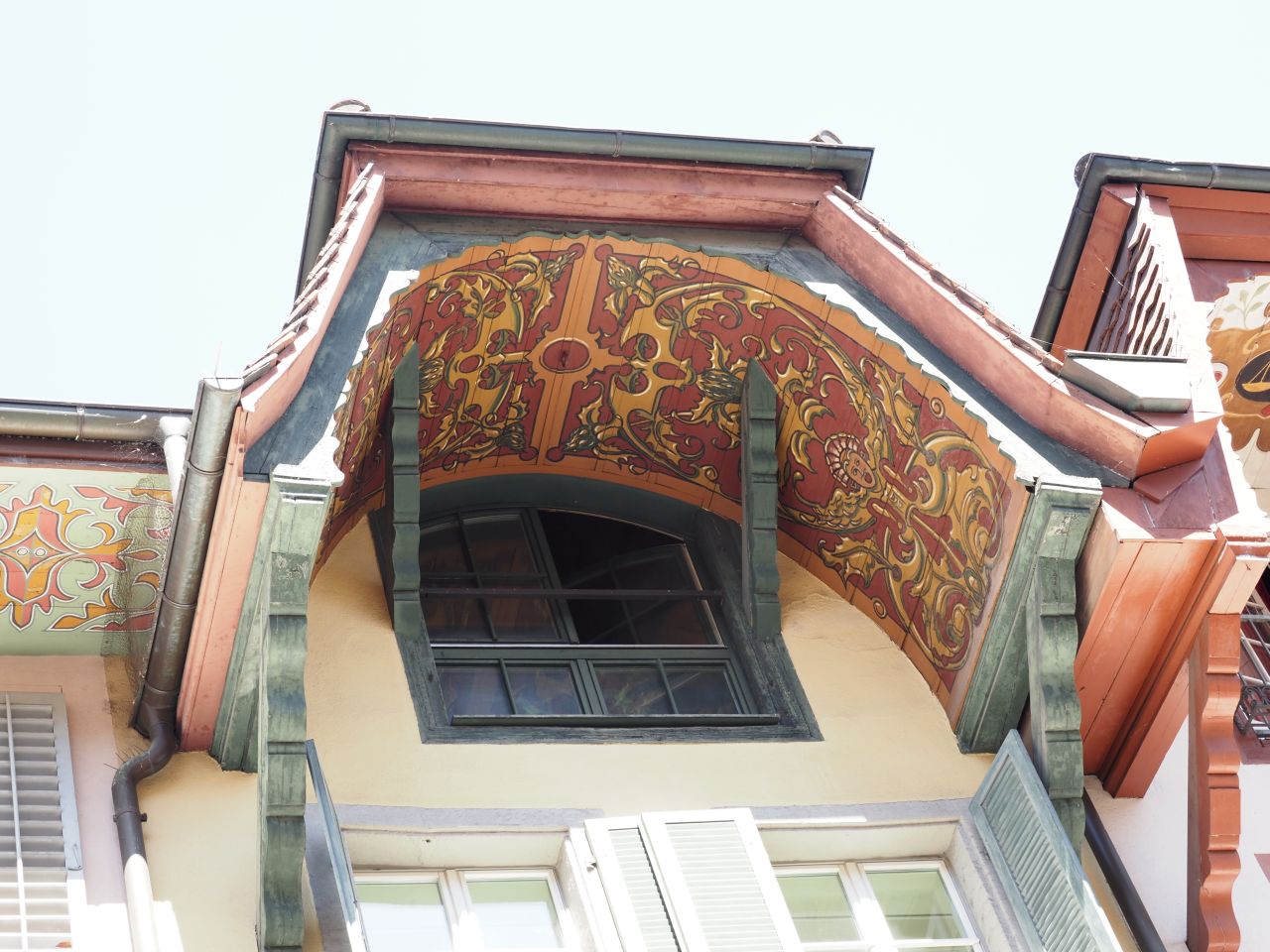
Aarau painted eave
Our last two nights in Switzerland were spent in Davos, which did not impress us, then (after admiring the painted eaves in Aarau) in Olten whose streets were deserted in the evening as Switzerland played Bosnia-Herzegovina in the World Cup. With temperatures going up to 36 degrees, we were pleased to reach Entre-deux-Eaux at the end of our impromptu holiday.
Since we got back, we have had the repair of the Italian-hail-damaged new car assessed and authorised for repair by the insurance. As we sweltered in the heat, it was frustrating to hear that Toby and Rachel in Tenerife and Jessica in Andros were having cooler weather than us! And now, after the welcome few days of lower temperatures, we are in the next round of the canicule in the east.